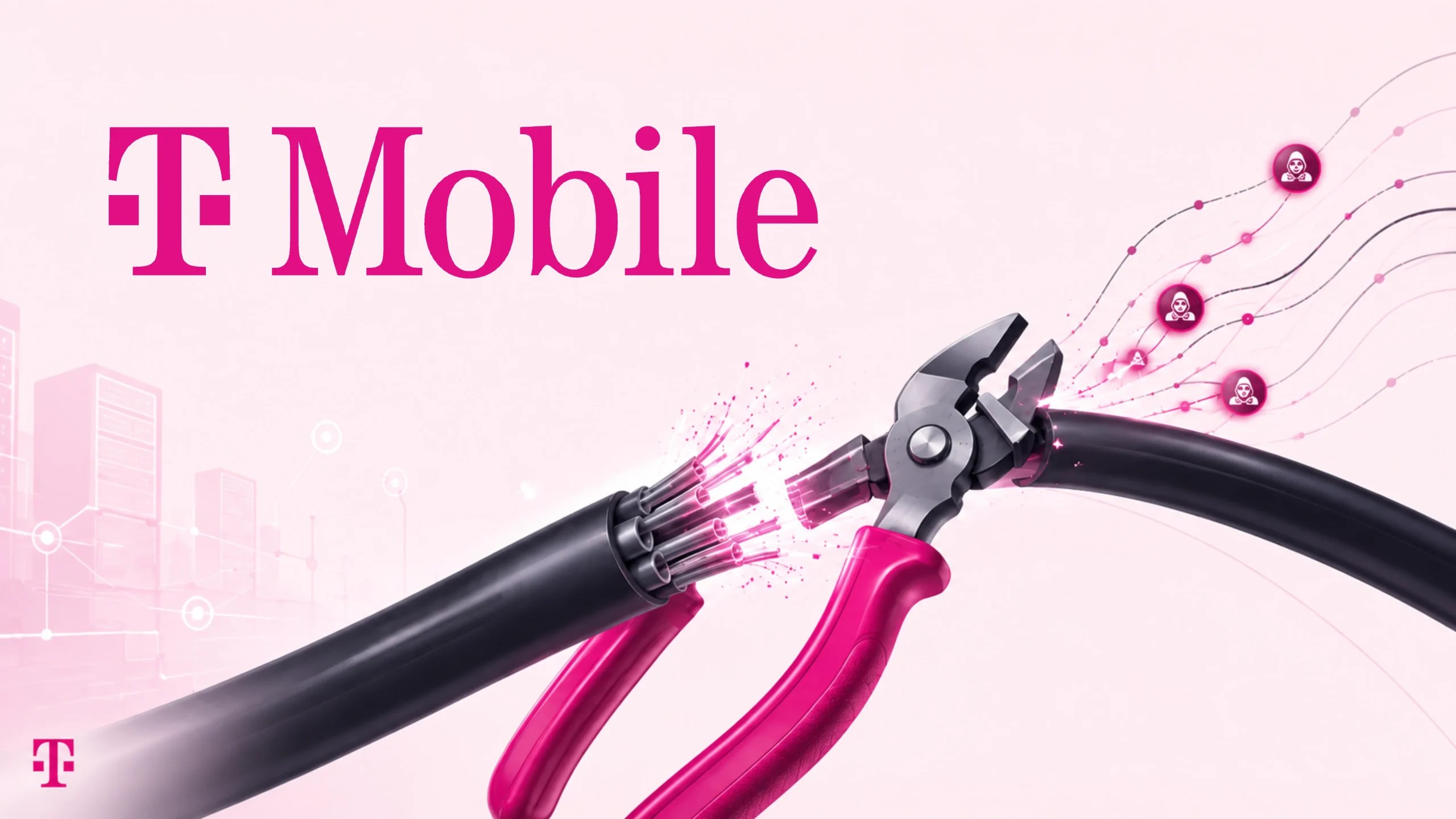
T-Mobile’s cybersecurity team took an unprecedented step in 2024 by physically cutting a network cable to thwart access by Chinese state-sponsored hackers. This drastic measure, as reported by Bloomberg, was part of a broader response to an extensive espionage campaign that jeopardized telecom and internet infrastructure throughout the United States.
Unfolding of a Major Espionage Campaign
The infiltration was attributed to Salt Typhoon, a hacking group linked to the Chinese government. According to the FBI, this group has infiltrated at least 200 companies across 80 countries, marking a significantly larger impact than initially disclosed. The primary aim of the campaign was to collect phone records and communications metadata from high-profile U.S. government officials, including those running for presidential office.
Among the victims were major telecom companies such as AT&T, Verizon, and others. Hackers targeted company routers to intercept sensitive network data. T-Mobile’s involvement in the Salt Typhoon breaches was first reported in November 2024, with the Wall Street Journal noting the carrier had been affected, though customer data was reportedly not significantly compromised.
T-Mobile’s Unique Defensive Action
Despite extensive efforts, T-Mobile’s cybersecurity team struggled to locate the intruders within their network. It wasn’t until unusual activity was detected from another telecom company’s router that they found a lead. Led by Jeff Simon, T-Mobile’s Chief Security Officer, the team opted for a direct approach, physically severing the cable at a data center near Bellevue, Washington, effectively isolating the compromised hardware from external threats.
This decisive action proved successful, allowing T-Mobile to largely avoid the extensive breaches that affected its peers. The severed cable now serves as a symbol of their unorthodox but effective solution, displayed at T-Mobile’s headquarters as a reminder of the incident.
Implications for the Telecom Industry
The incident highlights the aggressive strategies required to combat adversaries capable of exploiting interconnected telecom networks. Salt Typhoon’s ability to navigate shared infrastructure and exploit trust relationships between routers underscores the sophistication of state-sponsored cyber threats.
The FBI has indicated that the threat remains active, with Salt Typhoon maintaining access to parts of the global telecom infrastructure. This ongoing risk challenges telecom companies to innovate and adapt their defenses continually.
In an industry characterized by redundancy and constant connectivity, T-Mobile’s decision to use a physical solution over a digital one serves as a stark reminder that sometimes the most effective response to a cyber threat is to disconnect entirely.
For more insights into securing your network infrastructure, consider integrating threat intelligence solutions that enhance your cybersecurity posture.