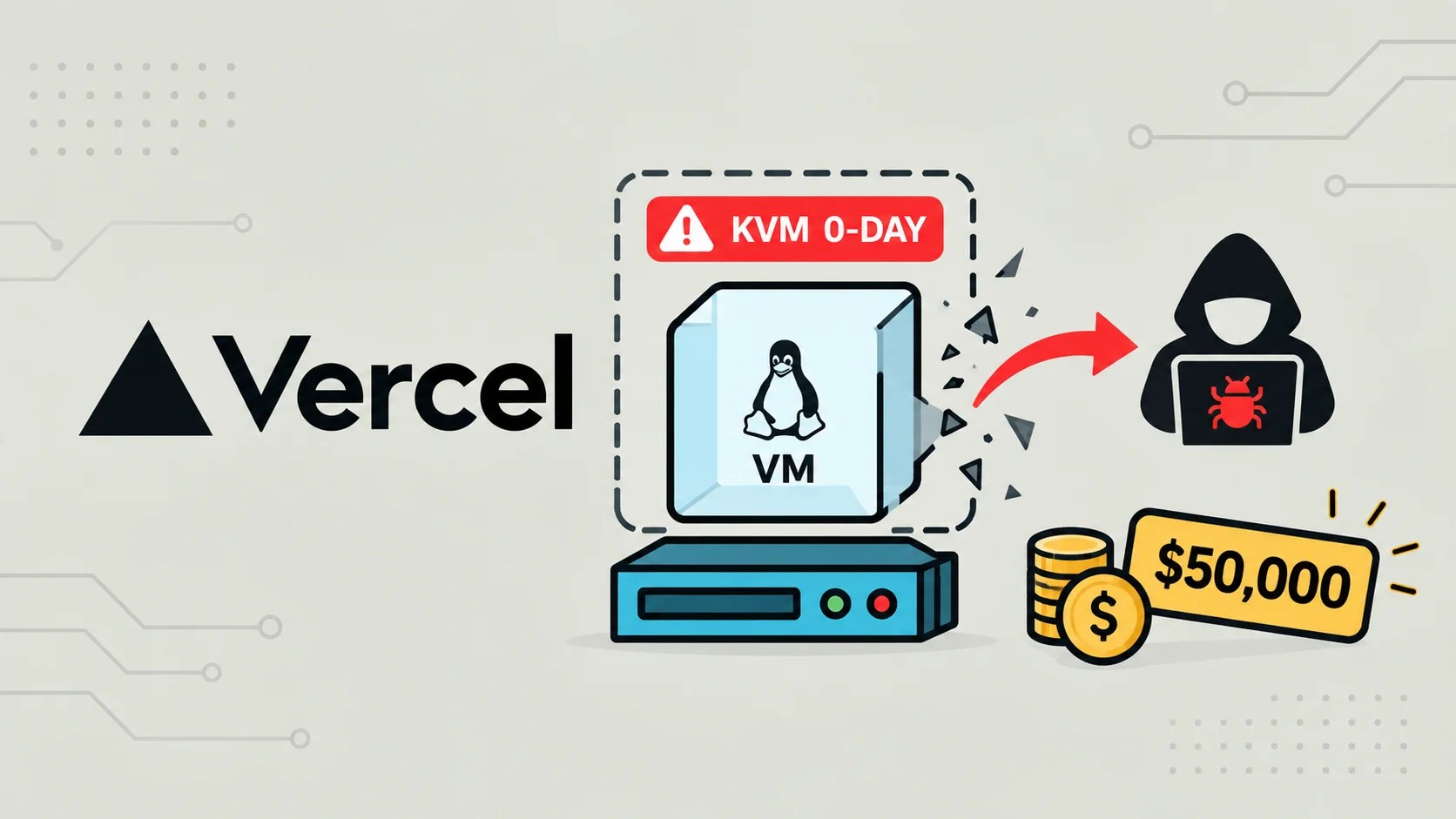
Vercel has confirmed a critical vulnerability in the KVM hypervisor, reported by security researcher Paulos Yibelo. This zero-day flaw allows potential code execution from a guest virtual machine, granting root access on the host system.
Significant Discovery Through Bug Bounty Program
The vulnerability was uncovered through Vercel’s Sandbox bug bounty initiative, highlighting security concerns in isolating untrusted workloads and AI-driven processes. Yibelo shared his findings on October 3, 2026, characterizing the issue as a complete virtual machine escape involving standard hypervisors.
Vercel’s CEO, Guillermo Rauch, confirmed the existence of a KVM zero-day without detailing the specific exploit mechanisms or affected software versions. A comprehensive technical report is anticipated to follow these announcements.
Rewarding Critical Vulnerability Reports
In recognition of the discovery, Vercel awarded Yibelo $50,000, the maximum payout for a single report in their program. This reward underscores the severity of vulnerabilities that could potentially expose or alter another customer’s data.
While the award signifies the critical nature of the flaw, there is no indication that customer data was compromised. The information released does not provide evidence of real-world exploitation or data theft.
Understanding the Implications for KVM
The KVM, or Kernel-based Virtual Machine, is a key component of Linux virtualization. It is crucial for maintaining separation between guest virtual machines and their hosts. A breach in this separation grants an attacker considerable control over the host system.
Vercel’s infrastructure employs Firecracker microVMs on Amazon’s EC2 hosts, with each sandbox isolated within these microVMs. The security breach described by Yibelo involves crossing from a container to the host system, a significant security boundary violation.
No Common Vulnerabilities and Exposures (CVE) identifier, affected software versions, or mitigation strategies have been disclosed yet. Until Vercel publishes a detailed technical analysis, operators should seek guidance from Vercel and relevant Linux providers.
Looking Ahead
The forthcoming technical write-up is expected to shed light on the root cause and offer guidance on protecting systems. The cybersecurity community is urged to await these details to gauge the vulnerability’s impact and necessary countermeasures.
For now, the confirmed vulnerability and potential host-root access remain primary concerns, with a focus on understanding and mitigating the risk rather than assuming widespread exploitation.