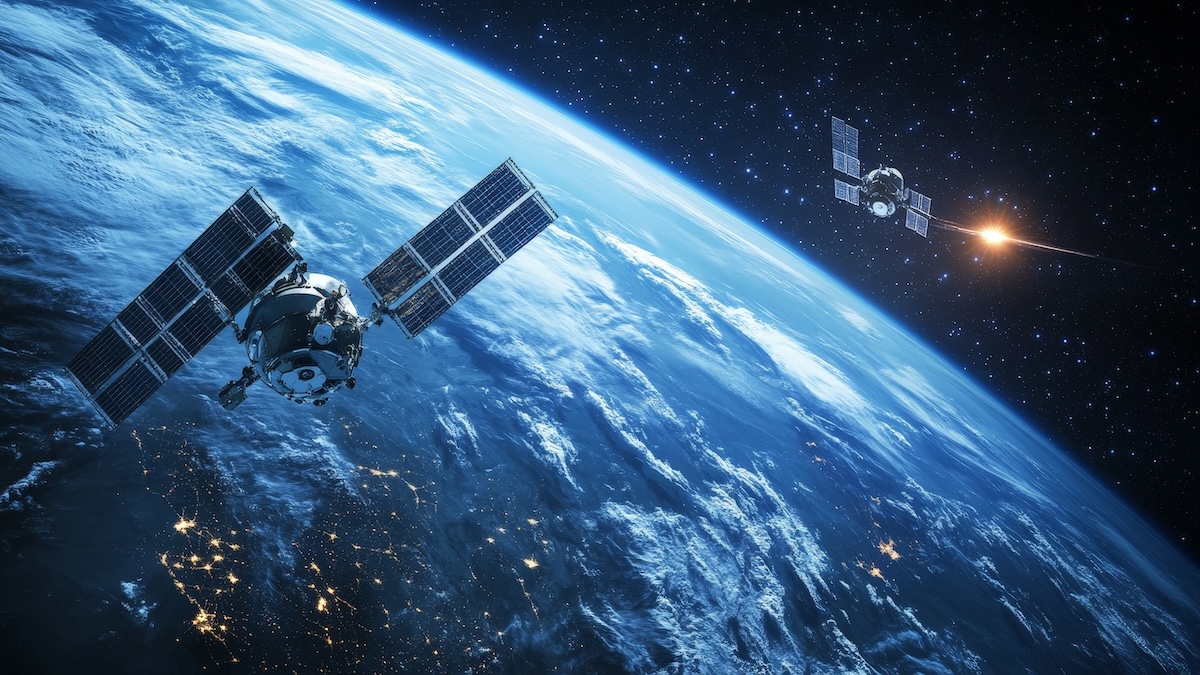
On the day Russia launched its invasion of Ukraine in 2022, it also targeted satellite modems across Europe, disrupting communications significantly. In response to these threats, a new AI-enhanced tool has been developed to bolster defenses against such vulnerabilities, addressing ongoing concerns about Russian cyber aggression and emerging threats from Iran.
Introduction of AI-Powered Cyber Defense
The cybersecurity firm Atalanta has introduced ‘Argo’, a sophisticated product designed to fortify Viasat’s satellite communications system, which was impacted by the 2022 cyberattack. According to industry specialists, this tool represents a crucial advancement for those tasked with protecting vital systems amid evolving cyberwarfare threats.
Atalanta’s innovative approach, termed ‘software understanding’, merges advanced mathematics with artificial intelligence to deliver a pioneering commercial system. This system offers a comprehensive analysis of software and internet-connected systems for vulnerabilities.
Global Implications of Cyber Threats
Recent conflicts in Ukraine and Iran have underscored the potential hazards hackers pose to daily operations. Notably, Iranian cyber actors have increasingly targeted critical infrastructure such as water and wastewater systems, prompting alerts from several governmental bodies.
Atalanta CEO and co-founder Anjana Rajan highlighted to The Associated Press that traditional tools are inadequate for current challenges. She emphasized ‘software understanding’ as essential for constructing systems of significant consequence in the United States.
Future Outlook and Industry Adoption
Viasat’s cyber strategy chief, Nick Saunders, noted that the new technology not only fortifies their network against prospective assaults but also provides mathematical proof of its enhanced resilience. Over the past year, collaboration with Atalanta has fostered a better grasp of system vulnerabilities and resilience.
Moreover, Atalanta’s technology is instrumental in the Genesis Mission, the Department of Energy’s initiative to develop autonomous nuclear reactors. Greg Shannon, chief cybersecurity scientist at Idaho National Laboratory, anticipates that such technology will eventually become a staple in new system development toolkits.
Shannon remarked on DARPA’s substantial investment in this technology over the years, noting that it has paved the way for systems like Argo to become available. DARPA, known for pioneering groundbreaking technologies, has allocated billions to advance formal methods, which are now coming to fruition.
In a related development, Emil Michael, the Pentagon’s chief technology officer, asserted at a DARPA conference that the mathematics underpinning Atalanta’s technology should set the standard for the Department of Defense’s cybersecurity protocols.