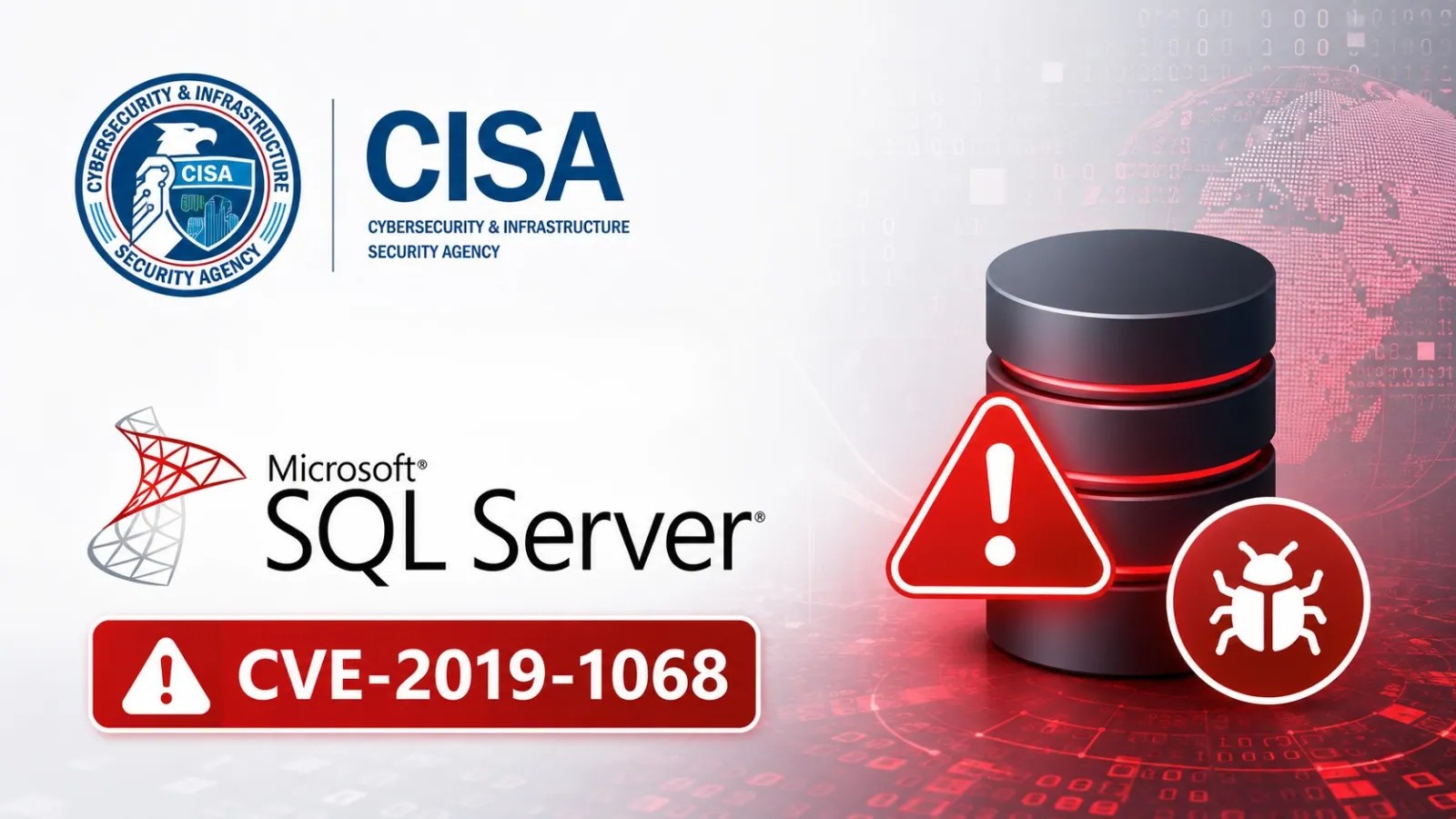
The U.S. Cybersecurity and Infrastructure Security Agency (CISA) has highlighted a critical vulnerability in Microsoft SQL Server, identified as CVE-2019-1068, which is being actively exploited. This remote code execution flaw has been incorporated into CISA’s Known Exploited Vulnerabilities catalog following confirmation of its exploitation in cyber attacks.
Understanding the Vulnerability
This particular flaw in Microsoft SQL Server allows attackers to execute commands with the same permissions as the SQL Server Database Engine service account. Successful exploitation can enable unauthorized control over a compromised database server, with the extent of control contingent on the privileges of the service account.
Systems with high-privilege service accounts are especially at risk, as attackers can potentially extend their reach beyond the database to affect the Windows host system. CISA added this vulnerability to its catalog on August 26, 2026, and has mandated a remediation deadline of August 29, 2026.
Recommended Actions for Organizations
CISA urges organizations to not merely rely on patching as a remedy. Under Binding Operational Directive 26-04, forensic investigation is strongly recommended. Although there is no current indication of this vulnerability being used in ransomware attacks, the risk remains significant due to the critical nature of data stored on SQL Server instances.
Security teams should thoroughly investigate SQL Server environments for any signs of prior exploitation. This involves reviewing various logs and alerts, as well as checking for unauthorized activities and changes. Organizations are advised to follow Microsoft’s mitigation strategies and align their response with CISA’s risk-based patching guidelines.
Mitigation and Security Best Practices
Administrators must identify all SQL Server assets at risk, prioritize systems that are externally accessible or integral to business operations, and apply necessary updates. Where updates are unavailable, discontinuing use of the affected systems is recommended.
Forensic efforts should include analysis of SQL Server logs, Windows event logs, and any anomalies in service-account activities. Monitoring for unauthorized changes or activities can help in early detection of a breach. Implementing least-privilege policies, network segmentation, and ongoing monitoring of administrative actions can mitigate potential damage from exploitation.
CISA’s alert underscores the importance of proactive cybersecurity measures and rapid response to vulnerabilities. Organizations should enhance their security posture by integrating threat intelligence to bolster their defense mechanisms against such exploits.