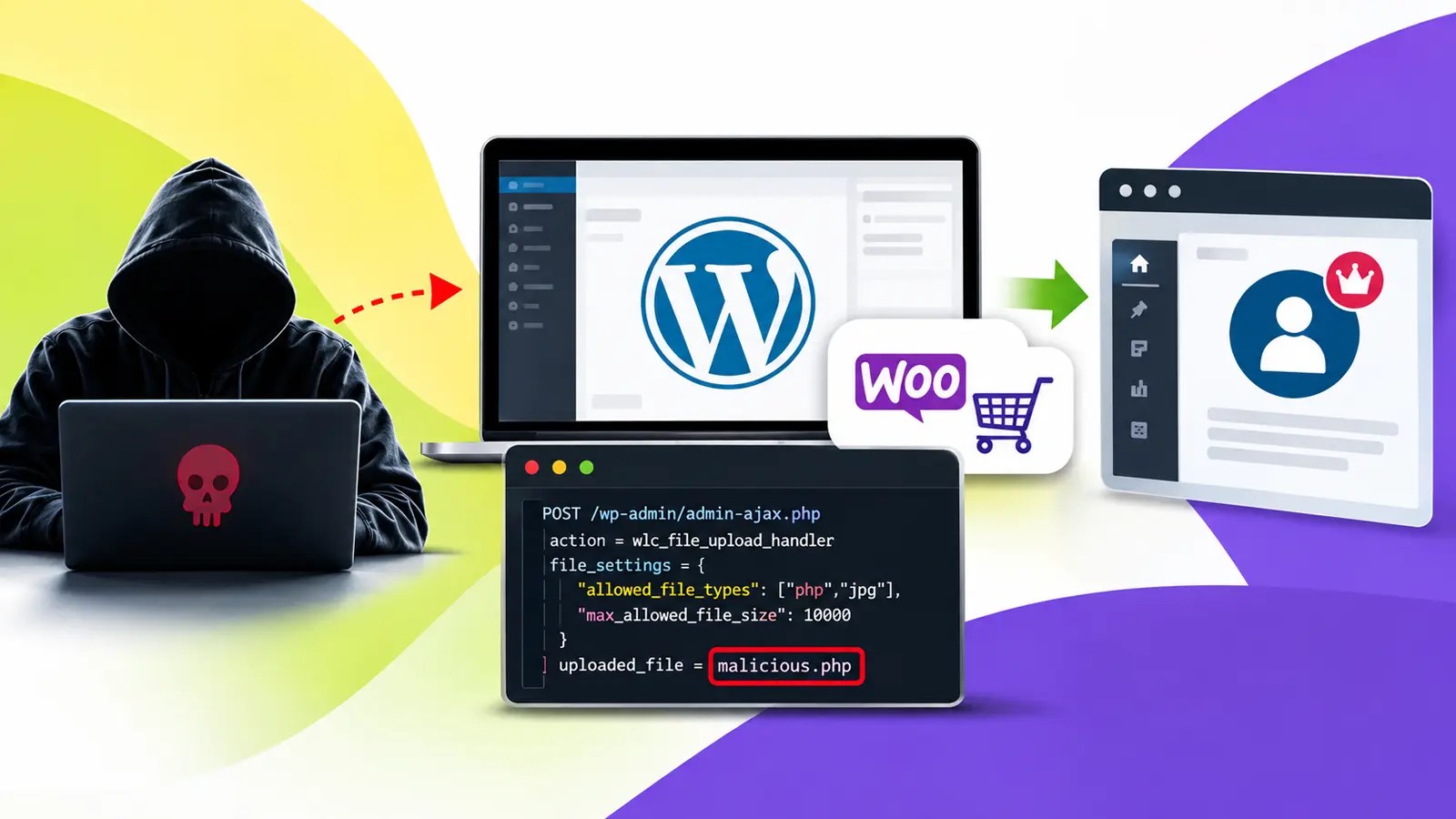
Cybercriminals have identified a significant vulnerability in a WooCommerce plugin, enabling them to gain unauthorized control over WordPress websites. This critical issue, found within the Wholesale Lead Capture extension, allows attackers to bypass login protocols and directly access server functions.
Understanding the Vulnerability
The flaw, designated as CVE-2026-27540, carries a high CVSS severity score of 9.8 and impacts all versions up to 2.0.3.1. This vulnerability allows malicious users to exploit the plugin’s file-upload feature, enabling them to execute malicious code on unprotected websites, potentially compromising them before owners are aware.
Wordfence has observed a significant number of exploit attempts, with over 100,000 cases blocked. These attempts were particularly prevalent during specific periods, notably from June 4 to June 17, and again on July 1 and August 30.
Potential Consequences of Exploitation
Wordfence reports that the compromised plugin is used on approximately 6,000 active sites. Successful breaches could lead to the exposure of sensitive customer data, enable fraudulent transactions, or turn affected sites into platforms for further cyber attacks. The risk underscores the importance of addressing such vulnerabilities promptly.
The loophole is located in the plugin’s file-upload process, which improperly relies on user-supplied information rather than server-secured settings. This allows attackers to upload unauthorized PHP files, granting them remote access to the site.
Mitigation and Future Prevention
To mitigate this threat, users are advised to update the Wholesale Lead Capture plugin to version 2.0.3.2 immediately. Additionally, administrators should conduct thorough reviews of their WordPress installations, ensuring all plugins are up-to-date and monitoring for any signs of unauthorized access.
It’s crucial to inspect server logs for unusual activities and remove any suspicious files. Maintaining verified backups is essential to restore systems without reintroducing vulnerabilities. Developers should enforce strict file-type validations and avoid relying on client-side settings.
Organizations should also assess checkout pages and scheduled tasks for anomalies and ensure logs are preserved for potential investigations. Fast patching and regular security evaluations are vital to safeguarding against known vulnerabilities.