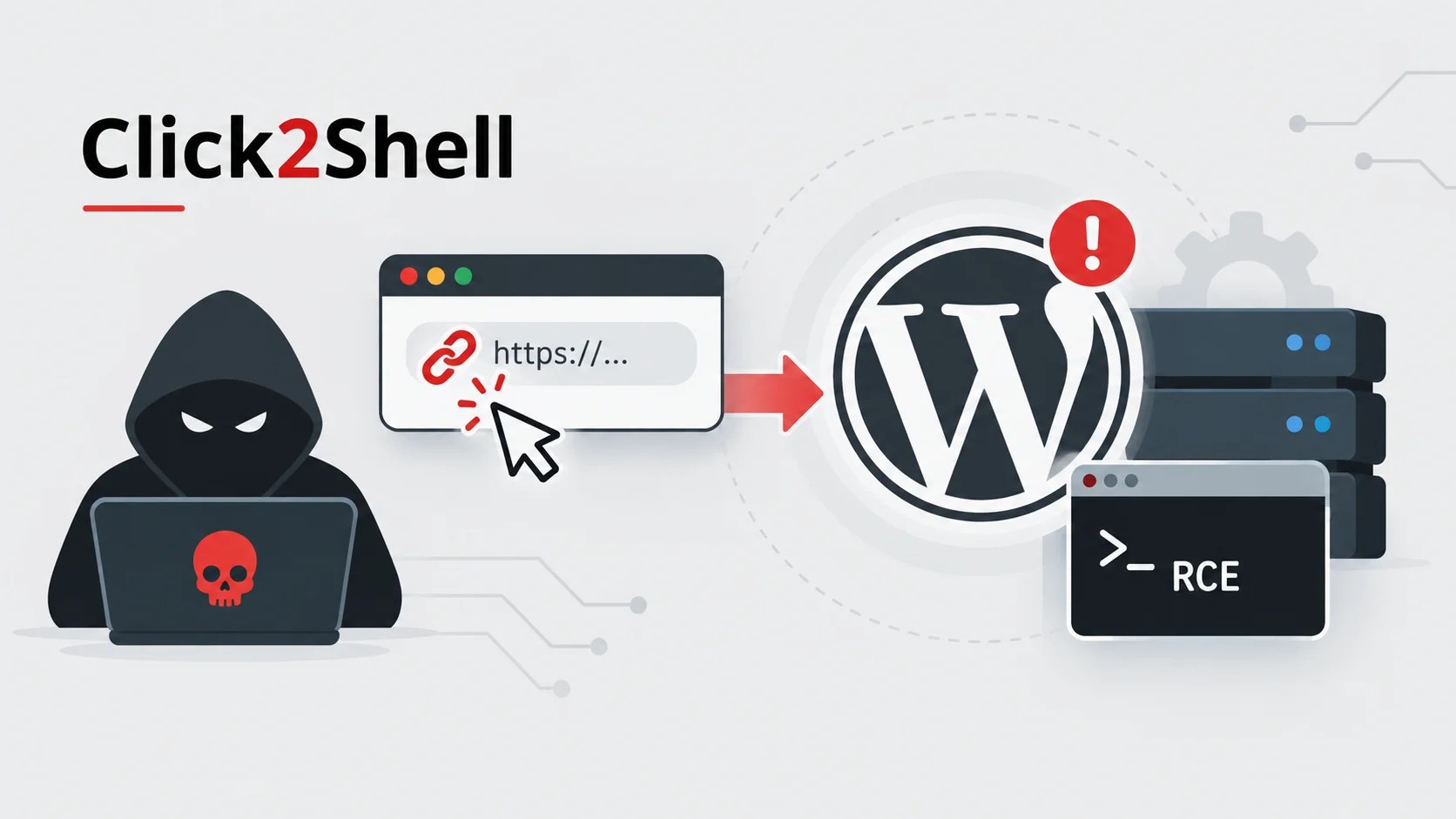
WordPress administrators are being advised to update immediately following the revelation of a serious security flaw known as Click2Shell. This vulnerability allows attackers to execute remote code execution (RCE) through a single malicious link on susceptible websites.
Understanding the Click2Shell Vulnerability
The issue originates from a weakness in the WordPress Core theme-preview function. This flaw permits the silent installation of an attacker-chosen theme from the official directory. When paired with insecure pre-activation code in certain themes, it leads to server compromise.
WordPress responded to this threat by addressing the Core flaw in version 7.1.1, released on September 17, 2026. This update included numerous security improvements, such as 11 security fixes, 17 Core bug fixes, and 19 Block Editor updates.
Mechanism of the Attack
The vulnerability is exploited through specially crafted URLs that automatically install and preview inactive themes. This process requires an administrator to be logged in and visit the malicious link, thus enabling the installation.
The attack leverages the administrator’s authenticated session to execute actions via trusted WordPress JavaScript. This is made possible because of inconsistencies in how theme values are processed. The Themes API standardizes inputs, but the administrator’s browser retains the original input, leading to potential exploitation.
Consequences and Mitigations
Although the initial behavior does not directly allow arbitrary theme installation or immediate RCE, it sets the stage for further exploitation. Successful attacks could lead to the compromise of wp-config.php, database credentials, and sensitive data within WordPress installations.
WordPress has since patched the vulnerability by implementing changeset 63664, which ensures that only legitimate theme cards are matched, and potential exploit characters are neutralized. Despite the fix, administrators are urged to update to the latest version, inspect recent changes, and audit their installations for any anomalies.
The vulnerability was reported by researchers on August 22, with a comprehensive disclosure on September 1. WordPress’s corrective measures were implemented by September 17, with a public technical analysis released shortly after.
Call to Action for WordPress Users
Site owners are strongly encouraged to upgrade to WordPress 7.1.1 or apply the necessary security updates for their version. It is crucial to verify automatic updates and scrutinize any new themes or plugins for irregularities.
Administrators should remain vigilant against suspicious activity, particularly around theme installations and changes in PHP files. Proactive measures can significantly mitigate the risk of exploitation and safeguard sensitive data.