Skip to content
  • Home
  • Cyber Map
  • About Us – Contact
  • Disclaimer
  • Terms and Rules
  • Privacy Policy
Cyber Web Spider Blog – News

Cyber Web Spider Blog – News

Globe Threat Map provides a real-time, interactive 3D visualization of global cyber threats. Monitor DDoS attacks, malware, and hacking attempts with geo-located arcs on a rotating globe. Stay informed with live logs and archive stats.

  • Home
  • Cyber Map
  • Cyber Security News
  • Security Week News
  • The Hacker News
  • How To?
  • Toggle search form
Critical WordPress Flaw Allows Remote Code Execution

Critical WordPress Flaw Allows Remote Code Execution

Posted on September 19, 2026 By CWS

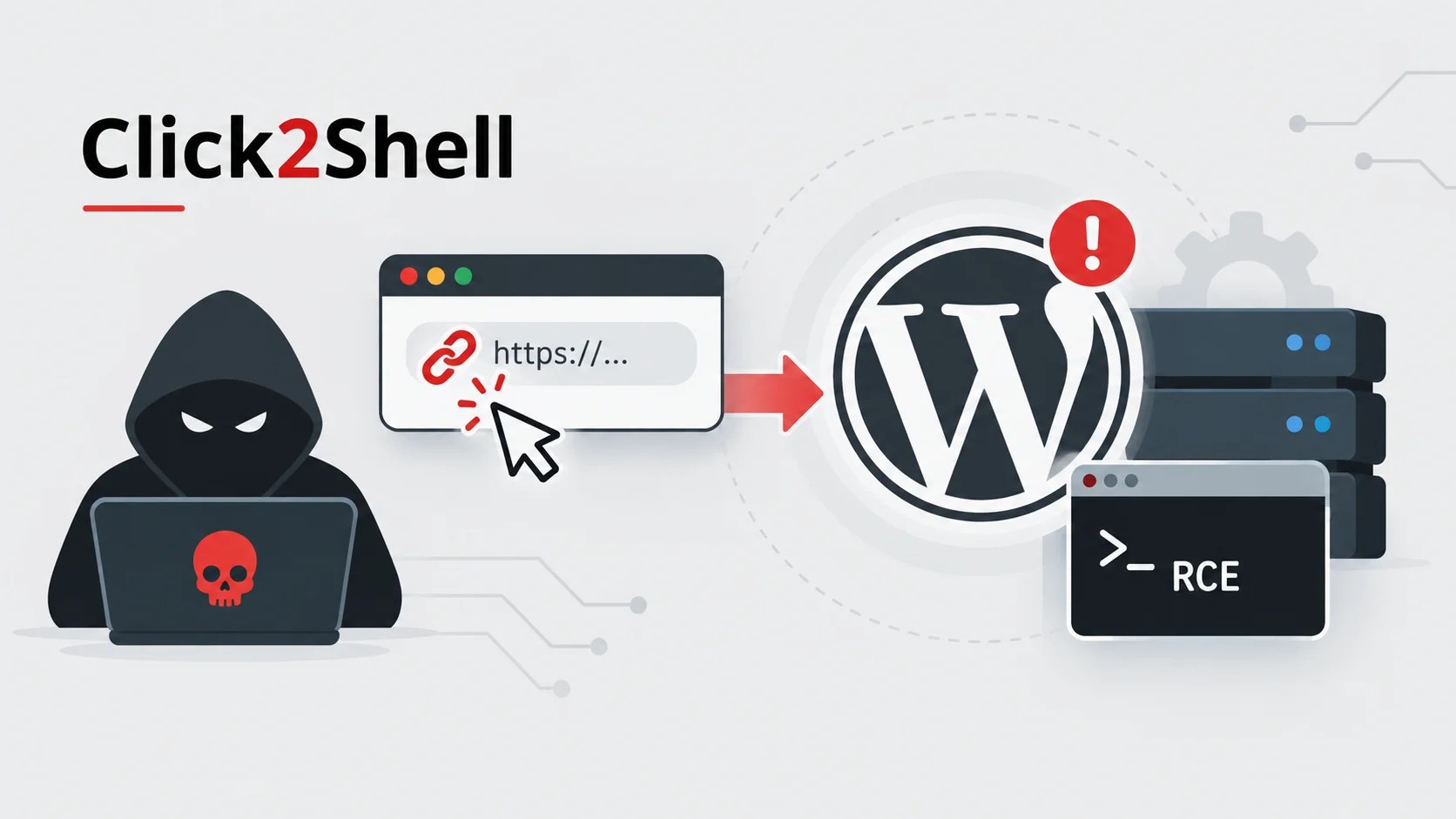
WordPress administrators are being advised to update immediately following the revelation of a serious security flaw known as Click2Shell. This vulnerability allows attackers to execute remote code execution (RCE) through a single malicious link on susceptible websites.

Understanding the Click2Shell Vulnerability

The issue originates from a weakness in the WordPress Core theme-preview function. This flaw permits the silent installation of an attacker-chosen theme from the official directory. When paired with insecure pre-activation code in certain themes, it leads to server compromise.

WordPress responded to this threat by addressing the Core flaw in version 7.1.1, released on September 17, 2026. This update included numerous security improvements, such as 11 security fixes, 17 Core bug fixes, and 19 Block Editor updates.

Mechanism of the Attack

The vulnerability is exploited through specially crafted URLs that automatically install and preview inactive themes. This process requires an administrator to be logged in and visit the malicious link, thus enabling the installation.

The attack leverages the administrator’s authenticated session to execute actions via trusted WordPress JavaScript. This is made possible because of inconsistencies in how theme values are processed. The Themes API standardizes inputs, but the administrator’s browser retains the original input, leading to potential exploitation.

Consequences and Mitigations

Although the initial behavior does not directly allow arbitrary theme installation or immediate RCE, it sets the stage for further exploitation. Successful attacks could lead to the compromise of wp-config.php, database credentials, and sensitive data within WordPress installations.

WordPress has since patched the vulnerability by implementing changeset 63664, which ensures that only legitimate theme cards are matched, and potential exploit characters are neutralized. Despite the fix, administrators are urged to update to the latest version, inspect recent changes, and audit their installations for any anomalies.

The vulnerability was reported by researchers on August 22, with a comprehensive disclosure on September 1. WordPress’s corrective measures were implemented by September 17, with a public technical analysis released shortly after.

Call to Action for WordPress Users

Site owners are strongly encouraged to upgrade to WordPress 7.1.1 or apply the necessary security updates for their version. It is crucial to verify automatic updates and scrutinize any new themes or plugins for irregularities.

Administrators should remain vigilant against suspicious activity, particularly around theme installations and changes in PHP files. Proactive measures can significantly mitigate the risk of exploitation and safeguard sensitive data.


Cyber Security News Tags:Administrator, Cybersecurity, Plugin, RCE, Security, Theme, Update, Vulnerability, web development, WordPress

Post navigation

Previous Post: BragJack Exploit Threatens AI Agents on Major Browsers
Next Post: CISA Identifies Critical Linux Kernel Vulnerabilities

Related Posts

Top 10 Best API Security Testing Tools in 2025 Top 10 Best API Security Testing Tools in 2025 Cyber Security News
Gootloader with Low Detection Rate Bypasses Most Security Tools Gootloader with Low Detection Rate Bypasses Most Security Tools Cyber Security News
Critical Fixes in Firefox 152 for Remote Code Threats Critical Fixes in Firefox 152 for Remote Code Threats Cyber Security News
Microsoft Enhances Defender Security for Windows Systems Microsoft Enhances Defender Security for Windows Systems Cyber Security News
Google Warns of Chrome 0-Day Vulnerability Actively Exploited in the wild Google Warns of Chrome 0-Day Vulnerability Actively Exploited in the wild Cyber Security News
New Wave of Steganography Attacks: Hackers Hiding XWorm in PNGs  New Wave of Steganography Attacks: Hackers Hiding XWorm in PNGs  Cyber Security News

Categories

  • Cyber Security News
  • How To?
  • Security Week News
  • The Hacker News

Recent Posts

  • Orkes Conductor Platform Vulnerability Exploited in the Wild
  • CrowdSec’s GitHub Repositories Exposed in TanStack Attack
  • CISA Identifies Critical Linux Kernel Vulnerabilities
  • Critical WordPress Flaw Allows Remote Code Execution
  • BragJack Exploit Threatens AI Agents on Major Browsers

Pages

  • About Us – Contact
  • Disclaimer
  • Privacy Policy
  • Terms and Rules

Archives

  • September 2026
  • August 2026
  • July 2026
  • June 2026
  • May 2026
  • April 2026
  • March 2026
  • February 2026
  • January 2026
  • December 2025
  • November 2025
  • October 2025
  • September 2025
  • August 2025
  • July 2025
  • June 2025
  • May 2025

Recent Posts

  • Orkes Conductor Platform Vulnerability Exploited in the Wild
  • CrowdSec’s GitHub Repositories Exposed in TanStack Attack
  • CISA Identifies Critical Linux Kernel Vulnerabilities
  • Critical WordPress Flaw Allows Remote Code Execution
  • BragJack Exploit Threatens AI Agents on Major Browsers

Pages

  • About Us – Contact
  • Disclaimer
  • Privacy Policy
  • Terms and Rules

Categories

  • Cyber Security News
  • How To?
  • Security Week News
  • The Hacker News

Copyright © 2026 Cyber Web Spider Blog – News.

Powered by PressBook Masonry Dark