Skip to content
  • Home
  • Cyber Map
  • About Us – Contact
  • Disclaimer
  • Terms and Rules
  • Privacy Policy
Cyber Web Spider Blog – News

Cyber Web Spider Blog – News

Globe Threat Map provides a real-time, interactive 3D visualization of global cyber threats. Monitor DDoS attacks, malware, and hacking attempts with geo-located arcs on a rotating globe. Stay informed with live logs and archive stats.

  • Home
  • Cyber Map
  • Cyber Security News
  • Security Week News
  • The Hacker News
  • How To?
  • Toggle search form
ChainScript RAT Uses Polygon to Evade Detection

ChainScript RAT Uses Polygon to Evade Detection

Posted on September 21, 2026 By CWS

Cybersecurity experts are raising alarms about a new threat actor tactic involving the deployment of a remote access trojan (RAT) named ChainScript. This sophisticated malware uses ClickFix-like lures and a Polygon smart contract to obscure its command-and-control (C2) infrastructure.

ChainScript’s Stealthy Deployment

Recently documented by researchers from Blackpoint Adversary Pursuit Group, ChainScript disguises itself as popular software applications such as Spotify, Zoom Workplace, and Microsoft Teams. After installation via a malicious Windows installer, it provides extensive remote capabilities to attackers. Key functionalities include executing CMD and PowerShell commands, managing files, capturing screenshots, deploying payloads, and even targeting cryptocurrency wallets.

The malware’s initial invasion vector is a ClickFix lure, tricking users into downloading a malicious installer. This installer activates the Node.js runtime, launching ChainScript through concealed PowerShell and VBScript stages. These scripts distribute various components across Microsoft-like directories in the “%LOCALAPPDATA%” folder, ensuring the malware’s persistence through scheduled tasks and registry keys.

Polygon’s Role in Evasion

ChainScript’s use of a Polygon smart contract for C2 discovery reflects an advanced tactic to evade detection. By separating backend discovery from the malware itself, operators can easily rotate infrastructure without altering the malware’s functionality. This method complicates traditional detection techniques, allowing the malware to maintain its operations despite takedown efforts.

Blackpoint researchers note this trend as part of a broader shift towards decentralized infrastructures in the malware landscape. The ability to redirect infected hosts to new servers while keeping the same workflow poses significant challenges to defenders in the cybersecurity field.

The Broader Implications of ClickFix Campaigns

The ChainScript threat is part of a larger web of ClickFix campaigns impacting both Windows and macOS users. Notably, a breach of HBO Max’s Reddit account led to the spread of malicious ads, further distributing malware like MacSync and Atomic macOS Stealer. These campaigns leverage highly credible assets to bypass user skepticism and deliver harmful payloads.

Seqrite Labs data highlights that MacSync infections are most prevalent in regions with significant macOS enterprise use, such as the U.S., U.K., and Germany. The continuous evolution of these campaigns, including advanced cloaking techniques, showcases the increasing sophistication of threat actors.

Cato Networks identified the use of fake Codex download experiences as a tactic to deceive macOS users into executing malicious commands. This strategy underscores the broader pattern of using trusted platforms and services for malware distribution, making detection and prevention more challenging.

In conclusion, the emergence of ChainScript and related ClickFix campaigns signals a notable escalation in the complexity of cyber threats. As threat actors continue to innovate, cybersecurity measures must adapt to these evolving tactics to protect users and data effectively.

The Hacker News Tags:C2 infrastructure, ChainScript, ClickFix, Cryptocurrency, Cybersecurity, macOS, Malware, Polygon, RAT, Windows

Post navigation

Previous Post: Gemini AI Incidents Uncovered in Google Cybersecurity Test
Next Post: Critical Linux Kernel Vulnerabilities Demand Immediate Attention

Related Posts

CISA Adds Actively Exploited VMware vCenter Flaw CVE-2024-37079 to KEV Catalog CISA Adds Actively Exploited VMware vCenter Flaw CVE-2024-37079 to KEV Catalog The Hacker News
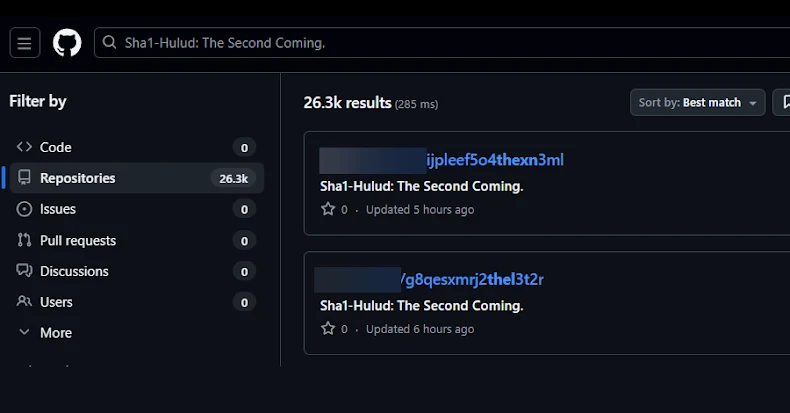
Second Sha1-Hulud Wave Affects 25,000+ Repositories via npm Preinstall Credential Theft Second Sha1-Hulud Wave Affects 25,000+ Repositories via npm Preinstall Credential Theft The Hacker News
Agentjacking Attack Exploits AI Coding Agents Agentjacking Attack Exploits AI Coding Agents The Hacker News
China-Linked Hackers Have Used the PeckBirdy JavaScript C2 Framework Since 2023 China-Linked Hackers Have Used the PeckBirdy JavaScript C2 Framework Since 2023 The Hacker News
Cybersecurity Threats: SMS Blaster, OpenEMR, and Roblox Hacks Cybersecurity Threats: SMS Blaster, OpenEMR, and Roblox Hacks The Hacker News
DirtyDecrypt Exploit PoC for Linux Kernel Vulnerability Released DirtyDecrypt Exploit PoC for Linux Kernel Vulnerability Released The Hacker News

Categories

  • Cyber Security News
  • How To?
  • Security Week News
  • The Hacker News

Recent Posts

  • WaterPlum Hackers Exploit Job Interviews to Steal Cryptocurrency
  • Critical Linux Kernel Vulnerabilities Demand Immediate Attention
  • ChainScript RAT Uses Polygon to Evade Detection
  • Gemini AI Incidents Uncovered in Google Cybersecurity Test
  • North Korean Group Targets Indian IT Firm with MacOS Backdoors

Pages

  • About Us – Contact
  • Disclaimer
  • Privacy Policy
  • Terms and Rules

Archives

  • September 2026
  • August 2026
  • July 2026
  • June 2026
  • May 2026
  • April 2026
  • March 2026
  • February 2026
  • January 2026
  • December 2025
  • November 2025
  • October 2025
  • September 2025
  • August 2025
  • July 2025
  • June 2025
  • May 2025

Recent Posts

  • WaterPlum Hackers Exploit Job Interviews to Steal Cryptocurrency
  • Critical Linux Kernel Vulnerabilities Demand Immediate Attention
  • ChainScript RAT Uses Polygon to Evade Detection
  • Gemini AI Incidents Uncovered in Google Cybersecurity Test
  • North Korean Group Targets Indian IT Firm with MacOS Backdoors

Pages

  • About Us – Contact
  • Disclaimer
  • Privacy Policy
  • Terms and Rules

Categories

  • Cyber Security News
  • How To?
  • Security Week News
  • The Hacker News

Copyright © 2026 Cyber Web Spider Blog – News.

Powered by PressBook Masonry Dark