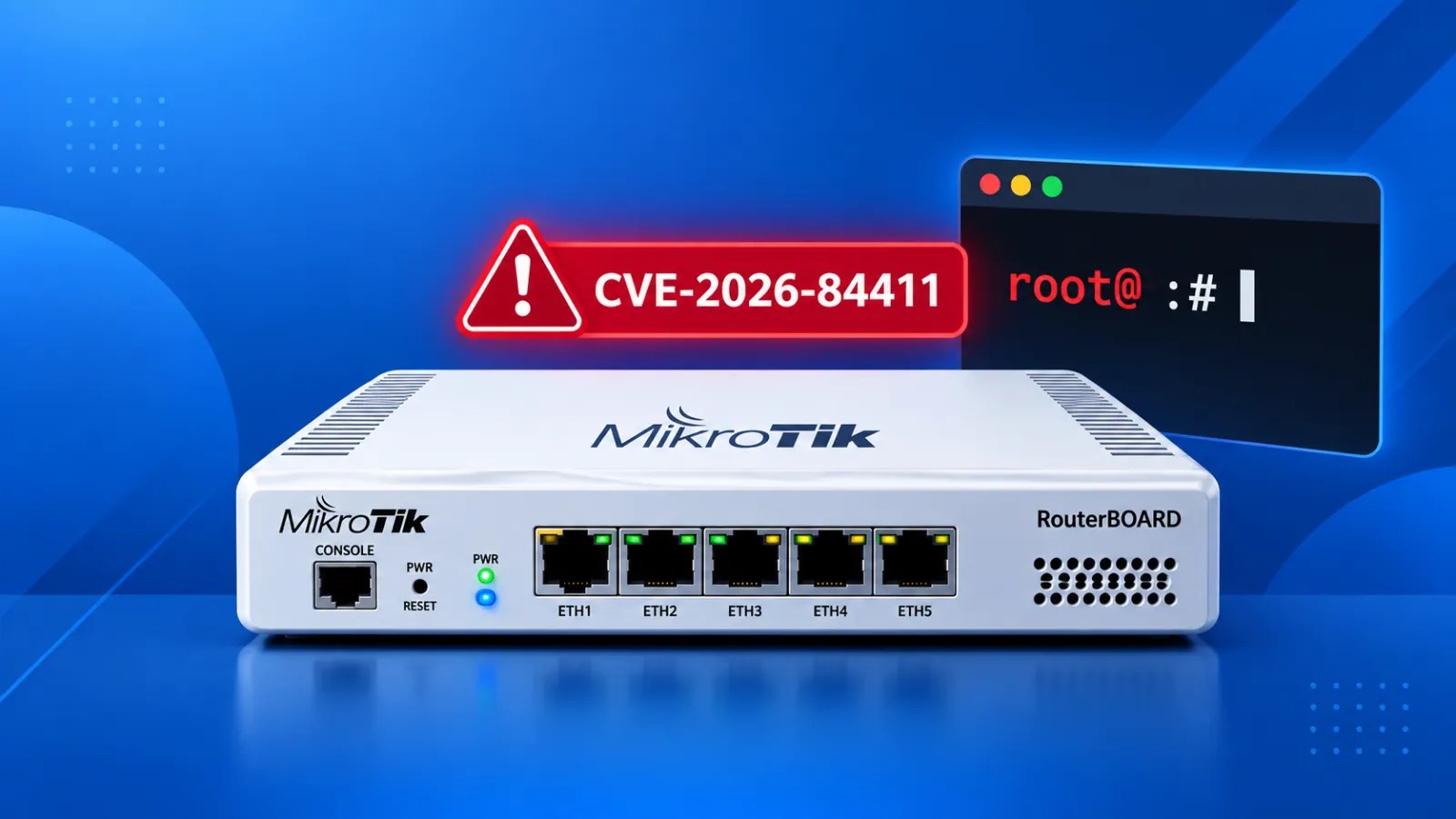
A significant security flaw in MikroTik RouterOS has been identified, potentially allowing unauthorized remote users to execute arbitrary commands with root privileges or cause a denial-of-service. This vulnerability, assigned the identifier CVE-2026-84411, affects versions of RouterOS before 7.24 and carries a critical CVSS v3 severity score of 9.8. The U.S. Cybersecurity and Infrastructure Security Agency (CISA) issued an advisory, ICSA-26-272-06, on September 29, 2026, to highlight this issue.
Understanding the Vulnerability
CVE-2026-84411 is categorized as an integer underflow, which is a type of integer wraparound problem. This occurs when software calculations result in a value smaller than the minimum supported by the data type. Instead of handling this error correctly, the application may instead treat it as a large number, leading to potential exploits. When attackers send crafted requests to such a network-facing product as RouterOS, they can activate the vulnerable code.
Potential Implications of Exploitation
Successful exploitation of this flaw could result in the execution of code remotely, granting an attacker root access to the compromised router. This level of access allows modification of device settings, control over traffic, and changes to routing and authentication configurations. Affected routers could then be used to intercept data, install malware, alter DNS settings, and enable persistent access, posing a risk to broader enterprise networks.
In industrial settings, where these routers connect operational technology networks or remote sites, the consequences could be more severe. CISA has also warned about the potential for exploitation leading to denial-of-service conditions, disrupting services and affecting connected systems.
Mitigation and Recommendations
To mitigate the risks associated with this vulnerability, organizations are advised to upgrade their MikroTik RouterOS to version 7.24 or later. It is essential to conduct a thorough inventory of all MikroTik devices, including those at remote sites, managed by third parties, or in legacy networks. Management interfaces should be secured and isolated from the public internet.
CISA recommends minimizing exposure of control system devices and segregating them from business networks. When remote access is necessary, it should be secured with updated VPN services and robust authentication measures. Network logs should be monitored for unusual activities, and credentials should be rotated after updates. While there are no current reports of exploitation specifically targeting CVE-2026-84411, the potential for root-level access and widespread usage of RouterOS necessitates immediate action.