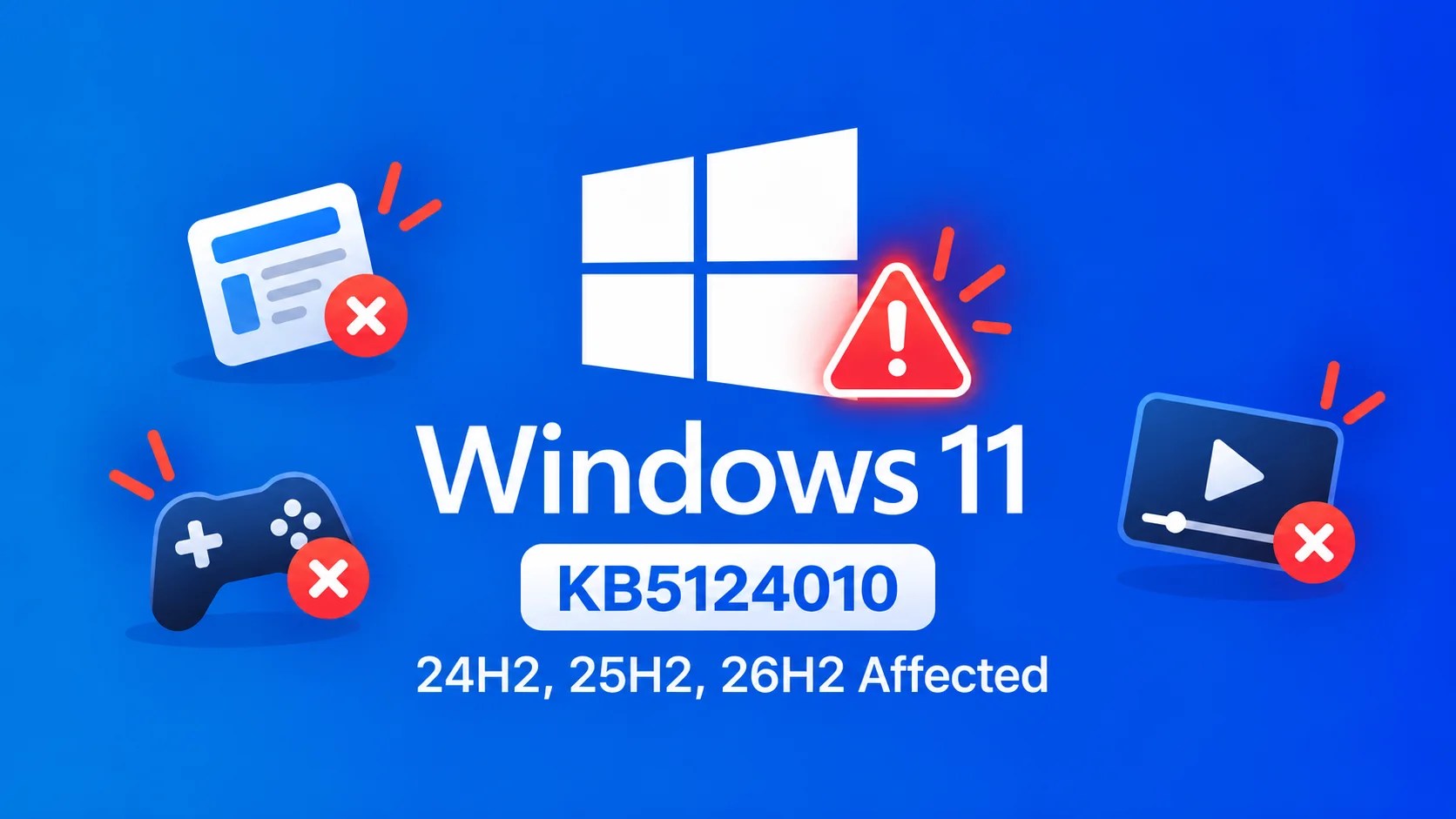
Microsoft has acknowledged a significant issue in Windows 11 that involves a flaw in audio decoding, leading to unexpected shutdowns of various productivity applications, games, and media players. This problem arises following the installation of the KB5124010 update, which was deployed on September 22, 2026, or subsequent updates, specifically affecting software reliant on Windows for decoding AC-3 (Dolby Digital) audio.
Impact on Windows 11 Versions
This bug impacts Windows 11 versions 26H2, 25H2, and 24H2, with no reported issues on Windows Server platforms. Microsoft notes that while numerous applications could experience crashes, the likelihood is higher for older software that depends on the operating system’s native audio decoding capabilities.
Microsoft first reported the issue on October 2 and has since confirmed it, with a resolution expected in a future update. The initial advisory pinpointed OS build 26300.9550 as the source for Windows 11 26H2, while builds 26200.9550 and 26100.9550 are linked to versions 25H2 and 24H2, respectively. According to Microsoft, this is a reliability issue stemming from the update, rather than a security vulnerability.
Understanding the Crash Dynamics
The crash symptoms vary based on application usage. Some programs may not open at all, while others might start but terminate unexpectedly. In instances where an application appears operational, issues may arise when features that require audio decoding, such as playing music, are activated. This behavior highlights the complexity of diagnosing crashes, as a program may seem functional until specific audio processes are involved.
Microsoft emphasizes that the problem is specifically linked to how applications handle AC-3 audio, rather than merely playing sound. The issue predominantly affects legacy applications that rely on Windows’ built-in audio decoding, explaining why diverse software categories might experience similar issues.
Current Status and Future Outlook
Microsoft has yet to offer a specific workaround or release date for a fix. The company assures that a solution will be provided in a forthcoming Windows update. Currently, there is no detailed list of affected applications, error codes, or technical breakdowns of the underlying issue, as Microsoft continues to work on resolving the fault.
This situation is distinct from previous USB audio failures reported in Cyber Security News, which involved sound devices generating no audio or displaying Code 10 errors. The current issue involves software crashes linked to audio processing, not hardware startup failures.
As users await a fix, it’s crucial for those experiencing these crashes to stay informed about updates from Microsoft, ensuring their systems remain as stable as possible until a permanent solution is implemented.