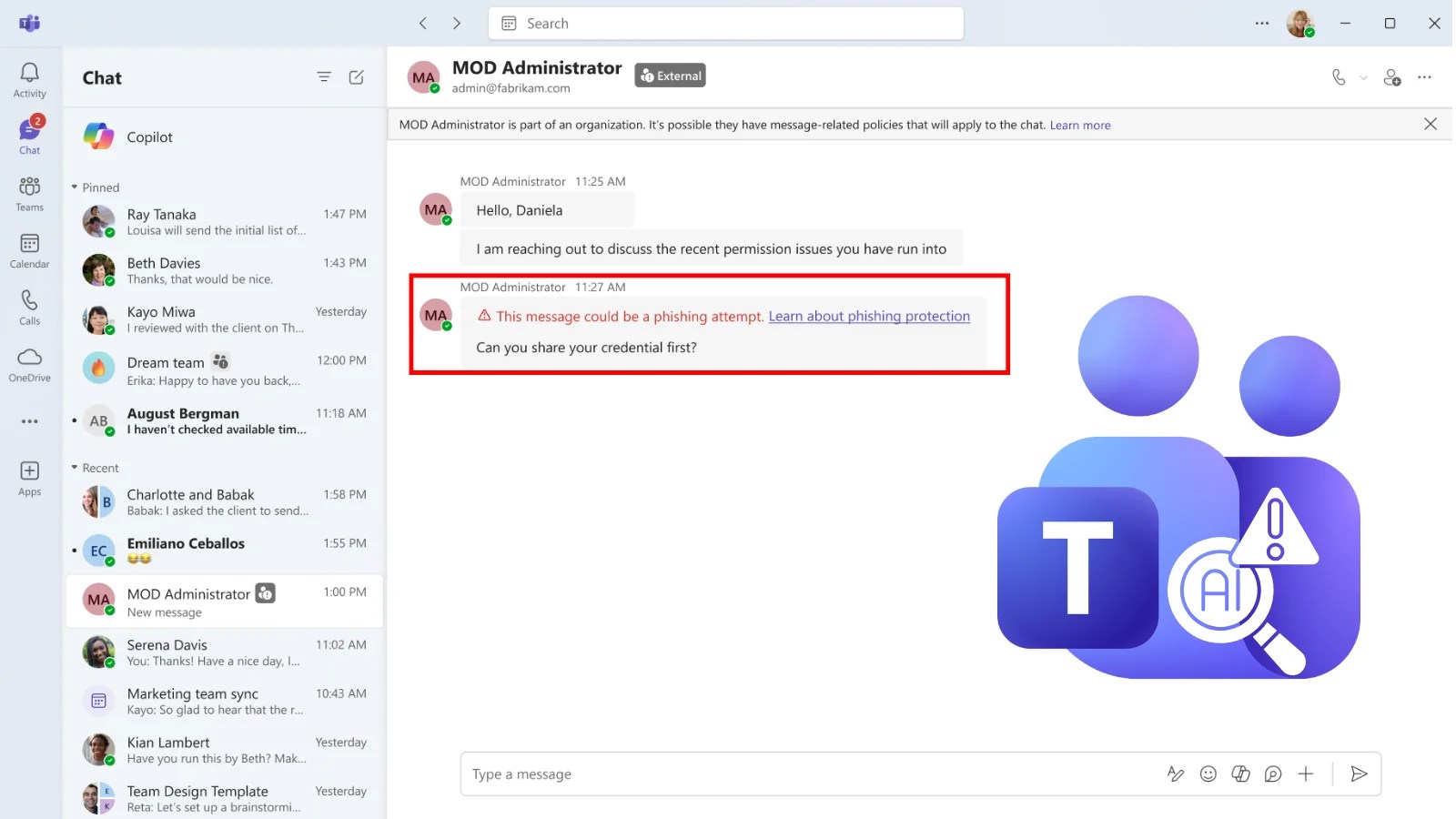
Microsoft is set to enhance the security features of its Teams platform by integrating AI-driven phishing detection capabilities. This new feature aims to identify phishing attempts by analyzing the context of conversations, particularly focusing on initial interactions with external contacts. The innovation is designed to detect scams that might not include harmful links or attachments, making it harder for attackers to impersonate legitimate support personnel and extract confidential information from employees.
Implementation Schedule and Availability
Details of this development were shared in a Message Center notice, MC1519866, published on October 21, 2026. The targeted release is scheduled for early November, with a worldwide general rollout anticipated to start in early December and conclude by mid-month. This timeline indicates that Microsoft is prioritizing a swift deployment to enhance user security on a global scale.
Using Conversation Context for Enhanced Security
Traditional phishing detection often relies on identifying suspicious links or malicious files. However, social engineering attacks can be more subtle, using conversation to build trust and manipulate users into revealing sensitive details. The new AI capability will scrutinize the context of chats to flag potential phishing attempts. This analysis will encompass individual and group conversations with new external contacts across various platforms, including mobile, desktop, and web applications.
An example shared by Microsoft illustrates how an external account might pose as an IT administrator, requesting credentials under the guise of solving permission issues. In such cases, Teams will alert users to the potential phishing threat, highlighting how understanding conversation context is crucial even when no direct threat is visible.
Guidance for Organizations and Users
Organizations are encouraged to familiarize themselves with the new feature, although no additional administrator configuration is needed. Microsoft advises reviewing external contact guidance and urging users to report suspicious interactions. Employees should verify the identity of external contacts through reliable channels before responding to any requests for sensitive information.
While the AI system will initially run in the background during quality checks, visible alerts will eventually notify users of potential threats. It is crucial for staff to remain vigilant, verifying unexpected support requests independently and reporting any suspicious activity.
This update enhances security layers within Microsoft Teams, but users must continue to practice caution, especially when dealing with new external contacts. Staying informed and proactive is key to maintaining security in digital communications.