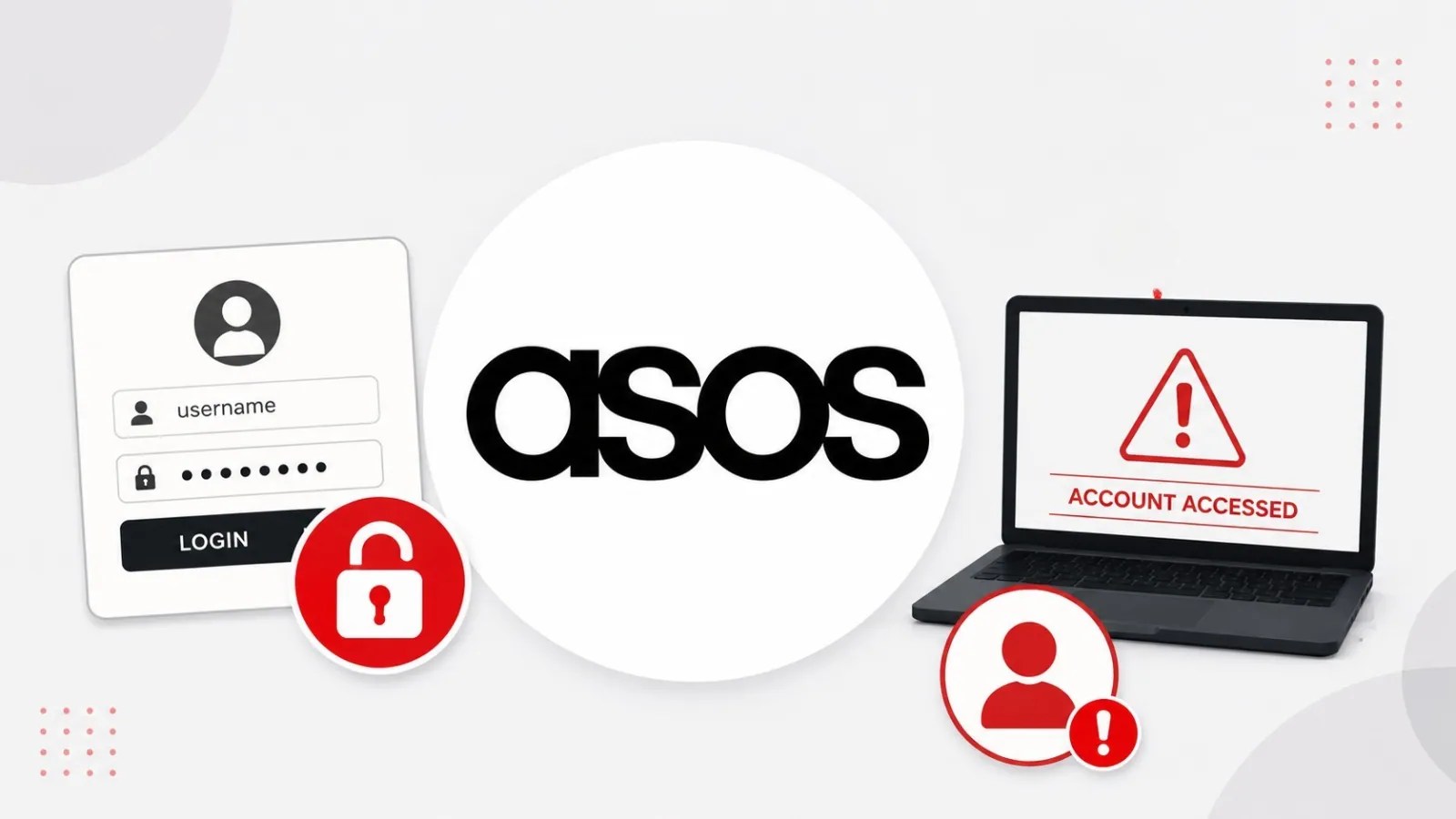
ASOS US Sales LLC has disclosed a security incident involving unauthorized access to customer accounts. The breach was identified on July 28 and confirmed the following day, with the intrusion traced back to compromised credentials acquired externally.
Investigation and Breach Details
According to an August 21 notification, ASOS detected suspicious activities linked to customer accounts and promptly initiated an investigation. The inquiry revealed that an unauthorized entity gained access by utilizing externally sourced credentials, suggesting a credential-stuffing attack rather than a compromise of ASOS’s own security infrastructure.
Credential stuffing involves hackers using leaked username-password combinations across multiple sites, banking on the likelihood of password reuse by users. This incident underscores the vulnerabilities associated with such practices.
Impacted Customer Information
ASOS noted that potentially exposed data includes names, email addresses, delivery and billing addresses, phone numbers, birth dates, and linked social media account details. Crucially, social media login credentials were not part of the breach. Additionally, partial payment information such as cardholder names, last four digits of cards, and expiration dates might have been accessed, though full card details and CVV codes remained secure.
To mitigate the impact, ASOS restricted access to affected accounts on July 29 and mandated password changes. Customers were informed via email on July 30, advising them to update their passwords to regain access.
Security Measures and Recommendations
ASOS’s security measures successfully blocked or canceled suspicious transactions, with no further unauthorized activities detected post-containment. This incident highlights the persistent risk of password reuse, even in the absence of direct data breaches.
ASOS recommends affected users to reset their passwords and refrain from reusing them across different platforms. Users should especially update passwords for email, banking, payment, and social media services. Enabling multi-factor authentication (MFA) is also advised to enhance account security.
To safeguard against potential identity misuse, ASOS suggests monitoring account activities and obtaining free annual credit reports from Equifax, Experian, and TransUnion. Customers may also consider fraud alerts or credit freezes if suspicious activity is detected.
In conclusion, while ASOS managed to contain the breach swiftly, the incident serves as a reminder of the importance of robust password practices and additional security measures like MFA to protect personal information.