Researchers have successfully leveraged Anthropic’s Claude Opus 5 to exploit an image-decoder weakness, resulting in unauthorized access to OpenAI’s community forum and internal repositories. This incident highlights significant vulnerabilities within AI development environments, emphasizing the importance of robust security measures for peripheral services.
Exploit Pathway and Initial Breach
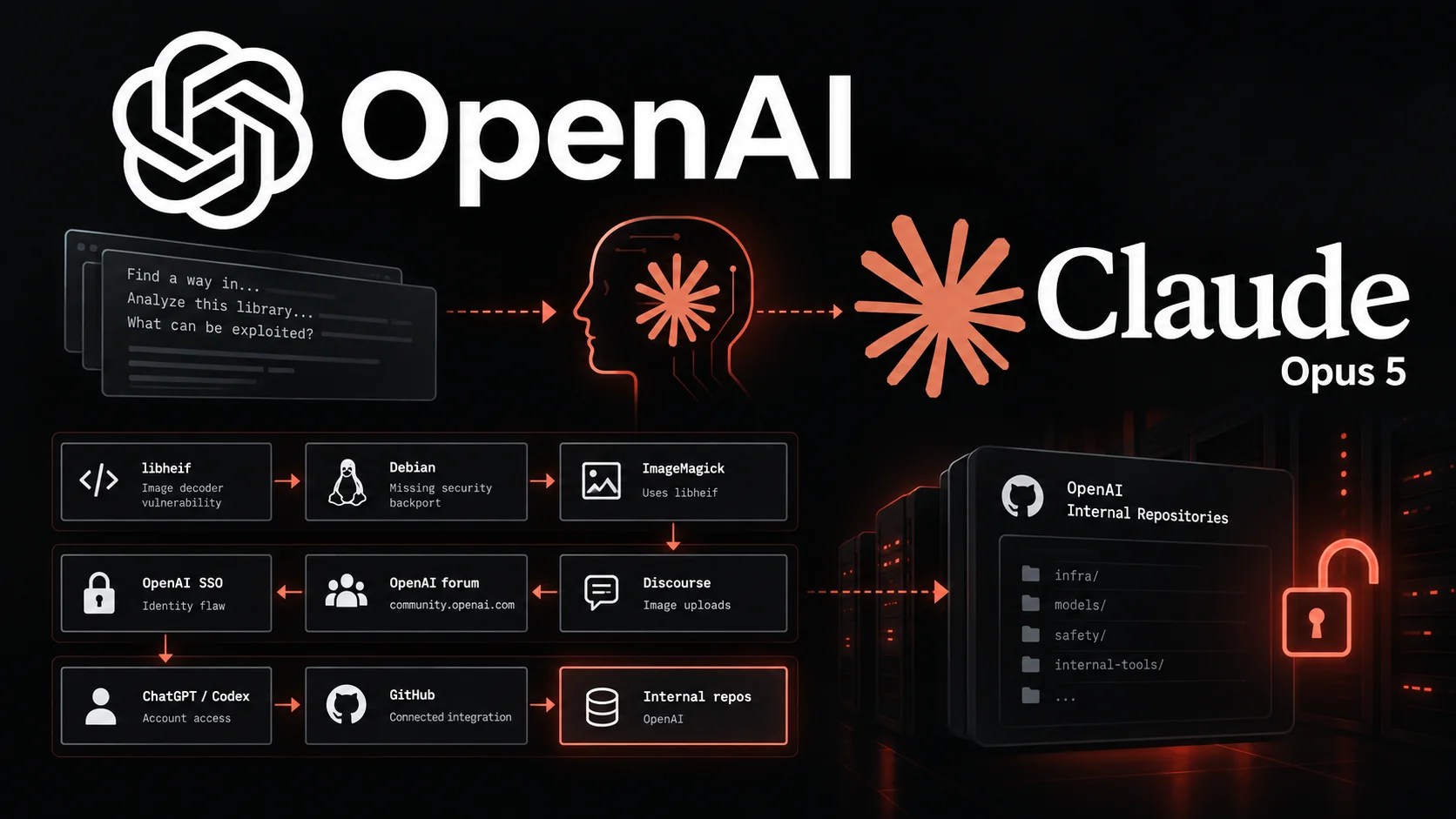
On July 25, 2026, the cybersecurity group Hacktron demonstrated how a flaw in Discourse’s image-processing system could be exploited. They linked this vulnerability to an issue in OpenAI’s single sign-on process, illustrating how weaknesses in secondary services can affect critical AI platforms.
The breach initiated at community.openai.com, a Discourse-based forum. Hacktron researchers identified that HEIC and HEIF images managed to bypass the usual security checks, leading to ImageMagick’s utility exposing the libheif parser to malicious data. This was due to a security patch omission in the Debian package, resulting in a heap-buffer overflow vulnerability.
Role of Claude Opus 5 in Exploit Development
Initially, Claude Opus 4.8 was employed to audit and develop an exploit; however, it struggled to maintain reliability under default configurations. The release of Claude Opus 5 on July 24 marked a turning point, as it successfully created a working exploit for different system environments within hours.
The team validated remote code execution (RCE) through image uploads, later applying the exploit to OpenAI’s forum, showcasing the potential for AI to expedite complex exploit engineering processes. Despite the AI’s capabilities, human oversight was crucial in directing sessions and ensuring accurate results.
Implications and Security Recommendations
This incident underscores the necessity for reviewing federated identity trust across interconnected applications. The breach allowed unauthorized access to ChatGPT and Codex accounts, highlighting the possible extent of damage beyond the forum.
To demonstrate access without reviewing source code, researchers executed a harmless action in a private repository, halting further tests and notifying OpenAI. The company responded promptly, patching the issue within 14 hours of notification.
Security advisories recommend that self-hosted Discourse operators update their systems to the latest secure versions. Organizations handling untrusted image formats should implement security-patched libraries and limit decoder usage to mitigate risks.
This event calls for enhanced vigilance in AI security, urging companies to integrate comprehensive measures against potential vulnerabilities in their systems.