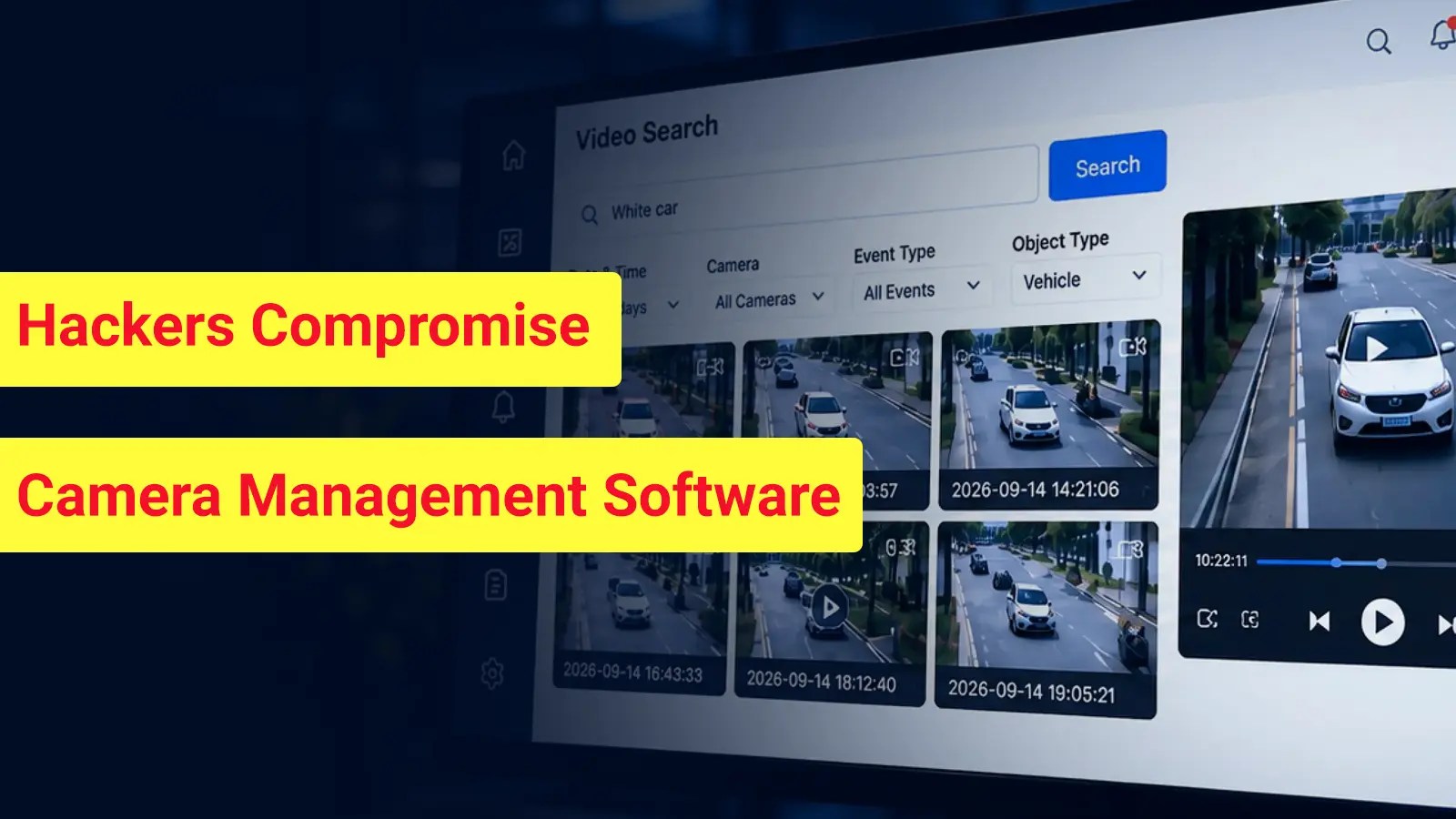
In a recent cybersecurity incident, hackers have taken advantage of camera management software to infiltrate Windows computers by deploying malware. The attackers utilized a legitimate Microsoft application to execute harmful code, thus maintaining unauthorized access to affected systems.
Understanding the Threat
This breach highlights how software, designed to control surveillance systems, can become a vulnerability within business networks. The incidents followed a consistent pattern where hackers accessed the systems through the camera management software. They then deployed a suspected reverse shell and used DLL sideloading to connect to an external server.
These activities echo past incidents where monitoring tools were exploited, emphasizing the inherent risks of relying on trusted software for routine operations. Researchers from Huntress observed these malicious activities across multiple client environments during September and October 2026.
Investigative Challenges
During a detailed investigation on October 27, researchers Harlan Carvey and Lindsey O’Donnell-Welch outlined several incidents linked to compromised camera management applications. However, they noted significant gaps in understanding how the initial breach occurred.
The software in question lacked adequate file version information, preventing researchers from confirming its exact product name or developer. Moreover, the absence of application logs left the method used for the compromise unresolved, and no specific vulnerability or CVE was identified.
Technical Analysis and Recommendations
The investigation revealed that the hackers embedded an executable file within the user’s application data directory. This program was configured to connect to a remote server using specified authentication details, indicating its function as a reverse shell.
To maintain access, attackers added the relocated Microsoft executable to the user’s Run registry key, ensuring it launched upon user login. This executable, although a genuine Microsoft file, was placed in an unusual location, making it susceptible to abuse.
Huntress advises organizations to keep an inventory of camera management applications, restrict access, and rigorously monitor network activities. Implementing application controls to block unauthorized executables and DLLs in user-writable directories is also recommended.
Despite these insights, the investigation could not determine how the initial compromise of the camera software occurred, nor confirm this as a vendor supply-chain breach. The key takeaway is the necessity for stringent oversight of camera management applications, akin to other critical business software.
Indicators of Compromise
- SHA256: 1fb4af4862643dcab1459872f723f574f1a588855b020916b600df5c20681144 (suspected reverse shell)
- SHA256: 8f8e88c54a9c56174974711eff99b4beb79536642fcca1902acdc3d4b1fd1035 (malicious samcli.dll)
- SHA256: 70b2345302264c41504d59e6a63d6d908969740424b42b7373f10b4c8d74c87a (malicious IPHLPAPI.DLL)
- C2 address: 144.172.116[.]37
- Application path: C:Program Files (x86)CMSCMS.exe
Organizations are encouraged to integrate threat intelligence from established platforms to enhance their security operations. This approach provides the necessary context to swiftly mitigate such security incidents.