Skip to content
  • Home
  • Cyber Map
  • About Us – Contact
  • Disclaimer
  • Terms and Rules
  • Privacy Policy
Cyber Web Spider Blog – News

Cyber Web Spider Blog – News

Globe Threat Map provides a real-time, interactive 3D visualization of global cyber threats. Monitor DDoS attacks, malware, and hacking attempts with geo-located arcs on a rotating globe. Stay informed with live logs and archive stats.

  • Home
  • Cyber Map
  • Cyber Security News
  • Security Week News
  • The Hacker News
  • How To?
  • Toggle search form
Enhancing Threat Monitoring with Intelligence-Led Approaches

Enhancing Threat Monitoring with Intelligence-Led Approaches

Posted on October 6, 2026 By CWS

In today’s rapidly evolving cybersecurity landscape, effective threat monitoring is the cornerstone of any security operations center (SOC) or managed security service provider (MSSP). It is crucial to shift from traditional log collection practices towards intelligence-led monitoring to enhance detection and response strategies.

The Need for Intelligence-Led Monitoring

Traditional monitoring models, which rely heavily on static indicators and hope for the best, are insufficient against modern, fast-paced threats like phishing and malware. To effectively reduce response times and mitigate business risks, security teams must adopt intelligence-driven monitoring that continuously refines detection capabilities.

This approach not only shortens the mean time to respond (MTTR) but also limits financial exposure by allowing high-priority alerts to surface more quickly. Intelligence-led monitoring can block threats before they become widespread, offering a proactive rather than reactive defense.

Integrating Monitoring with Detection Engineering

Monitoring and detection engineering, though often conflated, serve distinct purposes within cybersecurity operations. Monitoring focuses on real-time telemetry analysis to detect malicious activities as they occur, thereby reducing attacker dwell time. Conversely, detection engineering involves creating rules, such as YARA or Sigma, based on real adversary behaviors to inform monitoring systems.

The synergy between these disciplines is vital. Detection engineers develop rules informed by threat intelligence, which are then utilized in monitoring workflows. This feedback loop helps identify gaps and noise, feeding back into rule optimization and enhancing overall security posture.

Building a Comprehensive Threat Monitoring Framework

Establishing an intelligence-led threat monitoring framework involves multiple layers. The foundation is the integration of live, validated threat intelligence into existing security tools. ANY.RUN’s Threat Intelligence Feeds provide continuous updates on malicious IPs, domains, and URLs, derived from real-world sample analysis within their sandbox.

For deeper insights, analysts can leverage ANY.RUN’s Threat Intelligence Lookup to transition from basic indicators to behavioral evidence. This capability allows teams to explore the broader context of an attack and adjust their defenses accordingly.

Moreover, ANY.RUN’s YARA Search enables rapid rule development and validation, allowing security teams to create tailored detections based on observed behaviors. This agile approach ensures that monitoring systems remain responsive to emerging threats.

Conclusion: A Proactive Security Posture

Intelligence-led threat monitoring is essential for modern cybersecurity operations. By embedding real-world intelligence into every layer of the SOC, organizations can move from merely responding to incidents to actively preventing them. ANY.RUN’s comprehensive ecosystem supports this transition, offering a seamless integration of telemetry and defense strategies.

As cybersecurity threats continue to evolve, the need for robust, intelligence-driven monitoring solutions becomes increasingly critical. By adopting these strategies, SOC and MSSP leaders can ensure better protection and more efficient operations, ultimately safeguarding their organizations against potential threats.


Cyber Security News Tags:alert triage, ANY.RUN, cyber threat, Cybersecurity, detection engineering, incident response, malware analysis, MSSP, sandbox analysis, security operations, SOC, threat detection, threat intelligence, threat monitoring, YARA rules

Post navigation

Previous Post: Phishing Platforms Target AI Chatbot Users for Credentials
Next Post: Linux Backdoors Mimic Email Tools to Evade Detection

Related Posts

Railway Data Breach: Potential Exposure of Sensitive Information Railway Data Breach: Potential Exposure of Sensitive Information Cyber Security News
Malicious npm Package with 206k Downloads Attacking GitHub-Owned Repositories to Exfiltrate Tokens Malicious npm Package with 206k Downloads Attacking GitHub-Owned Repositories to Exfiltrate Tokens Cyber Security News
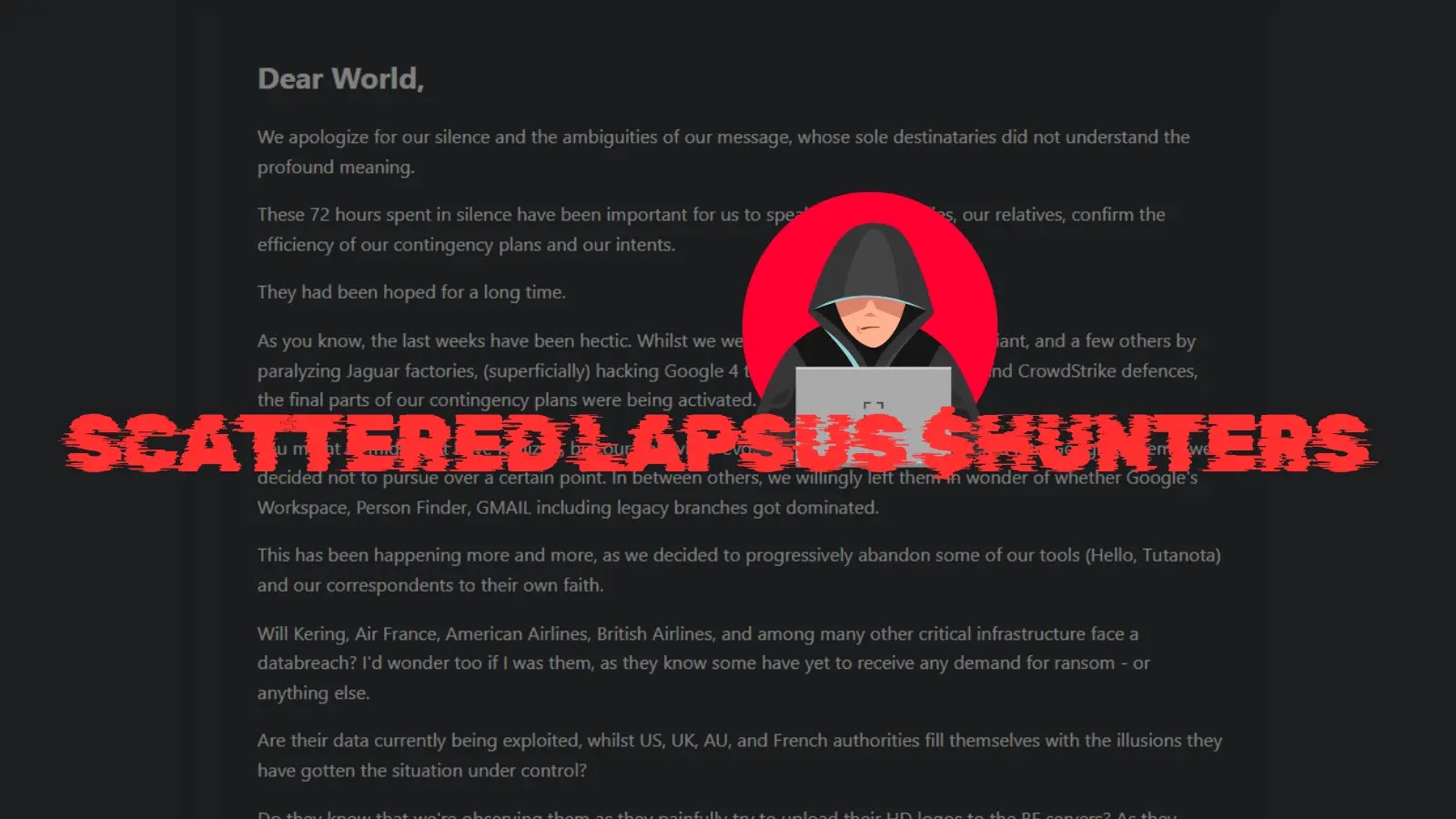
What Are The Takeaways from The Scattered Lapsus $Hunters Statement? What Are The Takeaways from The Scattered Lapsus $Hunters Statement? Cyber Security News
Windows Snipping Tool Flaw Exposes User Credentials Windows Snipping Tool Flaw Exposes User Credentials Cyber Security News
Atomic macOS Info-Stealer Upgraded With New Backdoor to Maintain Persistence Atomic macOS Info-Stealer Upgraded With New Backdoor to Maintain Persistence Cyber Security News
Credential Theft Drives Brute-Force Attacks on SSO Systems Credential Theft Drives Brute-Force Attacks on SSO Systems Cyber Security News

Categories

  • Cyber Security News
  • How To?
  • Security Week News
  • The Hacker News

Recent Posts

  • Java Vulnerability Affects Palo Alto Products: Key Details
  • Debian Packages Retain Distrusted Certificates Despite Updates
  • WhatsApp Fixes Android Security Flaw Amid Scam Concerns
  • Microsoft Probes Attachment Upload Issues in New Outlook
  • Critical OpenSSL Vulnerability Discovered in Base64 Encoding

Pages

  • About Us – Contact
  • Disclaimer
  • Privacy Policy
  • Terms and Rules

Archives

  • November 2026
  • October 2026
  • September 2026
  • August 2026
  • July 2026
  • June 2026
  • May 2026
  • April 2026
  • March 2026
  • February 2026
  • January 2026
  • December 2025
  • November 2025
  • October 2025
  • September 2025
  • August 2025
  • July 2025
  • June 2025
  • May 2025

Recent Posts

  • Java Vulnerability Affects Palo Alto Products: Key Details
  • Debian Packages Retain Distrusted Certificates Despite Updates
  • WhatsApp Fixes Android Security Flaw Amid Scam Concerns
  • Microsoft Probes Attachment Upload Issues in New Outlook
  • Critical OpenSSL Vulnerability Discovered in Base64 Encoding

Pages

  • About Us – Contact
  • Disclaimer
  • Privacy Policy
  • Terms and Rules

Categories

  • Cyber Security News
  • How To?
  • Security Week News
  • The Hacker News

Copyright © 2026 Cyber Web Spider Blog – News.

Powered by PressBook Masonry Dark