Skip to content
  • Home
  • Cyber Map
  • About Us – Contact
  • Disclaimer
  • Terms and Rules
  • Privacy Policy
Cyber Web Spider Blog – News

Cyber Web Spider Blog – News

Globe Threat Map provides a real-time, interactive 3D visualization of global cyber threats. Monitor DDoS attacks, malware, and hacking attempts with geo-located arcs on a rotating globe. Stay informed with live logs and archive stats.

  • Home
  • Cyber Map
  • Cyber Security News
  • Security Week News
  • The Hacker News
  • How To?
  • Toggle search form
Malicious Chrome Extension Targets Crypto Wallets

Malicious Chrome Extension Targets Crypto Wallets

Posted on March 7, 2026 By CWS

Malicious Chrome Extension Uncovered

A dangerous Chrome extension named “lmΤoken Chromophore” has been found by Socket’s Threat Research Team. This extension is designed to steal cryptocurrency wallet credentials by masquerading as a harmless tool. In reality, it impersonates the well-known non-custodial wallet brand imToken, posing a significant threat to users.

Since its inception in 2016, imToken has served over 20 million users globally, making it an attractive target for cybercriminals. The official imToken team has clarified that their services are exclusively available as a mobile application, and they have never released a Chrome extension. Despite this, the malicious extension mimics the brand’s visual identity to deceive users into revealing their 12 or 24-word seed phrases or plaintext private keys, leading to immediate wallet compromise.

Phishing Techniques and Evasion Strategies

Once installed, the extension disregards its alleged color-visualizing function and instead operates as a redirector. It retrieves a target website from a hardcoded remote endpoint hosted on JSONKeeper, opening a new tab that connects to the attackers’ infrastructure. This allows the phishing destination to be altered without modifying the extension’s code in the Chrome Web Store.

The phishing attack initially directs victims to a misleading domain, chroomewedbstorre-detail-extension[.]com. To bypass security checks, attackers use mixed-script Unicode homoglyphs, replacing standard Latin letters with similar-looking Cyrillic and Greek characters. Victims are then presented with a fake wallet import interface powered by external JavaScript files, prompting them to enter sensitive information.

Deceptive Workflow and Aftermath

After capturing the victims’ data, the attackers maintain the illusion of legitimacy by prompting users to set a local password and showing a fake “upgrading” screen. Ultimately, victims are redirected to the genuine token.im website, reducing suspicion while the attackers secretly drain accounts.

Security teams must apply stringent scrutiny to browser extensions, akin to traditional software assessments. Organizations are advised to limit extension installations in sensitive environments. Users should verify all wallet software through official channels and treat any compromised wallet as unsecured, moving funds to new, secure keys immediately.

Indicators of Compromise and Recommendations

Security tools should monitor for extensions that fetch remote content and open external destinations. Analysts should incorporate the following Indicators of Compromise (IOCs) to prevent this threat:

  • Malicious Extension ID: bbhaganppipihlhjgaaeeeefbaoihcgi
  • Publisher Email: liomassi19855@gmail[.]com
  • Phishing Landing Page: chroomewedbstorre-detail-extension[.]com
  • Configuration Payload: jsonkeeper[.]com/b/KUWNE
  • Script Infrastructure: compute-fonts-appconnect.pages[.]dev

Stay updated on cybersecurity insights by following us on Google News, LinkedIn, and X. Contact us to feature your stories.


Cyber Security News Tags:browser security, Chrome extension, crypto theft, cyber threat, Cybersecurity, imToken, malicious software, online security, Phishing, wallet security

Post navigation

Previous Post: Pentagon’s AI Dispute with Anthropic Over Autonomy
Next Post: BoryptGrab Malware Exploits Over 100 GitHub Repositories

Related Posts

Zero Trust Architecture Building Resilient Defenses for 2025 Zero Trust Architecture Building Resilient Defenses for 2025 Cyber Security News
Researchers Uncover on How Hacktivist Groups Gaining Attention and Selecting Targets Researchers Uncover on How Hacktivist Groups Gaining Attention and Selecting Targets Cyber Security News
Kawa4096 Ransomware Attacking Multinational Organizations to Exfiltrate Sensitive Data Kawa4096 Ransomware Attacking Multinational Organizations to Exfiltrate Sensitive Data Cyber Security News
How SOCs Detect More Threats without Alert Overload How SOCs Detect More Threats without Alert Overload Cyber Security News
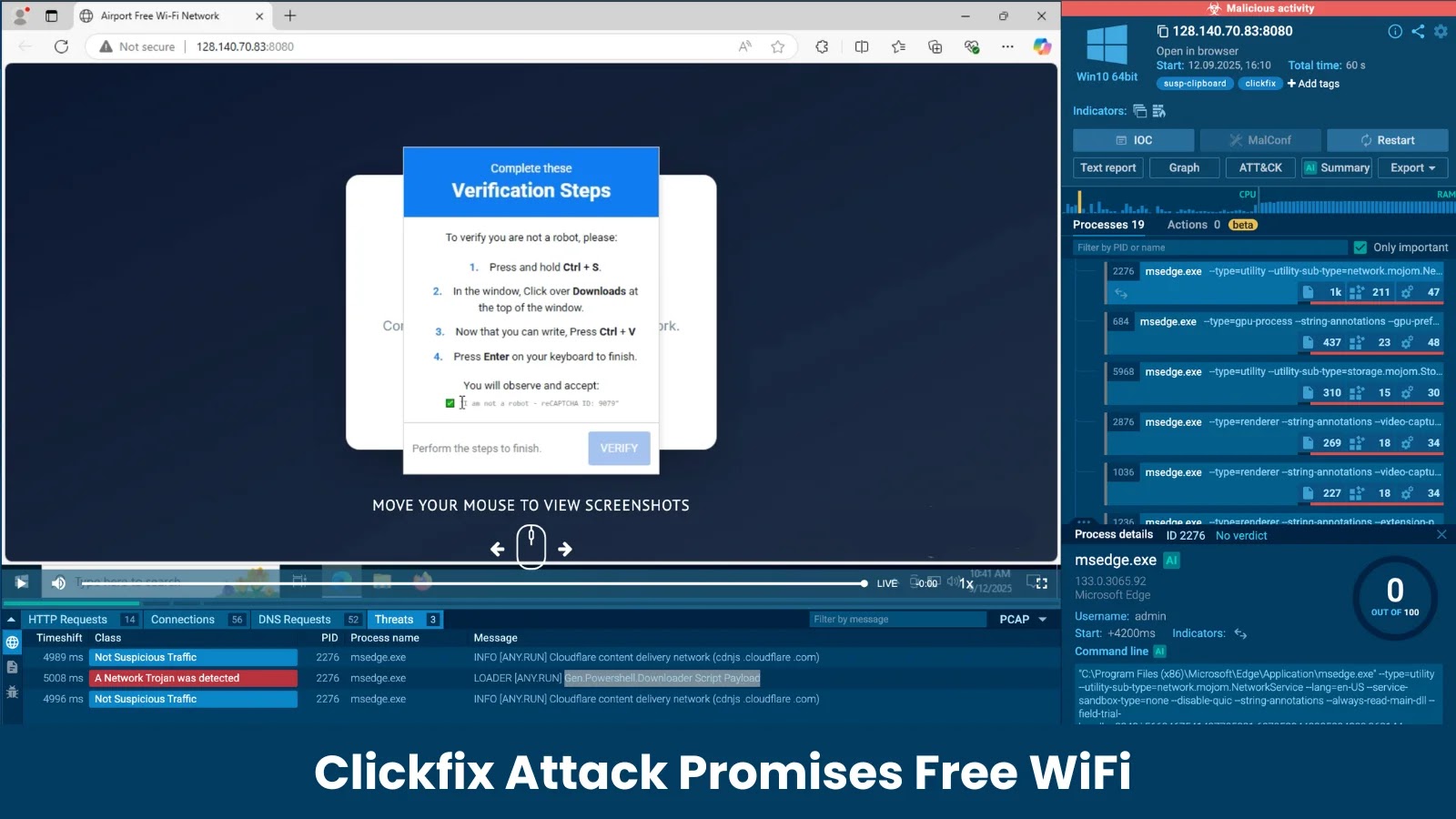
New Clickfix Attack Promises “Free WiFi” But Delivers Powershell Based Malware New Clickfix Attack Promises “Free WiFi” But Delivers Powershell Based Malware Cyber Security News
Beware of Weaponized MSI Installer Mimic as WhatsApp Delivers Modified XWorm RAT Beware of Weaponized MSI Installer Mimic as WhatsApp Delivers Modified XWorm RAT Cyber Security News

Categories

  • Cyber Security News
  • How To?
  • Security Week News
  • The Hacker News

Recent Posts

  • Anthropic AI Unearths Firefox Security Flaws
  • BoryptGrab Malware Exploits Over 100 GitHub Repositories
  • Malicious Chrome Extension Targets Crypto Wallets
  • Pentagon’s AI Dispute with Anthropic Over Autonomy
  • OpenAI Unveils Codex Security for Software Vulnerabilities

Pages

  • About Us – Contact
  • Disclaimer
  • Privacy Policy
  • Terms and Rules

Archives

  • March 2026
  • February 2026
  • January 2026
  • December 2025
  • November 2025
  • October 2025
  • September 2025
  • August 2025
  • July 2025
  • June 2025
  • May 2025

Recent Posts

  • Anthropic AI Unearths Firefox Security Flaws
  • BoryptGrab Malware Exploits Over 100 GitHub Repositories
  • Malicious Chrome Extension Targets Crypto Wallets
  • Pentagon’s AI Dispute with Anthropic Over Autonomy
  • OpenAI Unveils Codex Security for Software Vulnerabilities

Pages

  • About Us – Contact
  • Disclaimer
  • Privacy Policy
  • Terms and Rules

Categories

  • Cyber Security News
  • How To?
  • Security Week News
  • The Hacker News