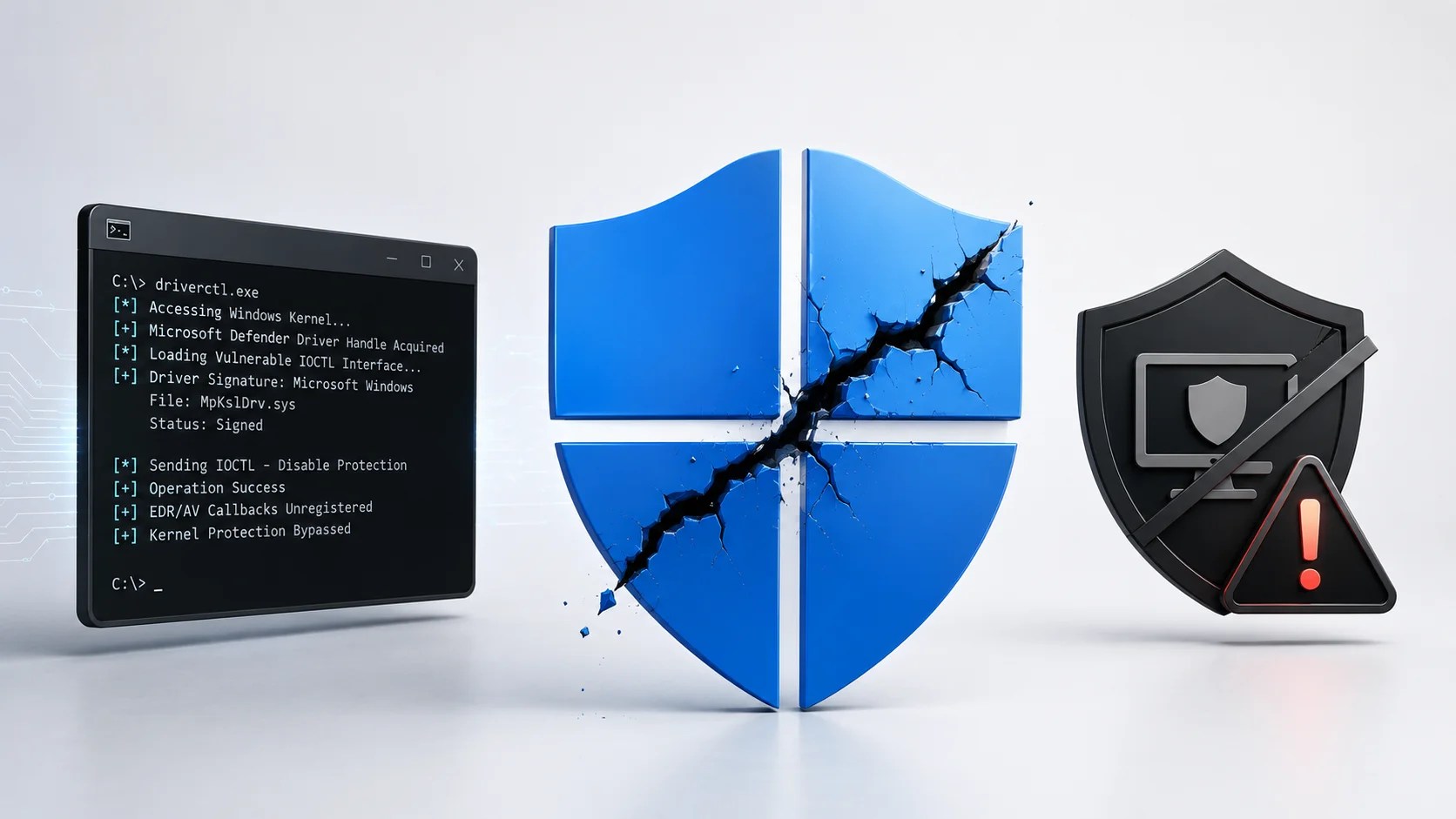
Recent findings have spotlighted a potential exploitation risk within Microsoft Defender’s Boot-Time Removal (BTR.sys) driver. This discovery reveals how attackers with administrative access might exploit this driver for kernel-level operations, potentially bypassing endpoint security measures.
Understanding the BTR.sys Driver
The BTR.sys driver, embedded in Microsoft Defender’s MpEngine.dll, is deployed during system reboots for specific remediation tasks. Notably, this driver can execute operations like file removal or registry modifications, which are typically part of Defender’s normal functions. However, when misused, these capabilities could enable unauthorized kernel-level interventions.
According to a report from Check Point Research, the driver utilizes an RC4-encrypted configuration, allowing it to perform privileged tasks. The research highlights the danger of reproducing the driver’s transaction protocols, which could lead to unwanted system modifications.
Potential Security Threats
One of the significant concerns is the timing of the driver’s execution. As a system-start driver, BTR.sys operates after the filesystem becomes accessible but before many security components are fully active. This timing creates a ‘golden window’ for potential exploitation, where the driver could disable security binaries before full protection is established.
This method differs from traditional attacks that exploit known vulnerable third-party drivers. BTR.sys, being a legitimate Microsoft-signed component, complicates detection efforts that rely on driver signatures as trust signals. Although no in-the-wild exploitation has been reported, the public availability of this methodology increases the need for proactive defenses.
Mitigation Strategies
Security teams are advised to monitor for suspicious BTR.sys deployments, rather than relying solely on file hashes or Microsoft signatures. Tools like Sysmon can be instrumental in identifying unusual activities related to driver deployment and operation.
Particularly, Sysmon Event ID 15 and Event ID 6 can help trace anomalous activities by recording file-stream creation and driver load details, respectively. These insights are crucial for correlating unexpected driver activities with potential security breaches.
Organizations should enforce strict control over driver-loading privileges, audit relevant telemetry, and implement application-control policies to mitigate risks. Detecting changes in boot-time persistence and suspicious operations attributed to system processes can further enhance security postures.
Ultimately, understanding these risks and implementing robust monitoring strategies is essential to safeguard against potential exploitation of Microsoft’s Defender driver.