Skip to content
  • Home
  • Cyber Map
  • About Us – Contact
  • Disclaimer
  • Terms and Rules
  • Privacy Policy
Cyber Web Spider Blog – News

Cyber Web Spider Blog – News

Globe Threat Map provides a real-time, interactive 3D visualization of global cyber threats. Monitor DDoS attacks, malware, and hacking attempts with geo-located arcs on a rotating globe. Stay informed with live logs and archive stats.

  • Home
  • Cyber Map
  • Cyber Security News
  • Security Week News
  • The Hacker News
  • How To?
  • Toggle search form
Rising Threat of Cybersquatting in Cybersecurity

Rising Threat of Cybersquatting in Cybersecurity

Posted on February 7, 2026 By CWS

Malicious cybersquatting is emerging as a severe cybersecurity threat, evolving from its roots as a mere trademark issue. Recent data from the World Intellectual Property Organization (WIPO) highlights this danger, with 2025 witnessing an unprecedented 6,200 domain disputes, marking a 68% surge since 2020.

Security professionals are sounding alarms about the malicious use of fake domains. These domains are not only sold for profit but also used to compromise customer data, spread malware, and tarnish brand reputations.

Understanding Cybersquatting Tactics

Cybercriminals employ a variety of strategies to lure unsuspecting users to fraudulent sites. Techniques include typosquatting, where common misspellings of well-known sites are registered, and combosquatting, which involves adding keywords to genuine brand names.

Other methods include TLD squatting, which uses different domain extensions, and homograph attacks, where visually similar characters create indistinguishable fake sites. These tactics are increasingly sophisticated, making detection difficult.

Research by SecPod indicates a 19-fold rise in these malicious activities between late 2024 and mid-2025, with a staggering 99% of squatted domains employed for phishing or malware distribution.

Case Study: Decodo’s Battle Against Impersonation

The challenges faced by Decodo, a prominent web data provider, underscore the seriousness of the cybersquatting threat. The company encountered aggressive impersonation by cybercriminals in China, who registered domains mimicking their legitimate service.

Customers misled by these fake sites paid for services they never received, and when these services failed, they blamed Decodo, significantly harming its reputation. Vytautas Savickas, CEO of Decodo, emphasized the difficulty for honest businesses to maintain trust amidst such threats.

High-Profile Domain Disputes and Their Impact

Several notable domain disputes have highlighted the financial and reputational risks posed by cybersquatting. For instance, Tesla had to negotiate a costly settlement to acquire its domain, while TikTok and Microsoft faced similar challenges.

These incidents illustrate the broader implications beyond financial losses. Phishing attacks stemming from fake domains cost organizations an average of $4.8 million per breach in 2025, as users inadvertently share sensitive information or download harmful software.

Industry experts stress the importance of proactive measures. Vaidotas Juknys, CCO at Decodo, recommends businesses audit their domain portfolios and adopt protective strategies, such as defensive registration and monitoring services, to mitigate risks.

As we move into 2026, safeguarding a company’s domain is crucial. Neglecting this can lead to breaches that are financially and reputationally damaging. For further updates on cybersecurity, follow us on Google News, LinkedIn, and X, or contact us to feature your stories.


Cyber Security News Tags:brand protection, Cybersecurity, Cybersquatting, data protection, digital threats, domain disputes, fraud prevention, Malware, online security, Phishing

Post navigation

Previous Post: Enhancing Nmap Efficiency with nmapUnleashed
Next Post: OpenClaw v2026.2.6 Enhances Security and Model Support

Related Posts

AMOS macOS Stealer Hides in GitHub With Advanced Sophistication Methods AMOS macOS Stealer Hides in GitHub With Advanced Sophistication Methods Cyber Security News
Critical Ivanti Endpoint Manager Vulnerabilities Let Attackers Execute Remote Code Critical Ivanti Endpoint Manager Vulnerabilities Let Attackers Execute Remote Code Cyber Security News
Critical pgAdmin4 Vulnerability Lets Attackers Execute Remote Code on Servers Critical pgAdmin4 Vulnerability Lets Attackers Execute Remote Code on Servers Cyber Security News
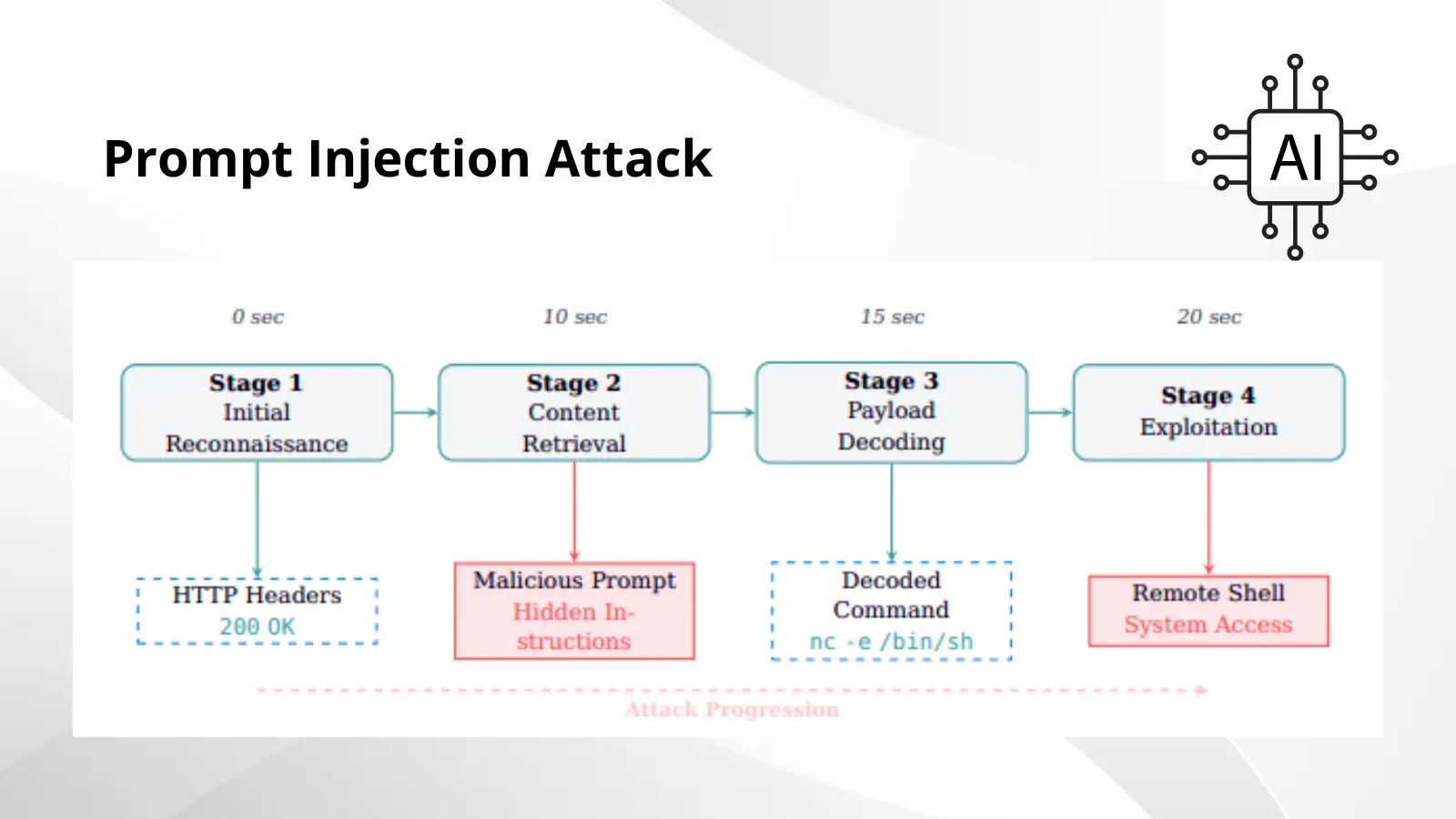
AI-Powered Cybersecurity Tools Can Be Turned Against Themselves Through Prompt Injection Attacks AI-Powered Cybersecurity Tools Can Be Turned Against Themselves Through Prompt Injection Attacks Cyber Security News
Microsoft Purview DLP to Restrict Microsoft 365 Copilot in Processing Emails With Sensitive Labels Microsoft Purview DLP to Restrict Microsoft 365 Copilot in Processing Emails With Sensitive Labels Cyber Security News
AI-Driven Penetration Testing with 20+ Integrated Tools AI-Driven Penetration Testing with 20+ Integrated Tools Cyber Security News

Categories

  • Cyber Security News
  • How To?
  • Security Week News
  • The Hacker News

Recent Posts

  • Top Log Monitoring Tools to Watch in 2026
  • Top Spam Filter Tools for 2026: A Comprehensive Guide
  • Top Fraud Detection Tools for 2026
  • Microsoft Urges Action on Critical Windows Updates
  • Citrix NetScaler Threat: Immediate Action Required

Pages

  • About Us – Contact
  • Disclaimer
  • Privacy Policy
  • Terms and Rules

Archives

  • March 2026
  • February 2026
  • January 2026
  • December 2025
  • November 2025
  • October 2025
  • September 2025
  • August 2025
  • July 2025
  • June 2025
  • May 2025

Recent Posts

  • Top Log Monitoring Tools to Watch in 2026
  • Top Spam Filter Tools for 2026: A Comprehensive Guide
  • Top Fraud Detection Tools for 2026
  • Microsoft Urges Action on Critical Windows Updates
  • Citrix NetScaler Threat: Immediate Action Required

Pages

  • About Us – Contact
  • Disclaimer
  • Privacy Policy
  • Terms and Rules

Categories

  • Cyber Security News
  • How To?
  • Security Week News
  • The Hacker News

Copyright © 2026 Cyber Web Spider Blog – News.

Powered by PressBook Masonry Dark