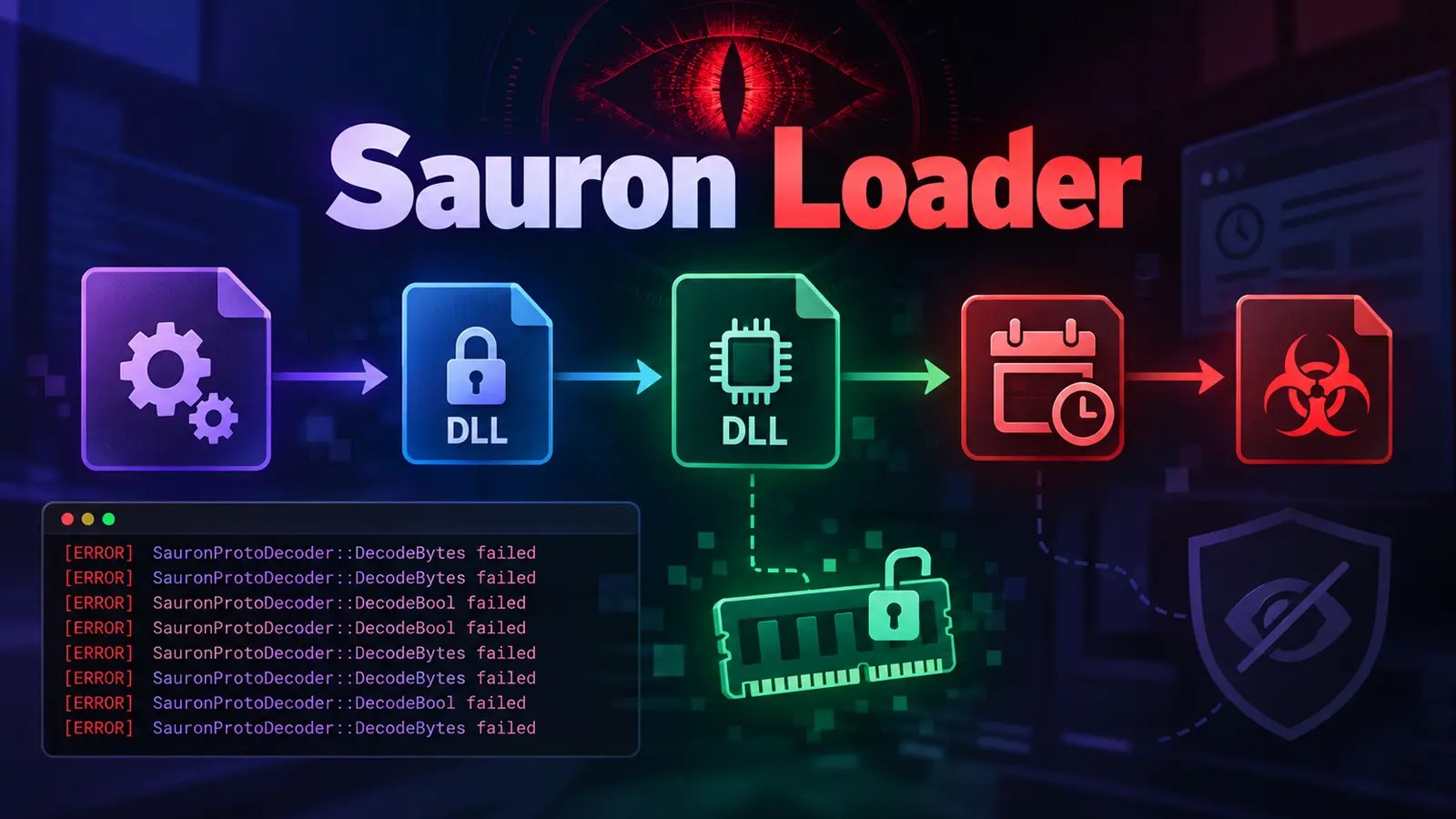
The Sauron Loader malware has emerged as a significant threat to German organizations, enabling attackers to introduce additional malicious software into systems. This malware does not necessarily initiate attacks but is often deployed towards the end of a complex series of deception-based intrusions, rather than exploiting newly discovered vulnerabilities.
Deceptive Social Engineering Techniques
Investigations revealed that victims were often deceived through techniques such as ClickFix-style prompts, which tricked them into executing harmful actions. In other scenarios, a barrage of spam emails was followed by phone calls from individuals impersonating IT support staff, creating problems and proposing fake solutions that facilitated malicious activities.
Research conducted by DCSO CyTec Blog linked the malware to an underground market advertisement aimed at Russian-speaking cybercriminals. The advertisement suggested targeting restrictions, but did not provide specific details about the perpetrators.
Advanced Malware Techniques
The Sauron Loader is capable of executing additional programs, gathering system information, and transmitting data back to its controllers. While the exact number of affected systems and the final payloads remain unidentified in all cases, the malware’s capabilities are concerning.
One notable technique used by Sauron Loader involves DLL side-loading and in-memory decryption. In one example, a legitimate Windows installer was used to place a trusted executable alongside malicious libraries. When the executable was launched, it activated a library that initiated a hidden malicious sequence, utilizing the legitimate appearance of the program to mask its true intent.
Persistence and Evasion Strategies
The malware’s main code is initially concealed in an encrypted form, only decrypted in memory during execution, making detection challenging. The use of scheduled tasks to repeatedly initiate the loader allows persistent access without overt signs of malicious activity. The malware’s evasion strategies highlight the broader difficulties in detecting threats that use similar trusted software as a cover.
Analysts noted that while they examined several variations of the malware, all shared a core behavior but differed in control infrastructure. This variability complicates efforts to block the malware by targeting a single server or installer.
Implications for Cybersecurity
Once activated, Sauron Loader uses encrypted HTTPS requests with dynamic web paths, complicating network-level detection. It can download various payloads, including executables and scripts, and even capture and transmit screenshots. These capabilities underscore its role as a versatile delivery platform rather than evidence of specific malicious software being deployed in every instance.
Social engineering plays a crucial role in these attacks, with strategies designed to secure unauthorized access by exploiting user trust. Organizations are advised to scrutinize unexpected installer activities, unusual library loads, and unexplained encrypted connections to prevent such intrusions. It is also recommended to verify unsolicited IT support contacts through established channels.
The findings by DCSO include detection materials for cybersecurity teams to investigate possible infections effectively. These insights are vital for preempting further malicious payloads and safeguarding sensitive systems from evolving threats like Sauron Loader.