
Skip to content
  • Home
  • Cyber Map
  • About Us – Contact
  • Disclaimer
  • Terms and Rules
  • Privacy Policy
Cyber Web Spider Blog – News

Cyber Web Spider Blog – News

Globe Threat Map provides a real-time, interactive 3D visualization of global cyber threats. Monitor DDoS attacks, malware, and hacking attempts with geo-located arcs on a rotating globe. Stay informed with live logs and archive stats.

  • Home
  • Cyber Map
  • Cyber Security News
  • Security Week News
  • The Hacker News
  • How To?
  • Toggle search form
UpdraftPlus Developer Breach Leads to Malicious Code Injection

UpdraftPlus Developer Breach Leads to Malicious Code Injection

Posted on October 21, 2026 By CWS

TeamUpdraft, the creators of the UpdraftPlus WordPress backup plugin, recently revealed a security breach on their website. This breach allowed attackers to obtain remote management keys, which were then used to install malicious plugins on associated WordPress sites. The attackers exploited these trusted management features to execute harmful code.

Details of the Security Breach

The security incident occurred between October 17 and 18, 2026, when unauthorized access to teamupdraft.com was detected. This breach potentially compromised the customer database, which stores names, email addresses, billing information, order histories, password hashes, two-factor authentication settings, and connection keys associated with UpdraftCentral, UpdraftVault, and UpdraftClone.

Although the breach did not affect the plugin files themselves, the attackers managed to exploit connection keys to send harmful commands, leveraging the site’s trust in these keys to execute unauthorized plugin installations.

Exploit Through Malicious Plugin Installation

UpdraftCentral provides administrators with a centralized dashboard to manage multiple WordPress sites, allowing commands signed with a private key to be executed with the connected user’s permissions. Attackers used this feature to send a command known as plugin.upload_plugin with valid keys. If the linked user had sufficient permissions, WordPress would accept the request and activate the malicious PHP code.

In some instances, the attack was unsuccessful due to insufficient user permissions. The exploit did not bypass the previously addressed CVE-2026-10795 vulnerability, as the sites were already running the latest version of UpdraftPlus. Instead, it capitalized on the stolen keys to bypass standard security checks.

Measures for Protection and Recovery

Both free and premium users of UpdraftPlus could be vulnerable if their sites were connected via compromised cloud connection keys. TeamUpdraft has assured that its plugin files and download packages remain unaltered, and self-hosted UpdraftCentral setups along with backups on personal cloud storage were not impacted by the breach.

The company has taken steps to mitigate further risks by closing the access route, logging out customer accounts, rotating service credentials, and notifying authorities. Administrators are advised to update to UpdraftPlus 1.26.13 Free or 2.26.13 Premium to ensure security patches are applied.

Users should manually inspect their WordPress dashboards, remove outdated connection keys, and check for unusual plugin files or server logs. Changing passwords and resetting two-factor authentication are also recommended. If any suspicious activities are detected, restoring from a backup taken before October 17 is advised.

While an Endpoint Detection and Response (EDR) alert might highlight an attack, comprehensive measures are essential to fully understand and mitigate such security incidents.

Cyber Security News Tags:Cybersecurity, data breach, malicious plugins, plugin vulnerability, remote management keys, security breach, site protection, TeamUpdraft, UpdraftCentral, UpdraftPlus, website security, WordPress, WordPress security

Post navigation

Previous Post: Accenture and Dragos Boost Cyber Defense for US Utilities
Next Post: OVHcloud Developer Account Breach Exposes CLI Security Flaw

Related Posts

Claude’s New Feature Simplifies AI Memory Transfer Claude’s New Feature Simplifies AI Memory Transfer Cyber Security News
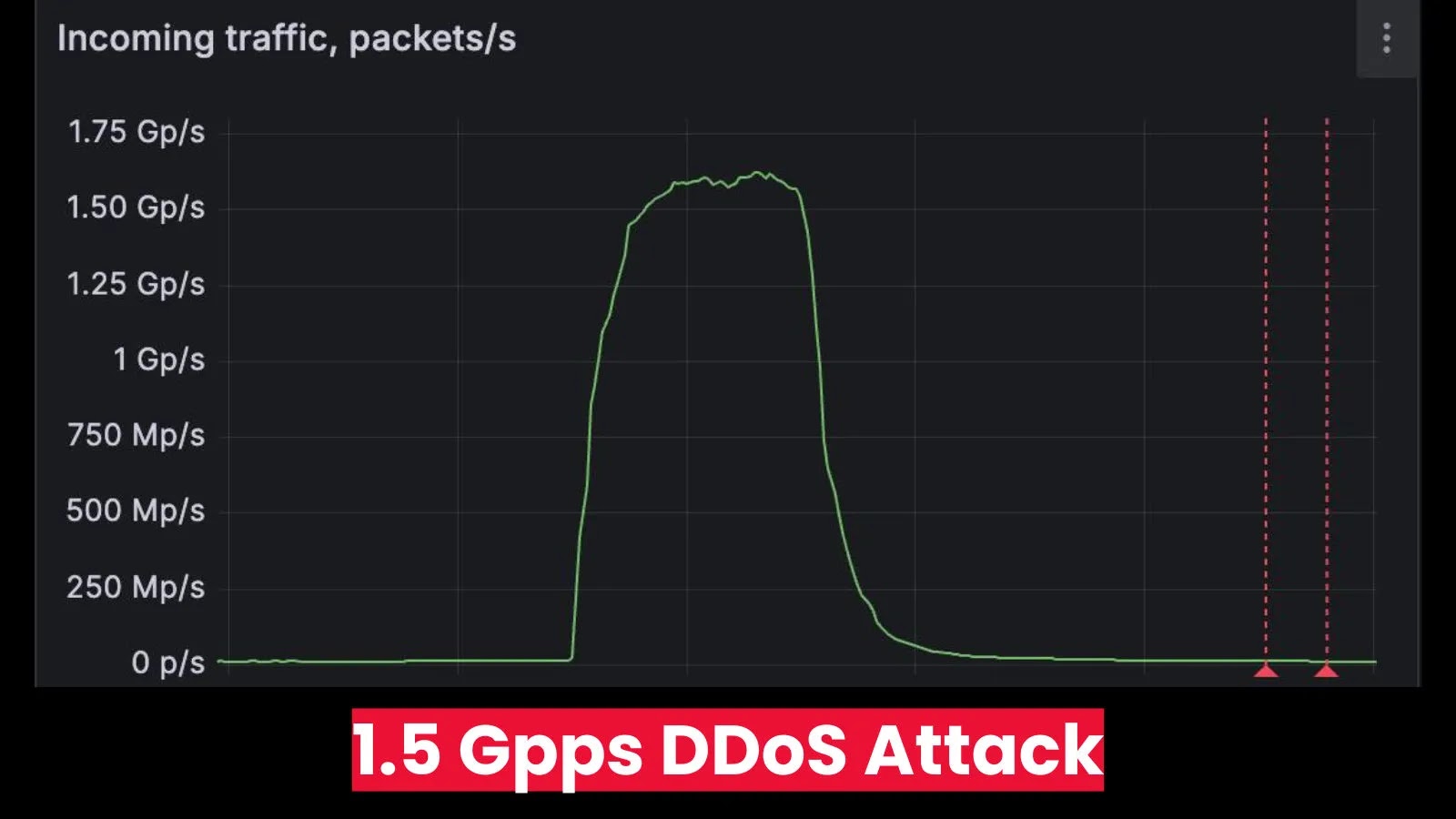
DDoS Mitigation Provider targeted In 1.5 Gpps 1.5 Billion Packets per Second DDoS Attack DDoS Mitigation Provider targeted In 1.5 Gpps 1.5 Billion Packets per Second DDoS Attack Cyber Security News
Global Ransomware Cases Surge as AI Tools Enhance Attacks Global Ransomware Cases Surge as AI Tools Enhance Attacks Cyber Security News
Chaos Emerges as Faster, Smarter, and More Dangerous Ransomware Chaos Emerges as Faster, Smarter, and More Dangerous Ransomware Cyber Security News
Linux Zero-Day Vulnerability Urges Immediate Patching Linux Zero-Day Vulnerability Urges Immediate Patching Cyber Security News
Hackers Using CastleRAT Malware to Attack Windows Systems and Gain Remote Access Hackers Using CastleRAT Malware to Attack Windows Systems and Gain Remote Access Cyber Security News

Categories

  • Cyber Security News
  • How To?
  • Security Week News
  • The Hacker News

Recent Posts

  • OVHcloud Developer Account Breach Exposes CLI Security Flaw
  • UpdraftPlus Developer Breach Leads to Malicious Code Injection
  • Accenture and Dragos Boost Cyber Defense for US Utilities
  • Critical PHP Security Flaws Prompt Urgent Update
  • PHP Issues Alert on Security Flaws, Prepares Patches

Pages

  • About Us – Contact
  • Disclaimer
  • Privacy Policy
  • Terms and Rules

Archives

  • October 2026
  • September 2026
  • August 2026
  • July 2026
  • June 2026
  • May 2026
  • April 2026
  • March 2026
  • February 2026
  • January 2026
  • December 2025
  • November 2025
  • October 2025
  • September 2025
  • August 2025
  • July 2025
  • June 2025
  • May 2025

Recent Posts

  • OVHcloud Developer Account Breach Exposes CLI Security Flaw
  • UpdraftPlus Developer Breach Leads to Malicious Code Injection
  • Accenture and Dragos Boost Cyber Defense for US Utilities
  • Critical PHP Security Flaws Prompt Urgent Update
  • PHP Issues Alert on Security Flaws, Prepares Patches

Pages

  • About Us – Contact
  • Disclaimer
  • Privacy Policy
  • Terms and Rules

Categories

  • Cyber Security News
  • How To?
  • Security Week News
  • The Hacker News

Copyright © 2026 Cyber Web Spider Blog – News.

Powered by PressBook Masonry Dark