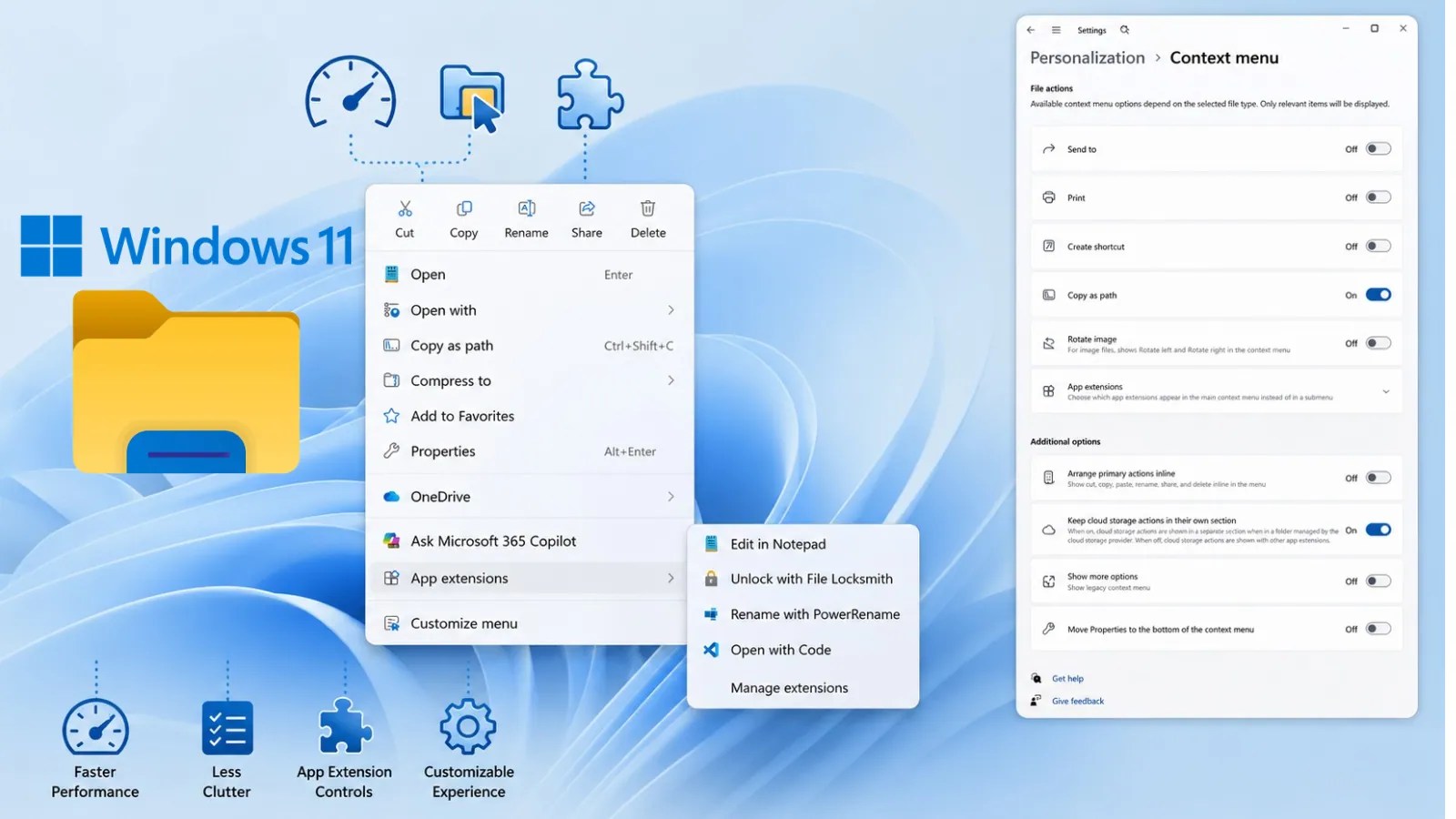
Microsoft has unveiled an updated File Explorer for Windows 11 Insiders, introducing a faster, more streamlined context menu. This enhancement aims to improve user interaction by boosting right-click performance and minimizing clutter, while also offering users greater control over both built-in commands and third-party app extensions.
Improved Responsiveness and Usability
This update is part of Microsoft’s broader initiative to enhance the responsiveness and stability of File Explorer, a core component of the Windows operating system. File Explorer is essential for daily tasks such as navigating directories, managing files, and accessing cloud-based content. Microsoft has concentrated on eliminating freezes, reducing loading times, and minimizing visual disruptions that hinder these common activities.
According to Microsoft, File Explorer now launches more swiftly and performs consistently during navigation and file operations. The company has addressed numerous potential issues that could lead to system stalls and delays, prioritizing a seamless user experience.
Redesigned Context Menu
The newly designed right-click menu is among the most significant changes in this update. Historically, context menus have been criticized for performance issues due to the accumulation of application extensions. As more software adds its actions, these menus can become overwhelmed and slow to load.
Microsoft’s new design reduces the number of default top-level options, maintaining access to commonly used actions. The restructured menu opens more quickly by doing less processing when users interact with files or folders. Users can further customize these options through the Settings app.
Customization and New Features
A new feature, the “Customize menu” option, allows users to personalize which Windows commands and app extensions appear in the context menu. This option can be accessed via the Context Menu page under the Personalization section in Settings.
Users can toggle built-in Windows commands and decide whether to display specific application extensions directly in the main menu or in a submenu. The redesign also allows users to revert to standard text entries for commands like Cut, Copy, and Paste, addressing familiar habits from Windows 10.
Additional improvements include expanded address bar input support and clearer file size units. The Details pane has also been reorganized for easier file property access. These updates are currently available to Windows Insiders, with Microsoft planning further refinements based on user feedback before a wider release.
As Microsoft continues to refine these changes, users can expect a more efficient and user-friendly File Explorer experience that aligns with modern computing needs.