Skip to content
  • Home
  • Cyber Map
  • About Us – Contact
  • Disclaimer
  • Terms and Rules
  • Privacy Policy
Cyber Web Spider Blog – News

Cyber Web Spider Blog – News

Globe Threat Map provides a real-time, interactive 3D visualization of global cyber threats. Monitor DDoS attacks, malware, and hacking attempts with geo-located arcs on a rotating globe. Stay informed with live logs and archive stats.

  • Home
  • Cyber Map
  • Cyber Security News
  • Security Week News
  • The Hacker News
  • How To?
  • Toggle search form
Critical Windows Vulnerability Exploit Released

Critical Windows Vulnerability Exploit Released

Posted on March 2, 2026 By CWS

A significant local privilege escalation vulnerability in Microsoft Windows has been unveiled with the release of a Proof-of-Concept (PoC) exploit. This flaw, identified as CVE-2026-20817, poses a substantial risk by enabling users with minimal privileges to execute harmful code at a SYSTEM level.

Exploit Details and Impact

The vulnerability resides in the Windows Error Reporting (WER) service, specifically targeting the Advanced Local Procedure Call (ALPC) protocol. The issue, highlighted by security researcher @oxfemale, showcases a critical security oversight in Windows’ error-reporting infrastructure.

The flaw is triggered through the WER service’s exposure of a specific ALPC port, known as WindowsErrorReportingService, facilitating interprocess communication. The vulnerability is found in the SvcElevatedLaunch method, labeled as method 0x0D, where the service fails to verify user permissions adequately.

Methodology of the Exploit

The exploit process involves several steps, starting with the creation of a shared memory block that contains a malicious command line. The attacker then establishes a connection to the WER ALPC port and sends an ALPC message using method 0x0D. This message includes the client process ID, shared memory handle, and command-line length.

Upon receiving this message, the WER service duplicates the handle and executes WerFault.exe with the supplied command line. The resulting process inherits the SYSTEM token, granting dangerous permissions like SeDebugPrivilege and SeImpersonatePrivilege, although not SeTcbPrivilege.

Vulnerability Scope and Mitigation

This vulnerability affects a wide array of systems, including all versions of Windows 10 and Windows 11 prior to January 2026, along with Windows Server 2019 and 2022. Microsoft has addressed this flaw in the January 2026 Security Update, urging organizations to implement the latest patches promptly.

To mitigate potential exploitation, security teams are advised to monitor for irregular WerFault.exe processes and unusual SYSTEM token activities. Keeping systems updated with the latest security measures is crucial in safeguarding against such vulnerabilities.

Stay informed with the latest cybersecurity updates by following us on Google News, LinkedIn, and X.

Cyber Security News Tags:ALPC, Cybersecurity, Exploit, Microsoft, Patch, PoC, Security, system privileges, Vulnerability, Windows

Post navigation

Previous Post: AWS Enhances Security Hub with Cross-Domain Integration
Next Post: Google Enhances Chrome Security with Quantum-Safe Certificates

Related Posts

Threat Actors Claiming Breach of Airpay Payment Gateway Threat Actors Claiming Breach of Airpay Payment Gateway Cyber Security News
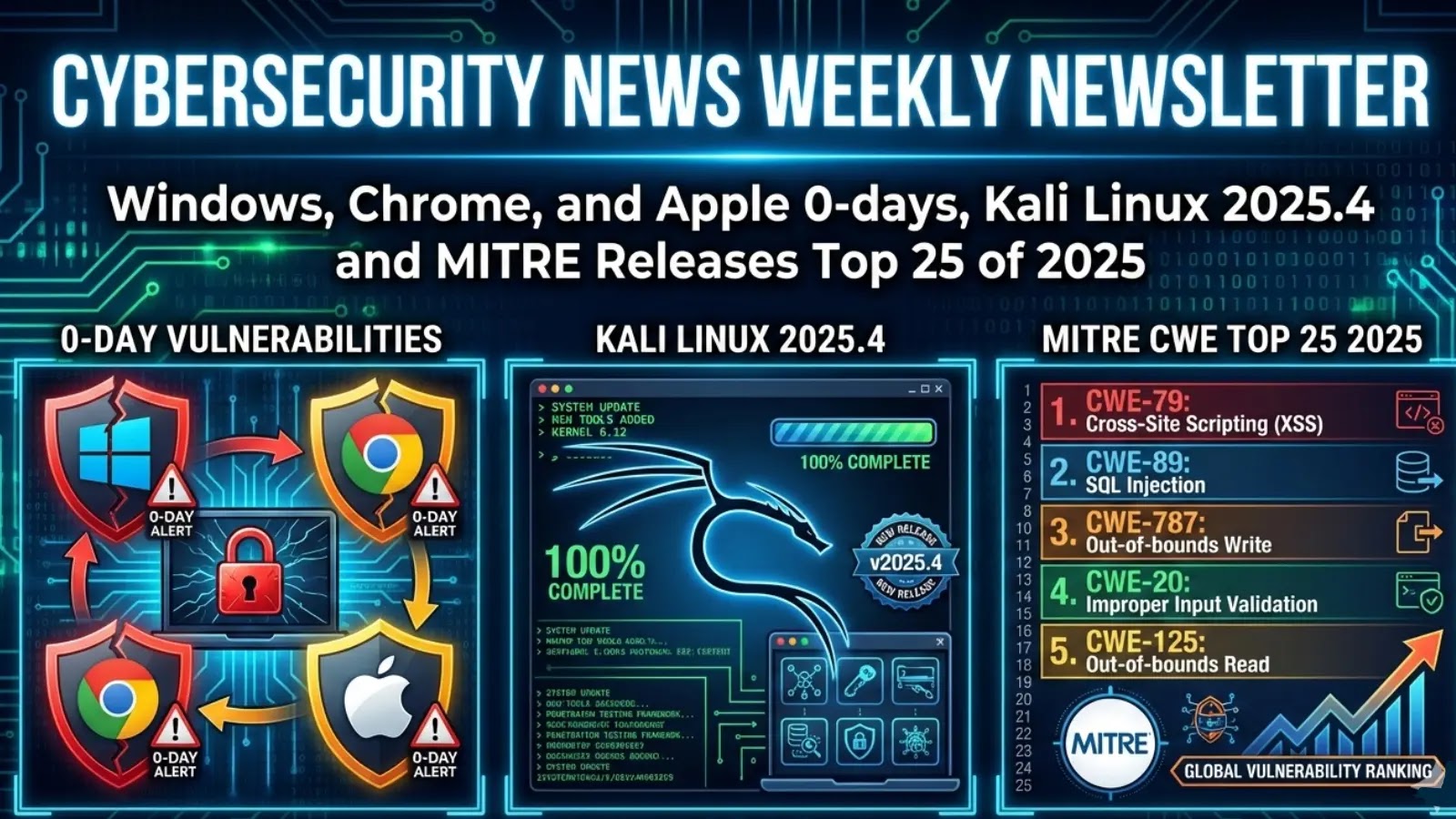
Cybersecurity News Weekly Newsletter – Windows, Chrome, and Apple 0-days, Kali Linux 2025.4, and MITRE Top 25 Cybersecurity News Weekly Newsletter – Windows, Chrome, and Apple 0-days, Kali Linux 2025.4, and MITRE Top 25 Cyber Security News
APT Group 123 Actively Attacking Windows Systems to Deliver Malicious Payloads APT Group 123 Actively Attacking Windows Systems to Deliver Malicious Payloads Cyber Security News
Palo Alto Networks Released A Mega Malware Analysis Tutorials Useful for Every Malware Analyst Palo Alto Networks Released A Mega Malware Analysis Tutorials Useful for Every Malware Analyst Cyber Security News
Microsoft Teams Mobile Update Prompts for Browser Choice Microsoft Teams Mobile Update Prompts for Browser Choice Cyber Security News
Hackers Abuse Microsoft 365 Exchange Direct Send to Bypass Content Filters and Harvest Sensitive Data Hackers Abuse Microsoft 365 Exchange Direct Send to Bypass Content Filters and Harvest Sensitive Data Cyber Security News

Categories

  • Cyber Security News
  • How To?
  • Security Week News
  • The Hacker News

Recent Posts

  • Chrome Security Flaw Allowed Extension Exploits
  • Chrome’s Gemini Flaw Risks User Privacy with Remote Access
  • Google Enhances Chrome Security with Quantum-Safe Certificates
  • Critical Windows Vulnerability Exploit Released
  • AWS Enhances Security Hub with Cross-Domain Integration

Pages

  • About Us – Contact
  • Disclaimer
  • Privacy Policy
  • Terms and Rules

Archives

  • March 2026
  • February 2026
  • January 2026
  • December 2025
  • November 2025
  • October 2025
  • September 2025
  • August 2025
  • July 2025
  • June 2025
  • May 2025

Recent Posts

  • Chrome Security Flaw Allowed Extension Exploits
  • Chrome’s Gemini Flaw Risks User Privacy with Remote Access
  • Google Enhances Chrome Security with Quantum-Safe Certificates
  • Critical Windows Vulnerability Exploit Released
  • AWS Enhances Security Hub with Cross-Domain Integration

Pages

  • About Us – Contact
  • Disclaimer
  • Privacy Policy
  • Terms and Rules

Categories

  • Cyber Security News
  • How To?
  • Security Week News
  • The Hacker News