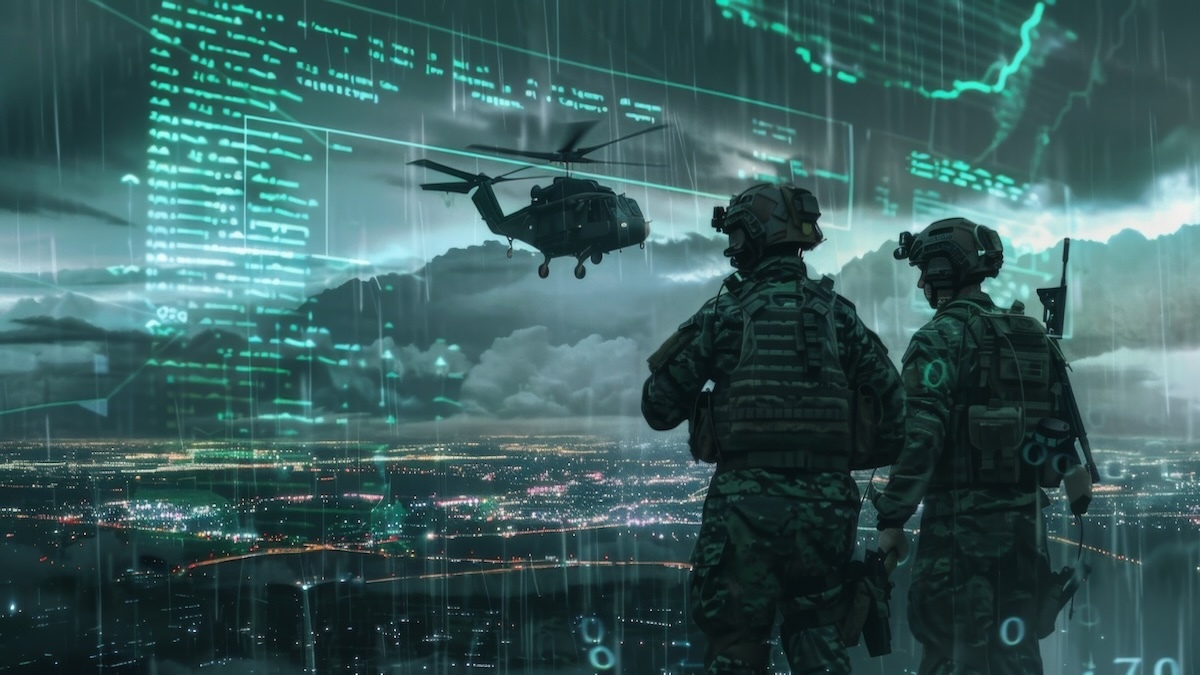
Cyberspace has emerged as a pivotal domain in military conflicts, joining land, air, and sea as a crucial battlefield. This shift reflects the increasing integration of cyber operations into geopolitical strategies, shaping global power dynamics.
Geopolitical Motivations and Cyber Warfare
The interplay between geopolitics and cyberspace involves complex motivations such as espionage, regime change, and territorial disputes. These motivations drive nation-state cyber operations, which often precede or accompany kinetic military actions. Unlike criminal cyber activities focused on financial gain, state-sponsored cyber activities prioritize stealth and prolonged engagement.
The geopolitical landscape can be seen as a dichotomy between East and West, with countries like China, Russia, Iran, and North Korea (CRINK) on one side, and North America, the UK, EU, and Five Eyes alliance on the other. Cyber espionage, while not traditionally viewed as warfare, enhances scale and scope in modern conflicts, targeting both military and economic assets.
Cyber Espionage and Military Strategies
Cyber espionage has deep historical roots, extending from ancient civilizations to contemporary intelligence operations. Modern cyber espionage elevates this practice, targeting military secrets and intellectual property. The Five Eyes alliance exemplifies the West’s coordinated cyber efforts, contrasting with practices in the East, such as China’s intellectual property theft.
Cyber espionage’s role in military strategy is evident in hypothetical scenarios, such as AI development, where the distinction between intelligence gathering and intellectual property theft becomes critical. This strategic focus underscores the nuanced role of cyber operations in global power struggles.
Cyber Operations in Kinetic Conflicts
Cyber operations often precede kinetic conflicts, providing strategic advantages in regime change and territorial disputes. Recent examples include Venezuela, Iran, Ukraine, and Taiwan, where cyber activities supported or anticipated military actions. These operations highlight the preparatory role of cyber tactics in facilitating physical military engagements.
In Ukraine, cyber disruptions heralded Russia’s 2022 invasion, illustrating cyber’s predictive role in kinetic warfare. Similarly, ongoing cyber hostilities surrounding Taiwan suggest potential future conflicts, with China leveraging cyber capabilities to assert territorial claims.
Despite cyber operations’ strategic importance, they cannot independently secure kinetic victories. This limitation emphasizes the continued necessity of traditional military forces alongside cyber strategies in modern conflicts.
Conclusion: The Future of Cyber in Geopolitics
The integration of cyberspace into military strategies marks a significant evolution in global conflict dynamics. While cyber operations augment traditional military tactics, their success remains intertwined with ground forces. The situation in Taiwan exemplifies the potential for cyber-driven geopolitical tensions to escalate into broader conflicts.
As cyber operations continue to reshape warfare, understanding their role within the geopolitical landscape is essential. Future conflicts may increasingly hinge on the delicate balance between cyber capabilities and traditional military power, particularly in regions with significant global implications.