Skip to content
  • Home
  • Cyber Map
  • About Us – Contact
  • Disclaimer
  • Terms and Rules
  • Privacy Policy
Cyber Web Spider Blog – News

Cyber Web Spider Blog – News

Globe Threat Map provides a real-time, interactive 3D visualization of global cyber threats. Monitor DDoS attacks, malware, and hacking attempts with geo-located arcs on a rotating globe. Stay informed with live logs and archive stats.

  • Home
  • Cyber Map
  • Cyber Security News
  • Security Week News
  • The Hacker News
  • How To?
  • Toggle search form
AI-Driven Browser Ransomware Exploits Chromium API

AI-Driven Browser Ransomware Exploits Chromium API

Posted on July 1, 2026 By CWS

Cybersecurity experts have identified a new form of ransomware that leverages artificial intelligence to exploit the Chromium API on Windows and Android platforms. This innovative threat, flagged by researchers using DeepSeek, combines previously theoretical browser-malware concepts with practical browser capabilities, resulting in a functional ransomware method executed entirely within the browser.

AI and the Emergence of Novel Cyber Threats

The discovery marks the first instance where an AI model has independently transitioned from a theoretical risk to a viable attack method, overcoming challenges traditionally posed by browser sandboxing. According to Check Point, this development highlights a shift in the cybersecurity landscape, as it becomes easier for malicious actors to identify new attack vectors without extensive expertise.

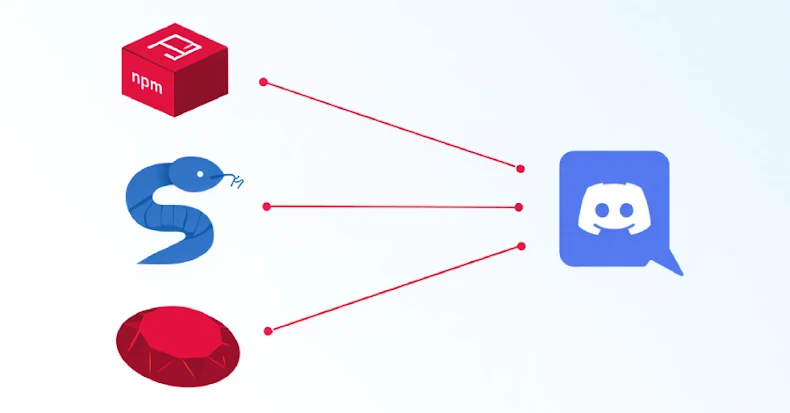
The malware, identified as InfernoGrabber v9.0, is a Python Flask application uploaded to VirusTotal in early 2026. Described as a comprehensive information-stealing and ransomware toolkit, it masquerades as a fake Discord avatar AI upscaler to lure victims. The application conducts several malicious activities, including stealing Discord tokens, capturing credit card information, and logging keystrokes.

Technical Analysis of the Ransomware

The ransomware employs a variety of tactics to achieve its goals. It includes routines for exploiting browser vulnerabilities, such as CVEs like CVE-2023-4863, and uses a hard-coded Discord webhook for data exfiltration. Additionally, it demands Bitcoin through a ransomware ‘WinLocker’ screen and features an administrative dashboard for managing stolen data.

This development signifies a growing trend where AI and large language models (LLMs) are increasingly being used to facilitate cyber threats. DeepSeek’s involvement is particularly concerning due to its lower refusal rates for harmful queries compared to Western AI platforms like Anthropic, Google, or OpenAI. The accessibility and broad prompt capabilities of DeepSeek make it a potent tool for generating malicious applications.

Implications and the Future of Cybersecurity

The discovery of this AI-generated malware underscores a critical shift in how cyber attacks are conceptualized and executed. The ability of AI models to independently devise attack strategies using legitimate platform features poses significant challenges for security professionals. Eli Smadja from Check Point Research emphasizes the need for organizations to adapt by strengthening security protocols, reconsidering permission-based trust, and treating browser prompts as critical security decisions.

As AI continues to evolve, the potential for these technologies to be harnessed for malicious purposes grows. It is imperative that cybersecurity measures evolve in tandem, preparing for a future where AI models might inadvertently uncover new attack techniques. This necessitates a proactive approach to security, assuming that the next threat could originate from an AI-generated solution rather than human ingenuity.
The Hacker News Tags:AI malware, AI threats, Android security, browser sandboxing, browser vulnerability, Check Point, Chromium API, cyber threat landscape, Cybersecurity, DeepSeek, DeepSeek AI, Ransomware, Windows security

Post navigation

Previous Post: Adobe ColdFusion Flaws Allow Code Execution Attacks

Related Posts

SonicWall Confirms Patched Vulnerability Behind Recent VPN Attacks, Not a Zero-Day SonicWall Confirms Patched Vulnerability Behind Recent VPN Attacks, Not a Zero-Day The Hacker News
PCPJack Compromises Cloud Systems Using 5 CVEs PCPJack Compromises Cloud Systems Using 5 CVEs The Hacker News
Hackers Use LinkedIn Messages to Spread RAT Malware Through DLL Sideloading Hackers Use LinkedIn Messages to Spread RAT Malware Through DLL Sideloading The Hacker News
Google AI “Big Sleep” Stops Exploitation of Critical SQLite Vulnerability Before Hackers Act Google AI “Big Sleep” Stops Exploitation of Critical SQLite Vulnerability Before Hackers Act The Hacker News
Critical n8n Vulnerability Allows System Commands Execution Critical n8n Vulnerability Allows System Commands Execution The Hacker News
Go-Based Malware Deploys XMRig Miner on Linux Hosts via Redis Configuration Abuse Go-Based Malware Deploys XMRig Miner on Linux Hosts via Redis Configuration Abuse The Hacker News

Categories

  • Cyber Security News
  • How To?
  • Security Week News
  • The Hacker News

Recent Posts

  • AI-Driven Browser Ransomware Exploits Chromium API
  • Adobe ColdFusion Flaws Allow Code Execution Attacks
  • Malware Chain Exploits Blogger to Deploy PureLogs Stealer
  • Critical Fluentd Vulnerabilities Threaten System Security
  • Teen Hacker Extradited to U.S. for Cybercrime Charges

Pages

  • About Us – Contact
  • Disclaimer
  • Privacy Policy
  • Terms and Rules

Archives

  • July 2026
  • June 2026
  • May 2026
  • April 2026
  • March 2026
  • February 2026
  • January 2026
  • December 2025
  • November 2025
  • October 2025
  • September 2025
  • August 2025
  • July 2025
  • June 2025
  • May 2025

Recent Posts

  • AI-Driven Browser Ransomware Exploits Chromium API
  • Adobe ColdFusion Flaws Allow Code Execution Attacks
  • Malware Chain Exploits Blogger to Deploy PureLogs Stealer
  • Critical Fluentd Vulnerabilities Threaten System Security
  • Teen Hacker Extradited to U.S. for Cybercrime Charges

Pages

  • About Us – Contact
  • Disclaimer
  • Privacy Policy
  • Terms and Rules

Categories

  • Cyber Security News
  • How To?
  • Security Week News
  • The Hacker News

Copyright © 2026 Cyber Web Spider Blog – News.

Powered by PressBook Masonry Dark