Skip to content
  • Home
  • Cyber Map
  • About Us – Contact
  • Disclaimer
  • Terms and Rules
  • Privacy Policy
Cyber Web Spider Blog – News

Cyber Web Spider Blog – News

Globe Threat Map provides a real-time, interactive 3D visualization of global cyber threats. Monitor DDoS attacks, malware, and hacking attempts with geo-located arcs on a rotating globe. Stay informed with live logs and archive stats.

  • Home
  • Cyber Map
  • Cyber Security News
  • Security Week News
  • The Hacker News
  • How To?
  • Toggle search form
Chrome Extensions Turn Malicious, Sparking Security Concerns

Chrome Extensions Turn Malicious, Sparking Security Concerns

Posted on March 9, 2026 By CWS

Two Google Chrome extensions have recently become security hazards following their transfer of ownership. This transition has allowed them to be exploited for malicious purposes, including injecting harmful code and collecting sensitive user information.

Security Breach in Chrome Extensions

The extensions, originally developed by someone using the email “[email protected]” and associated with BuildMelon, were QuickLens and ShotBird. QuickLens, which had amassed 7,000 users, is no longer available. Conversely, ShotBird remains accessible and has been downloaded by approximately 800 users. The extension, intended for crafting professional visuals, was passed to another developer last month.

According to monxresearch-sec, QuickLens was put up for sale in October 2025 and subsequently changed hands by February 2026. Updates introduced to QuickLens enabled the removal of security headers from HTTP responses, facilitating the execution of unauthorized scripts across domains.

Technical Exploitation Details

The malicious update to QuickLens allowed arbitrary requests by stripping security headers like X-Frame-Options. Moreover, the extension could identify user details such as location and operating system, continuously polling an external server for JavaScript code to execute upon page loads.

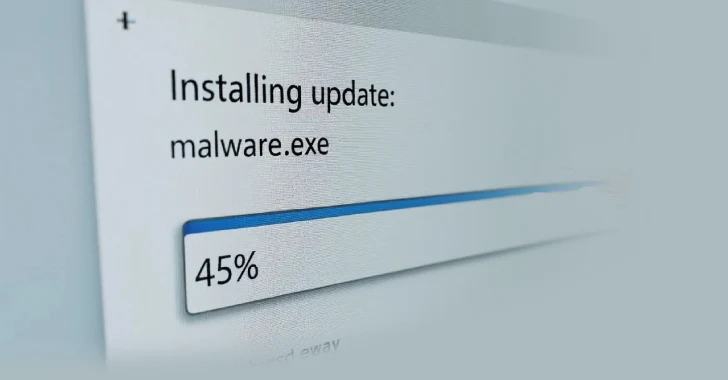
Similarly, ShotBird was found to utilize direct callback functions to deliver harmful JavaScript. This script mimicked a Google Chrome update prompt, leading users to inadvertently download malicious software.

Impact and Response to Threats

The potential for credential theft and broader system compromise has been heightened due to these malicious extensions. Researchers suggest that the same threat actor could be behind both compromised extensions, using a similar command-and-control pattern.

To mitigate risk, users who installed these extensions should remove them immediately. Regular audits of browser extensions are advised to ensure no malicious add-ons compromise user data.

The issue underscores a broader problem within the extension ecosystem, where trusted extensions can be weaponized post-ownership transfer, posing significant threats to user security and privacy.


The Hacker News Tags:Browser, browser extensions, Chrome, credential theft, Cybersecurity, data protection, data theft, Extensions, malicious extensions, Malware, malware injection, Security, Threat Actors

Post navigation

Previous Post: Critical Hikvision Vulnerability Risks Global Security Breaches
Next Post: Malware Distributed via Cloned AI Tool Sites in New Campaign

Related Posts

Fake Gaming and AI Firms Push Malware on Cryptocurrency Users via Telegram and Discord Fake Gaming and AI Firms Push Malware on Cryptocurrency Users via Telegram and Discord The Hacker News
Privacy in the Age of Agentic AI Privacy in the Age of Agentic AI The Hacker News
XDigo Malware Exploits Windows LNK Flaw in Eastern European Government Attacks XDigo Malware Exploits Windows LNK Flaw in Eastern European Government Attacks The Hacker News
Researchers Expose PWA JavaScript Attack That Redirects Users to Adult Scam Apps Researchers Expose PWA JavaScript Attack That Redirects Users to Adult Scam Apps The Hacker News
Iranian Hackers Use DEEPROOT and TWOSTROKE Malware in Aerospace and Defense Attacks Iranian Hackers Use DEEPROOT and TWOSTROKE Malware in Aerospace and Defense Attacks The Hacker News
Cisco Patches ISE Security Vulnerability After Public PoC Exploit Release Cisco Patches ISE Security Vulnerability After Public PoC Exploit Release The Hacker News

Categories

  • Cyber Security News
  • How To?
  • Security Week News
  • The Hacker News

Recent Posts

  • AI-Driven Malware Surge by Transparent Tribe
  • Malware Distributed via Cloned AI Tool Sites in New Campaign
  • Chrome Extensions Turn Malicious, Sparking Security Concerns
  • Critical Hikvision Vulnerability Risks Global Security Breaches
  • MacOS Vulnerability Exposed by ExifTool Flaw

Pages

  • About Us – Contact
  • Disclaimer
  • Privacy Policy
  • Terms and Rules

Archives

  • March 2026
  • February 2026
  • January 2026
  • December 2025
  • November 2025
  • October 2025
  • September 2025
  • August 2025
  • July 2025
  • June 2025
  • May 2025

Recent Posts

  • AI-Driven Malware Surge by Transparent Tribe
  • Malware Distributed via Cloned AI Tool Sites in New Campaign
  • Chrome Extensions Turn Malicious, Sparking Security Concerns
  • Critical Hikvision Vulnerability Risks Global Security Breaches
  • MacOS Vulnerability Exposed by ExifTool Flaw

Pages

  • About Us – Contact
  • Disclaimer
  • Privacy Policy
  • Terms and Rules

Categories

  • Cyber Security News
  • How To?
  • Security Week News
  • The Hacker News