Skip to content
  • Home
  • Cyber Map
  • About Us – Contact
  • Disclaimer
  • Terms and Rules
  • Privacy Policy
Cyber Web Spider Blog – News

Cyber Web Spider Blog – News

Globe Threat Map provides a real-time, interactive 3D visualization of global cyber threats. Monitor DDoS attacks, malware, and hacking attempts with geo-located arcs on a rotating globe. Stay informed with live logs and archive stats.

  • Home
  • Cyber Map
  • Cyber Security News
  • Security Week News
  • The Hacker News
  • How To?
  • Toggle search form
Critical 10-Year-Old Roundcube Webmail Bug Allows Authenticated Users Run Malicious Code

Critical 10-Year-Old Roundcube Webmail Bug Allows Authenticated Users Run Malicious Code

Posted on June 3, 2025June 3, 2025 By CWS

Jun 03, 2025Ravie LakshmananEmail Safety / Vulnerability
Cybersecurity researchers have disclosed particulars of a essential safety flaw within the Roundcube webmail software program that has gone unnoticed for a decade and could possibly be exploited to take over vulnerable methods and execute arbitrary code.
The vulnerability, tracked as CVE-2025-49113, carries a CVSS rating of 9.9 out of 10.0. It has been described as a case of post-authenticated distant code execution through PHP object deserialization.
“Roundcube Webmail earlier than 1.5.10 and 1.6.x earlier than 1.6.11 permits distant code execution by authenticated customers as a result of the _from parameter in a URL just isn’t validated in program/actions/settings/add.php, resulting in PHP Object Deserialization,” reads the outline of the flaw within the NIST’s Nationwide Vulnerability Database (NVD).
The shortcoming, which impacts all variations of the software program earlier than and together with 1.6.10, has been addressed in 1.6.11 and 1.5.10 LTS. Kirill Firsov, founder and CEO of FearsOff, has been credited with discovering and reporting the flaw.

The Dubai-based cybersecurity firm famous in a short advisory that it intends to make public further technical particulars and a proof-of-concept (PoC) “quickly” in order to present customers enough time to use the required patches.

Beforehand disclosed safety vulnerabilities in Roundcube have been a profitable goal for nation-state menace actors like APT28 and Winter Vivern. Final 12 months, Constructive Applied sciences revealed that unidentified hackers tried to use a Roundcube flaw (CVE-2024-37383) as a part of a phishing assault designed to steal consumer credentials.
Then a few weeks in the past, ESET famous that APT28 had leveraged cross-site scripting (XSS) vulnerabilities in numerous webmail servers resembling Roundcube, Horde, MDaemon, and Zimbra to reap confidential information from particular e-mail accounts belonging to governmental entities and protection corporations in Jap Europe.

Discovered this text fascinating? Observe us on Twitter  and LinkedIn to learn extra unique content material we put up.

The Hacker News Tags:10YearOld, Authenticated, Bug, Code, Critical, Malicious, Roundcube, Run, Users, Webmail

Post navigation

Previous Post: Splunk Universal Forwarder on Windows Lets Non-Admin Users Access All Contents
Next Post: Zero Networks Raises $55 Million for Microsegmentation Solution

Related Posts

Cybercriminals Exploit Remote Monitoring Tools to Infiltrate Logistics and Freight Networks Cybercriminals Exploit Remote Monitoring Tools to Infiltrate Logistics and Freight Networks The Hacker News
CISA Urges Patching of Apple and CMS Vulnerabilities CISA Urges Patching of Apple and CMS Vulnerabilities The Hacker News
SEC Drops SolarWinds Case After Years of High-Stakes Cybersecurity Scrutiny SEC Drops SolarWinds Case After Years of High-Stakes Cybersecurity Scrutiny The Hacker News
The Impact of Robotic Process Automation (RPA) on Identity and Access Management The Impact of Robotic Process Automation (RPA) on Identity and Access Management The Hacker News
Trojan VPNs Spread via SEO Poisoning, Microsoft Warns Trojan VPNs Spread via SEO Poisoning, Microsoft Warns The Hacker News
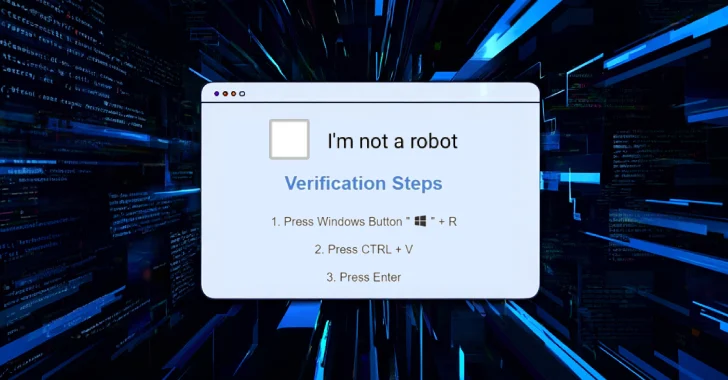
Cybercriminals Deploy CORNFLAKE.V3 Backdoor via ClickFix Tactic and Fake CAPTCHA Pages Cybercriminals Deploy CORNFLAKE.V3 Backdoor via ClickFix Tactic and Fake CAPTCHA Pages The Hacker News

Categories

  • Cyber Security News
  • How To?
  • Security Week News
  • The Hacker News

Recent Posts

  • Top Fraud Detection Tools for 2026
  • Microsoft Urges Action on Critical Windows Updates
  • Citrix NetScaler Threat: Immediate Action Required
  • Iranian Hackers Compromise FBI Director’s Email, Attack Stryker
  • Stocks in Cybersecurity Dip as Anthropic Tests Cutting-Edge AI

Pages

  • About Us – Contact
  • Disclaimer
  • Privacy Policy
  • Terms and Rules

Archives

  • March 2026
  • February 2026
  • January 2026
  • December 2025
  • November 2025
  • October 2025
  • September 2025
  • August 2025
  • July 2025
  • June 2025
  • May 2025

Recent Posts

  • Top Fraud Detection Tools for 2026
  • Microsoft Urges Action on Critical Windows Updates
  • Citrix NetScaler Threat: Immediate Action Required
  • Iranian Hackers Compromise FBI Director’s Email, Attack Stryker
  • Stocks in Cybersecurity Dip as Anthropic Tests Cutting-Edge AI

Pages

  • About Us – Contact
  • Disclaimer
  • Privacy Policy
  • Terms and Rules

Categories

  • Cyber Security News
  • How To?
  • Security Week News
  • The Hacker News

Copyright © 2026 Cyber Web Spider Blog – News.

Powered by PressBook Masonry Dark