Skip to content
  • Home
  • Cyber Map
  • About Us – Contact
  • Disclaimer
  • Terms and Rules
  • Privacy Policy
Cyber Web Spider Blog – News

Cyber Web Spider Blog – News

Globe Threat Map provides a real-time, interactive 3D visualization of global cyber threats. Monitor DDoS attacks, malware, and hacking attempts with geo-located arcs on a rotating globe. Stay informed with live logs and archive stats.

  • Home
  • Cyber Map
  • Cyber Security News
  • Security Week News
  • The Hacker News
  • How To?
  • Toggle search form
Google Enhances Chrome Security with DBSC Rollout

Google Enhances Chrome Security with DBSC Rollout

Posted on April 10, 2026 By CWS

Google has officially launched the Device Bound Session Credentials (DBSC) for all Windows users on its Chrome 146 browser, advancing its efforts to enhance security against session theft. This new feature, previously tested in beta, is set to expand to macOS users in future updates.

Enhancing Browser Security

The introduction of DBSC marks a significant milestone in Google’s strategy to combat the prevalent threat of session theft. This cyber threat often involves the unauthorized collection of session cookies from web browsers, which can be exploited to access user accounts.

Typically, attackers use malware, such as Atomic, Lumma, and Vidar Stealer, to infiltrate systems and extract these cookies. The extended lifespan of session cookies makes them valuable targets, enabling cybercriminals to gain unauthorized access to accounts and potentially sell these credentials for profit.

How DBSC Works

Originally announced in April 2024, DBSC aims to mitigate such threats by cryptographically linking authentication sessions to specific devices. This approach renders stolen cookies ineffective, as they cannot be used on unauthorized devices.

Google explains that this is achieved through hardware-backed security modules like the Trusted Platform Module (TPM) on Windows and the Secure Enclave on macOS. These modules generate unique key pairs that remain secure within the device.

New session cookies are issued only when Chrome proves possession of the private key, ensuring that any stolen cookies expire quickly and become useless to attackers.

Future Developments and Privacy Considerations

Since the implementation of DBSC, Google has observed a notable decrease in cases of session theft, indicating the effectiveness of this security measure. The company plans to extend DBSC to a broader range of devices and enhance its integration with enterprise environments.

Google collaborated with Microsoft to develop this standard, aiming to establish it as an open web standard. The DBSC architecture is designed to prioritize user privacy, with distinct key approaches preventing websites from tracking user activities across sessions or sites.

As part of its commitment to privacy, the protocol minimizes data exchange, ensuring that it secures sessions without enabling cross-site tracking or serving as a device fingerprinting mechanism.


The Hacker News Tags:browser security, Chrome 146, Cybersecurity, DBSC, device security, Google Chrome, malware protection, public key, Secure Enclave, session cookies, session theft, TPM, Trusted Platform Module, Windows Update

Post navigation

Previous Post: CPUID Site Delivers Compromised CPU-Z and HWMonitor Tools
Next Post: Marimo Vulnerability Exploited Quickly After Disclosure

Related Posts

Researchers Find 175,000 Publicly Exposed Ollama AI Servers Across 130 Countries Researchers Find 175,000 Publicly Exposed Ollama AI Servers Across 130 Countries The Hacker News
Experts Reports Sharp Increase in Automated Botnet Attacks Targeting PHP Servers and IoT Devices Experts Reports Sharp Increase in Automated Botnet Attacks Targeting PHP Servers and IoT Devices The Hacker News
GPUGate Malware Uses Google Ads and Fake GitHub Commits to Target IT Firms GPUGate Malware Uses Google Ads and Fake GitHub Commits to Target IT Firms The Hacker News
Google Warns Salesloft OAuth Breach Extends Beyond Salesforce, Impacting All Integrations Google Warns Salesloft OAuth Breach Extends Beyond Salesforce, Impacting All Integrations The Hacker News
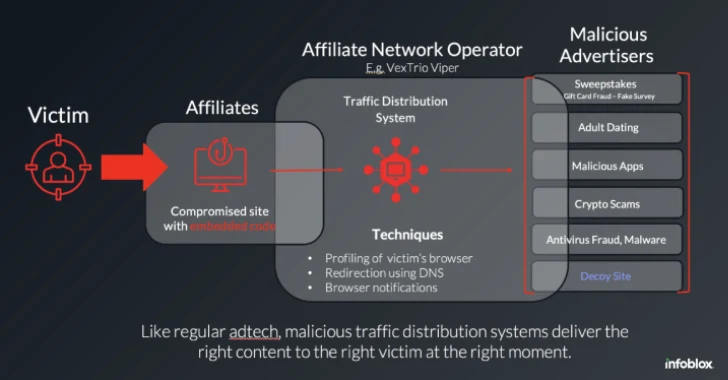
How VexTrio and Affiliates Run a Global Scam Network How VexTrio and Affiliates Run a Global Scam Network The Hacker News
Wormable AirPlay Flaws Enable Zero-Click RCE on Apple Devices via Public Wi-Fi Wormable AirPlay Flaws Enable Zero-Click RCE on Apple Devices via Public Wi-Fi The Hacker News

Categories

  • Cyber Security News
  • How To?
  • Security Week News
  • The Hacker News

Recent Posts

  • Chrome 147 Fixes 60 Security Flaws, Two Critical
  • AI Extensions: The Emerging Security Threat in Browsers
  • Mallory Unveils AI-Driven Threat Intelligence Platform
  • MITRE Unveils Comprehensive Fraud Prevention Framework
  • Malicious OpenVSX Extension Infects Multiple Code Editors

Pages

  • About Us – Contact
  • Disclaimer
  • Privacy Policy
  • Terms and Rules

Archives

  • April 2026
  • March 2026
  • February 2026
  • January 2026
  • December 2025
  • November 2025
  • October 2025
  • September 2025
  • August 2025
  • July 2025
  • June 2025
  • May 2025

Recent Posts

  • Chrome 147 Fixes 60 Security Flaws, Two Critical
  • AI Extensions: The Emerging Security Threat in Browsers
  • Mallory Unveils AI-Driven Threat Intelligence Platform
  • MITRE Unveils Comprehensive Fraud Prevention Framework
  • Malicious OpenVSX Extension Infects Multiple Code Editors

Pages

  • About Us – Contact
  • Disclaimer
  • Privacy Policy
  • Terms and Rules

Categories

  • Cyber Security News
  • How To?
  • Security Week News
  • The Hacker News

Copyright © 2026 Cyber Web Spider Blog – News.

Powered by PressBook Masonry Dark