Skip to content
  • Home
  • Cyber Map
  • About Us – Contact
  • Disclaimer
  • Terms and Rules
  • Privacy Policy
Cyber Web Spider Blog – News

Cyber Web Spider Blog – News

Globe Threat Map provides a real-time, interactive 3D visualization of global cyber threats. Monitor DDoS attacks, malware, and hacking attempts with geo-located arcs on a rotating globe. Stay informed with live logs and archive stats.

  • Home
  • Cyber Map
  • Cyber Security News
  • Security Week News
  • The Hacker News
  • How To?
  • Toggle search form
PHP Warns of New RCE Vulnerability Amid Recent Patches

PHP Warns of New RCE Vulnerability Amid Recent Patches

Posted on October 23, 2026 By CWS

PHP has issued a caution regarding a potential new method for executing code on web servers, shortly after releasing emergency updates for critical PHP2Shell vulnerabilities. This latest issue, identified as CVE-2026-115560, impacts only specific web application configurations. Although deemed unlikely to pose a significant threat, PHP advises disabling the session upload progress feature until a long-term solution is integrated into a future routine update.

Details of the Latest Vulnerability

The advisory concerning CVE-2026-115560 was made public on October 23, following the urgent fixes for PHP2Shell vulnerabilities disclosed on October 21. These earlier vulnerabilities, noted as CVE-2026-109618 and CVE-2026-109619, allowed unauthorized code execution on servers and were addressed in PHP versions 8.5.12, 8.4.27, 8.3.36, and 8.2.35. The new vulnerability is separate and remains unresolved in these releases.

Configuration Risks and Mitigation

This vulnerability only affects web applications with a specific configuration. The issue arises when an application initially sets the session.serialize_handler to php_binary or php_serialize, subsequently alters it to php via ini_set(), and then calls session_start() with session upload progress still active. PHP considers this configuration rare, suggesting that applications which do not modify the serialize handler during execution can safely retain the feature.

To mitigate potential risks, PHP recommends adjusting the session.upload_progress.enabled setting to 0 until a bugfix is released. This action aligns with the recommendations previously issued for CVE-2026-109619 on October 21. Applications that have already implemented this precaution do not need further adjustments for the current vulnerability.

Implications and Continued Monitoring

Despite the unusual configuration required to exploit CVE-2026-115560, PHP will address it in its standard release cycle and provide a detailed advisory in an upcoming update. The affected versions and the severity score for this vulnerability remain unspecified. Additionally, PHP has not clarified whether this issue shares any commonality with the earlier PHP2Shell vulnerabilities.

No known exploits for CVE-2026-115560 have been reported. However, there has been a significant increase in attempts to exploit the previous PHP2Shell vulnerabilities since their disclosure. Reports from Amazon and Cloudflare indicate a rise in exploit attempts, with attackers aiming to deploy a Mirai botnet variant. Despite these efforts, successful exploitation has not been confirmed, as security researchers find developing a reliable exploit more challenging than anticipated.
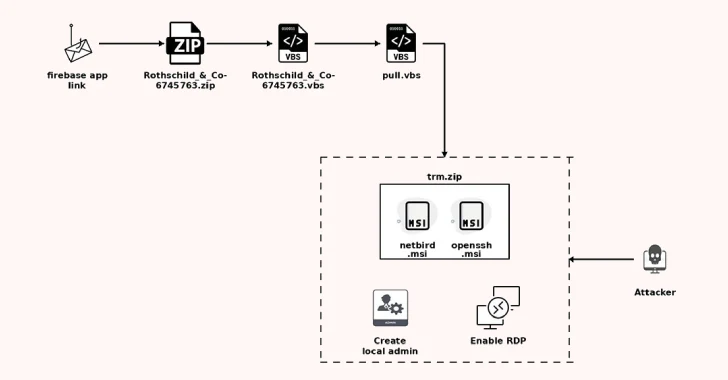
The Hacker News Tags:CVE-2026-115560, Cybersecurity, emergency patch, exploit attempts, PHP, PHP2Shell, RCE vulnerability, server security, session management, session upload progress, web applications, web security

Post navigation

Previous Post: SBI Alerts Customers Following Cybersecurity Breach
Next Post: Cybersecurity Breach at Quest Diagnostics Compromises Patient Data

Related Posts

Fake Recruiter Emails Target CFOs Using Legit NetBird Tool Across 6 Global Regions Fake Recruiter Emails Target CFOs Using Legit NetBird Tool Across 6 Global Regions The Hacker News
Security Platforms: A Solution for Mid-Market Needs Security Platforms: A Solution for Mid-Market Needs The Hacker News
Chrome Zero-Day CVE-2026-2441 Actively Exploited Chrome Zero-Day CVE-2026-2441 Actively Exploited The Hacker News
Russian Hackers Exploit ClickFix CAPTCHAs in Ukraine Russian Hackers Exploit ClickFix CAPTCHAs in Ukraine The Hacker News
How to Browse the Web More Sustainably With a Green Browser How to Browse the Web More Sustainably With a Green Browser The Hacker News
Fortinet Exploits, RedLine Clipjack, NTLM Crack, Copilot Attack & More Fortinet Exploits, RedLine Clipjack, NTLM Crack, Copilot Attack & More The Hacker News

Categories

  • Cyber Security News
  • How To?
  • Security Week News
  • The Hacker News

Recent Posts

  • Citrix NetScaler Vulnerability Exploited by Hackers
  • Cybersecurity Breach at Quest Diagnostics Compromises Patient Data
  • PHP Warns of New RCE Vulnerability Amid Recent Patches
  • SBI Alerts Customers Following Cybersecurity Breach
  • AI Tool Artex Fuels China-Linked ConnectWise Breaches

Pages

  • About Us – Contact
  • Disclaimer
  • Privacy Policy
  • Terms and Rules

Archives

  • October 2026
  • September 2026
  • August 2026
  • July 2026
  • June 2026
  • May 2026
  • April 2026
  • March 2026
  • February 2026
  • January 2026
  • December 2025
  • November 2025
  • October 2025
  • September 2025
  • August 2025
  • July 2025
  • June 2025
  • May 2025

Recent Posts

  • Citrix NetScaler Vulnerability Exploited by Hackers
  • Cybersecurity Breach at Quest Diagnostics Compromises Patient Data
  • PHP Warns of New RCE Vulnerability Amid Recent Patches
  • SBI Alerts Customers Following Cybersecurity Breach
  • AI Tool Artex Fuels China-Linked ConnectWise Breaches

Pages

  • About Us – Contact
  • Disclaimer
  • Privacy Policy
  • Terms and Rules

Categories

  • Cyber Security News
  • How To?
  • Security Week News
  • The Hacker News

Copyright © 2026 Cyber Web Spider Blog – News.

Powered by PressBook Masonry Dark