Skip to content
  • Home
  • Cyber Map
  • About Us – Contact
  • Disclaimer
  • Terms and Rules
  • Privacy Policy
Cyber Web Spider Blog – News

Cyber Web Spider Blog – News

Globe Threat Map provides a real-time, interactive 3D visualization of global cyber threats. Monitor DDoS attacks, malware, and hacking attempts with geo-located arcs on a rotating globe. Stay informed with live logs and archive stats.

  • Home
  • Cyber Map
  • Cyber Security News
  • Security Week News
  • The Hacker News
  • How To?
  • Toggle search form
Trojan VPNs Spread via SEO Poisoning, Microsoft Warns

Trojan VPNs Spread via SEO Poisoning, Microsoft Warns

Posted on March 13, 2026 By CWS

Microsoft has unveiled a worrying campaign targeting users through fake VPN clients distributed via SEO poisoning tactics. Known as Storm-2561, this operation manipulates search results to direct users seeking genuine enterprise software to malicious sites, where they inadvertently download trojans disguised as trusted VPN programs.

How SEO Poisoning Facilitates Credential Theft

The campaign, first noticed by Microsoft in January 2026, abuses search engine credibility to lead users to attacker-controlled websites. These sites host ZIP files containing trojanized VPN installers, which, although digitally signed, are crafted to steal VPN credentials. The threat actor, active since May 2025, impersonates reputable software brands to enhance the deception.

Initially reported by Cyjax, the threat actors exploit SEO to divert users from legitimate software vendors like SonicWall and Pulse Secure to counterfeit websites. These sites persuade users to download MSI installers that activate the Bumblebee loader, a known malware.

Fake VPN Clients and Malicious Installers

In October 2025, Zscaler revealed a similar attack using a fake Ivanti Pulse Secure VPN client. Users searching on Bing were directed to fraudulent domains, such as ‘ivanti-vpn[.]org’, which resulted in credential theft from the infected systems. The campaign highlights the sophistication of social engineering tactics used to prey on user trust in search engine results and software brands.

Microsoft’s analysis showed that malicious installers are hosted on platforms like GitHub, adding a layer of authenticity. The installers contain DLL files that sideload malware, while a deceptive VPN login prompt captures user credentials. Victims are later redirected to legitimate VPN sites, further obscuring the attack.

Protective Measures and Future Outlook

To combat these threats, Microsoft has removed the offending GitHub repositories and invalidated the certificates used in the attack. They emphasize the importance of multi-factor authentication (MFA) and cautious software downloading practices. Users should verify the legitimacy of software sources to avoid falling victim to such scams.

In conclusion, the campaign underlines the persistent threat posed by cybercriminal groups like Storm-2561. As cyber threats evolve, staying informed and adopting robust security measures are crucial for protecting sensitive information.

The Hacker News Tags:credential theft, Cybercrime, Cybersecurity, fake VPN clients, GitHub, information stealer, Malware, malware distribution, Microsoft, multi-factor authentication, SEO poisoning, Storm-2561, Trojan, VPN

Post navigation

Previous Post: Metasploit Pro 5.0.0 Launches with Enhanced Security Features
Next Post: Critical Cyber Threats: Exploits, Malware, and Global Crackdown

Related Posts

New Rust-Based Malware “ChaosBot” Uses Discord Channels to Control Victims’ PCs New Rust-Based Malware “ChaosBot” Uses Discord Channels to Control Victims’ PCs The Hacker News
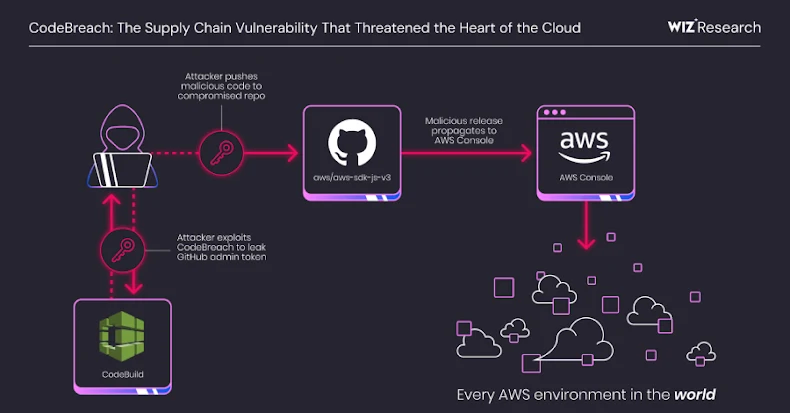
AWS CodeBuild Misconfiguration Exposed GitHub Repos to Potential Supply Chain Attacks AWS CodeBuild Misconfiguration Exposed GitHub Repos to Potential Supply Chain Attacks The Hacker News
Critical n8n Vulnerabilities Risk Remote Code Execution Critical n8n Vulnerabilities Risk Remote Code Execution The Hacker News
Cybercrime Group Recruits Women for IT Vishing Cybercrime Group Recruits Women for IT Vishing The Hacker News
Firefox Patches 2 Zero-Days Exploited at Pwn2Own Berlin with 0K in Rewards Firefox Patches 2 Zero-Days Exploited at Pwn2Own Berlin with $100K in Rewards The Hacker News
Microsoft Removes Password Management from Authenticator App Starting August 2025 Microsoft Removes Password Management from Authenticator App Starting August 2025 The Hacker News

Categories

  • Cyber Security News
  • How To?
  • Security Week News
  • The Hacker News

Recent Posts

  • Starbucks Employee Data Breach Exposes Sensitive Information
  • INTERPOL’s Major Cybercrime Bust: 45,000 IPs Dismantled
  • Major Security Breach at Loblaw: Customer Data Compromised
  • Critical Cyber Threats: Exploits, Malware, and Global Crackdown
  • Trojan VPNs Spread via SEO Poisoning, Microsoft Warns

Pages

  • About Us – Contact
  • Disclaimer
  • Privacy Policy
  • Terms and Rules

Archives

  • March 2026
  • February 2026
  • January 2026
  • December 2025
  • November 2025
  • October 2025
  • September 2025
  • August 2025
  • July 2025
  • June 2025
  • May 2025

Recent Posts

  • Starbucks Employee Data Breach Exposes Sensitive Information
  • INTERPOL’s Major Cybercrime Bust: 45,000 IPs Dismantled
  • Major Security Breach at Loblaw: Customer Data Compromised
  • Critical Cyber Threats: Exploits, Malware, and Global Crackdown
  • Trojan VPNs Spread via SEO Poisoning, Microsoft Warns

Pages

  • About Us – Contact
  • Disclaimer
  • Privacy Policy
  • Terms and Rules

Categories

  • Cyber Security News
  • How To?
  • Security Week News
  • The Hacker News