Skip to content
  • Home
  • Cyber Map
  • About Us – Contact
  • Disclaimer
  • Terms and Rules
  • Privacy Policy
Cyber Web Spider Blog – News

Cyber Web Spider Blog – News

Globe Threat Map provides a real-time, interactive 3D visualization of global cyber threats. Monitor DDoS attacks, malware, and hacking attempts with geo-located arcs on a rotating globe. Stay informed with live logs and archive stats.

  • Home
  • Cyber Map
  • Cyber Security News
  • Security Week News
  • The Hacker News
  • How To?
  • Toggle search form
Hackers Target ICTBroadcast Servers via Cookie Exploit to Gain Remote Shell Access

Hackers Target ICTBroadcast Servers via Cookie Exploit to Gain Remote Shell Access

Posted on October 15, 2025October 15, 2025 By CWS

Oct 15, 2025Ravie LakshmananVulnerability / Server Safety
Cybersecurity researchers have disclosed {that a} vital safety flaw impacting ICTBroadcast, an autodialer software program from ICT Improvements, has come beneath lively exploitation within the wild.
The vulnerability, assigned the CVE identifier CVE-2025-2611 (CVSS rating: 9.3), pertains to improper enter validation that can lead to unauthenticated distant code execution as a consequence of the truth that the decision middle software unsafely passes session cookie knowledge to shell processing.
This, in flip, permits an attacker to inject shell instructions right into a session cookie that may get executed within the weak server. The safety flaw impacts ICTBroadcast variations 7.4 and under.

“Attackers are leveraging the unauthenticated command injection in ICTBroadcast by way of the BROADCAST cookie to realize distant code execution,” VulnCheck’s Jacob Baines mentioned in a Tuesday alert. “Roughly 200 on-line situations are uncovered.”
The cybersecurity agency mentioned that it detected in-the-wild exploitation on October 11, with the assaults occurring in two phases, beginning with a time-based exploit examine adopted by makes an attempt to arrange reverse shells.

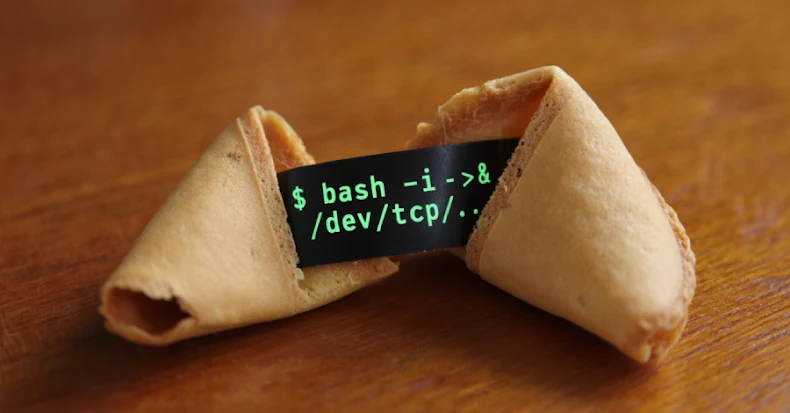
To that finish, unknown menace actors have been noticed injecting a Base64-encoded command that interprets to “sleep 3” within the BROADCAST cookie in specifically crafted HTTP requests to substantiate command execution after which create reverse shells.
“The attacker used a localto[.]web URL within the mkfifo + nc payload, and likewise made connections to 143.47.53[.]106 in different payloads,” Baines famous.

It is price noting that each the usage of a localto.web hyperlink and the IP handle had been beforehand flagged by Fortinet in reference to an electronic mail marketing campaign distributing a Java-based distant entry trojan (RAT) named Ratty RAT concentrating on organizations in Spain, Italy, and Portugal.
These indicator overlaps recommend doable reuse or shared tooling, VulnCheck identified. There may be presently no info obtainable on the patch standing of the flaw. The Hacker Information has reached out to ICT Improvements for additional remark, and we’ll replace the story if we hear again.

The Hacker News Tags:Access, Cookie, Exploit, Gain, Hackers, ICTBroadcast, Remote, Servers, Shell, Target

Post navigation

Previous Post: Windows Remote Desktop Client Vulnerability Let Attackers Execute Remote Code
Next Post: Critical Veeam Backup RCE Vulnerabilities Let Attackers Execute Malicious Code Remotely

Related Posts

LastPass Warns of Fake Repositories Infecting macOS with Atomic Infostealer LastPass Warns of Fake Repositories Infecting macOS with Atomic Infostealer The Hacker News
Microsoft Patches Critical Entra ID Flaw Enabling Global Admin Impersonation Across Tenants Microsoft Patches Critical Entra ID Flaw Enabling Global Admin Impersonation Across Tenants The Hacker News
ShadowLeak Zero-Click Flaw Leaks Gmail Data via OpenAI ChatGPT Deep Research Agent ShadowLeak Zero-Click Flaw Leaks Gmail Data via OpenAI ChatGPT Deep Research Agent The Hacker News
Researchers Detect Malicious npm Package Targeting GitHub-Owned Repositories Researchers Detect Malicious npm Package Targeting GitHub-Owned Repositories The Hacker News
Exchange Exploits and npm Worms: This Week’s Cyber Threats Exchange Exploits and npm Worms: This Week’s Cyber Threats The Hacker News
RustFS Flaw, Iranian Ops, WebUI RCE, Cloud Leaks, and 12 More Stories RustFS Flaw, Iranian Ops, WebUI RCE, Cloud Leaks, and 12 More Stories The Hacker News

Categories

  • Cyber Security News
  • How To?
  • Security Week News
  • The Hacker News

Recent Posts

  • Russian Intelligence Phishing Campaign Targets Messaging Apps
  • Chinese Framework Fuels Massive Scam Network
  • OpenAI Unveils GPT-5.6 Sol with Enhanced Security
  • Critical Cloud Bucket Hijacking Threat Exposed
  • Claude Mythos 5 Redeployed to Protect US Infrastructure

Pages

  • About Us – Contact
  • Disclaimer
  • Privacy Policy
  • Terms and Rules

Archives

  • June 2026
  • May 2026
  • April 2026
  • March 2026
  • February 2026
  • January 2026
  • December 2025
  • November 2025
  • October 2025
  • September 2025
  • August 2025
  • July 2025
  • June 2025
  • May 2025

Recent Posts

  • Russian Intelligence Phishing Campaign Targets Messaging Apps
  • Chinese Framework Fuels Massive Scam Network
  • OpenAI Unveils GPT-5.6 Sol with Enhanced Security
  • Critical Cloud Bucket Hijacking Threat Exposed
  • Claude Mythos 5 Redeployed to Protect US Infrastructure

Pages

  • About Us – Contact
  • Disclaimer
  • Privacy Policy
  • Terms and Rules

Categories

  • Cyber Security News
  • How To?
  • Security Week News
  • The Hacker News

Copyright © 2026 Cyber Web Spider Blog – News.

Powered by PressBook Masonry Dark