Browser assaults have turn out to be way more harmful and arranged than earlier than. A brand new risk known as Stanley, found in January 2026, reveals simply how critical the issue has turn out to be.
This malware-as-a-service toolkit, priced between $2,000 and $6,000, does one thing notably misleading: it shows pretend web sites to customers whereas the URL bar retains exhibiting the reliable deal with.
It’s designed to steal login credentials and monetary data by tricking individuals into pondering they’re visiting actual web sites.
Stanley first appeared on January 12, 2026, on Russian-language cybercrime boards below the vendor’s alias “Стэнли.”
What makes this toolkit particularly regarding is that the vendor guarantees assured publication on the Chrome Net Retailer, that means the malicious extension might be downloaded immediately from Google’s official retailer.
The toolkit disguises itself as “Notely,” a notes and bookmarks software, giving it reliable cowl whereas performing web site spoofing assaults.
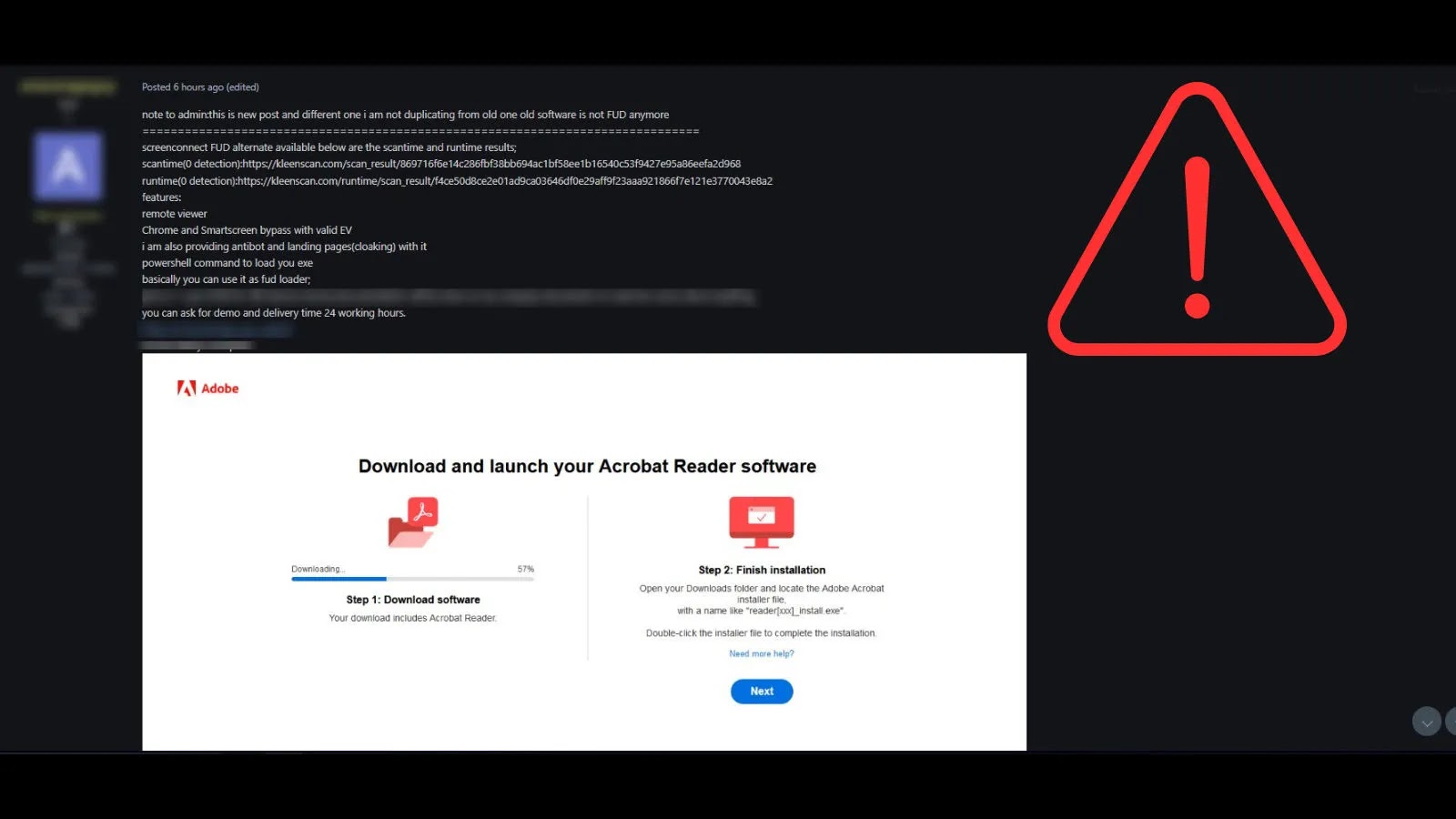
The ‘Stanley’ market itemizing on a Russian cybercrime discussion board (Supply – Varonis)
Varonis researchers famous and recognized the toolkit after analyzing its technical capabilities and distribution strategies.
The safety staff found that Stanley features via a web-based management panel the place attackers choose particular person victims and configure web site hijacking guidelines.
As soon as a goal is chosen, operators arrange a supply URL (the reliable website to hijack) and a goal URL (the attacker’s phishing web page).
Stanley’s pricing, with the top-tier guaranteeing Chrome Net Retailer publication (Supply – Varonis)
The extension then intercepts when the sufferer visits the actual web site and overlays a full-screen iframe containing the pretend model, all whereas the browser’s deal with bar shows the reliable area.
How Stanley Infects and Controls Victims
The an infection mechanism depends on browser extension permissions that grant near-complete management over consumer searching exercise.
As soon as put in, Stanley’s code runs on the earliest doable second throughout web page loading, earlier than any reliable content material seems.
The extension makes use of the sufferer’s IP deal with as a novel identifier, enabling attackers to focus on particular individuals and even correlate customers throughout a number of browsers and units.
Each ten seconds, the extension communicates with the attacker’s command and management server to obtain up to date hijacking directions.
Stanley implements backup area rotation to make sure survival even when authorities take down the first server.
This implies the extension mechanically cycles via fallback domains to take care of operational management.
The toolkit has already compromised hundreds of customers, with the command and management panel displaying sufferer IP addresses, on-line standing, and final exercise timestamps.
Enterprises ought to contemplate strict extension allowlisting insurance policies, whereas particular person customers want to cut back their put in extensions and scrutinize permission requests rigorously.
The deeper downside stays that browser extension marketplaces approve extensions as soon as and permit updates anytime, that means malicious updates can slip via after preliminary evaluation.
Comply with us on Google Information, LinkedIn, and X to Get Extra On the spot Updates, Set CSN as a Most popular Supply in Google.