Skip to content
  • Home
  • Cyber Map
  • About Us – Contact
  • Disclaimer
  • Terms and Rules
  • Privacy Policy
Cyber Web Spider Blog – News

Cyber Web Spider Blog – News

Globe Threat Map provides a real-time, interactive 3D visualization of global cyber threats. Monitor DDoS attacks, malware, and hacking attempts with geo-located arcs on a rotating globe. Stay informed with live logs and archive stats.

  • Home
  • Cyber Map
  • Cyber Security News
  • Security Week News
  • The Hacker News
  • How To?
  • Toggle search form
Lithuania Strengthens Cybersecurity Against AI Fraud

Lithuania Strengthens Cybersecurity Against AI Fraud

Posted on February 16, 2026 By CWS

As digital threats evolve, Lithuania is ramping up its cybersecurity measures, particularly against AI-driven fraud. The Innovation Agency Lithuania is spearheading a national initiative to bolster the country’s digital resilience, in collaboration with universities and tech companies. This effort is part of a larger mission to create a ‘Safe and Inclusive E-Society’, aiming to protect personal data and secure public and private e-services.

The National Mission: A Safer Digital Society

Central to this initiative is the ‘Safe and Inclusive E-Society’ mission, coordinated by Kaunas University of Technology (KTU). With a budget exceeding €24.1 million, this mission seeks to enhance cyber resilience and mitigate data breaches, focusing on everyday users. Collaborating partners include prominent universities like Vilnius Tech, Mykolas Romeris University, and leading cybersecurity companies.

Research and development efforts are directed towards creating solutions for various cybersecurity challenges. These include smart buildings, AI-driven defense systems for the financial sector, and threat-detection sensors for critical infrastructure. The mission also tackles disinformation using AI models to detect coordinated bot activity, alongside platforms for real-time cyber threat analysis.

AI-Driven Fraud: A Growing Concern

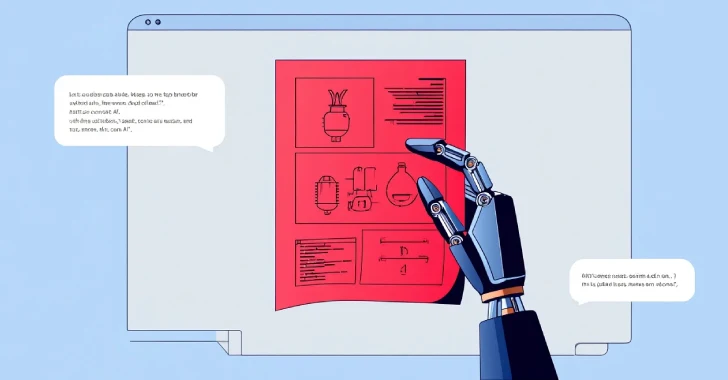
Dr. Rasa Brūzgienė from KTU highlights the transformative impact of Generative AI and Large Language Models on fraud tactics. Previously, defense relied on pattern detection, but GenAI’s ability to produce contextually accurate messages has blurred these lines. This technology enables criminals to craft sophisticated phishing emails that are difficult to distinguish from legitimate communications.

The scale and sophistication of attacks have surged, with AI facilitating the generation of personalized, multilingual fraudulent messages. Tools such as GPT-4, GPT-5, and others are used to create convincing fake identities, making traditional security measures less effective.

Countering AI-Powered Social Engineering

AI-driven social engineering represents another emerging threat. Attackers use AI to adapt communication strategies in real-time, employing LLMs to craft personalized messages. These messages are designed to exploit victims’ psychological vulnerabilities, shifting communication channels and tones as needed to maintain engagement.

In Lithuania, the advanced e-government infrastructure faces unique challenges from these sophisticated threats. However, the country is making significant strides in cybersecurity, ranking highly in international indices and prioritizing AI-driven defense strategies. Collaborations with NATO and EU partners further enhance its defense capabilities.

Survilas from the Innovation Agency emphasizes that cyber resilience is fundamental to democracy and economic growth. By fostering collaboration across sectors and focusing on continuous education, Lithuania aims to empower its citizens to trust and engage in the digital world. This mission represents a concrete step towards achieving a secure and inclusive digital society.
The Hacker News Tags:AI fraud, cyber defense, Cybersecurity, data breaches, digital resilience, generative AI, Innovation Agency, KTU, Lithuania, social engineering

Post navigation

Previous Post: Matryoshka Malware Targets macOS with New Stealer Variant
Next Post: CISA Faces Challenges Amid DHS Shutdown

Related Posts

North Korean Hackers Use EtherHiding to Hide Malware Inside Blockchain Smart Contracts North Korean Hackers Use EtherHiding to Hide Malware Inside Blockchain Smart Contracts The Hacker News
Malicious npm Package Uses Hidden Prompt and Script to Evade AI Security Tools Malicious npm Package Uses Hidden Prompt and Script to Evade AI Security Tools The Hacker News
Rethinking Security for Scattered Spider Rethinking Security for Scattered Spider The Hacker News
NadMesh Botnet Exploits AI Services for Cloud Credentials NadMesh Botnet Exploits AI Services for Cloud Credentials The Hacker News
Iranian-Backed Pay2Key Ransomware Resurfaces with 80% Profit Share for Cybercriminals Iranian-Backed Pay2Key Ransomware Resurfaces with 80% Profit Share for Cybercriminals The Hacker News
Fortinet Exploits, RedLine Clipjack, NTLM Crack, Copilot Attack & More Fortinet Exploits, RedLine Clipjack, NTLM Crack, Copilot Attack & More The Hacker News

Categories

  • Cyber Security News
  • How To?
  • Security Week News
  • The Hacker News

Recent Posts

  • Apple Alerts Users to Global Spyware Threats
  • CTM360 Exposes Over 3,000 Phishing URLs in Job Scams
  • Chrome DevTools Enables Session Hijacking in Windows
  • Mustang Panda’s Enhanced CoolClient and Rootkit Tactics
  • Cavern Framework Evolves with New DNS and Google Apps Integration

Pages

  • About Us – Contact
  • Disclaimer
  • Privacy Policy
  • Terms and Rules

Archives

  • August 2026
  • July 2026
  • June 2026
  • May 2026
  • April 2026
  • March 2026
  • February 2026
  • January 2026
  • December 2025
  • November 2025
  • October 2025
  • September 2025
  • August 2025
  • July 2025
  • June 2025
  • May 2025

Recent Posts

  • Apple Alerts Users to Global Spyware Threats
  • CTM360 Exposes Over 3,000 Phishing URLs in Job Scams
  • Chrome DevTools Enables Session Hijacking in Windows
  • Mustang Panda’s Enhanced CoolClient and Rootkit Tactics
  • Cavern Framework Evolves with New DNS and Google Apps Integration

Pages

  • About Us – Contact
  • Disclaimer
  • Privacy Policy
  • Terms and Rules

Categories

  • Cyber Security News
  • How To?
  • Security Week News
  • The Hacker News

Copyright © 2026 Cyber Web Spider Blog – News.

Powered by PressBook Masonry Dark