Skip to content
  • Home
  • Cyber Map
  • About Us – Contact
  • Disclaimer
  • Terms and Rules
  • Privacy Policy
Cyber Web Spider Blog – News

Cyber Web Spider Blog – News

Globe Threat Map provides a real-time, interactive 3D visualization of global cyber threats. Monitor DDoS attacks, malware, and hacking attempts with geo-located arcs on a rotating globe. Stay informed with live logs and archive stats.

  • Home
  • Cyber Map
  • Cyber Security News
  • Security Week News
  • The Hacker News
  • How To?
  • Toggle search form
Phishing Tactics Exploit Amazon SES to Bypass Email Security

Phishing Tactics Exploit Amazon SES to Bypass Email Security

Posted on May 5, 2026 By CWS

Cybercriminals are increasingly leveraging Amazon’s cloud email service, Amazon SES, to distribute phishing emails that appear authentic and effortlessly bypass security measures. This tactic poses significant challenges for organizations trying to protect against phishing attacks.

Exploiting Trust in Amazon SES

Phishing attacks rely on deception, with perpetrators crafting emails that seem legitimate to trick recipients into surrendering sensitive information or funds. As security systems have improved in catching suspicious activities, attackers have shifted to exploiting trusted services like Amazon SES instead of creating fake infrastructure.

Amazon SES is a well-integrated component of the AWS ecosystem, widely trusted by businesses and security systems alike. Emails sent through this service typically include valid SPF, DKIM, and DMARC headers, allowing them to pass most email security checks. The presence of “.amazonses.com” in Message-ID headers further enhances their credibility.

The Rising Threat of Phishing Campaigns

In early 2026, researchers from Securelist observed a notable increase in phishing campaigns abusing Amazon SES. Attackers exploit this service not because of any inherent vulnerability but due to its legitimate nature. By sending phishing emails through a reputable infrastructure, they evade reputation-based blocklists.

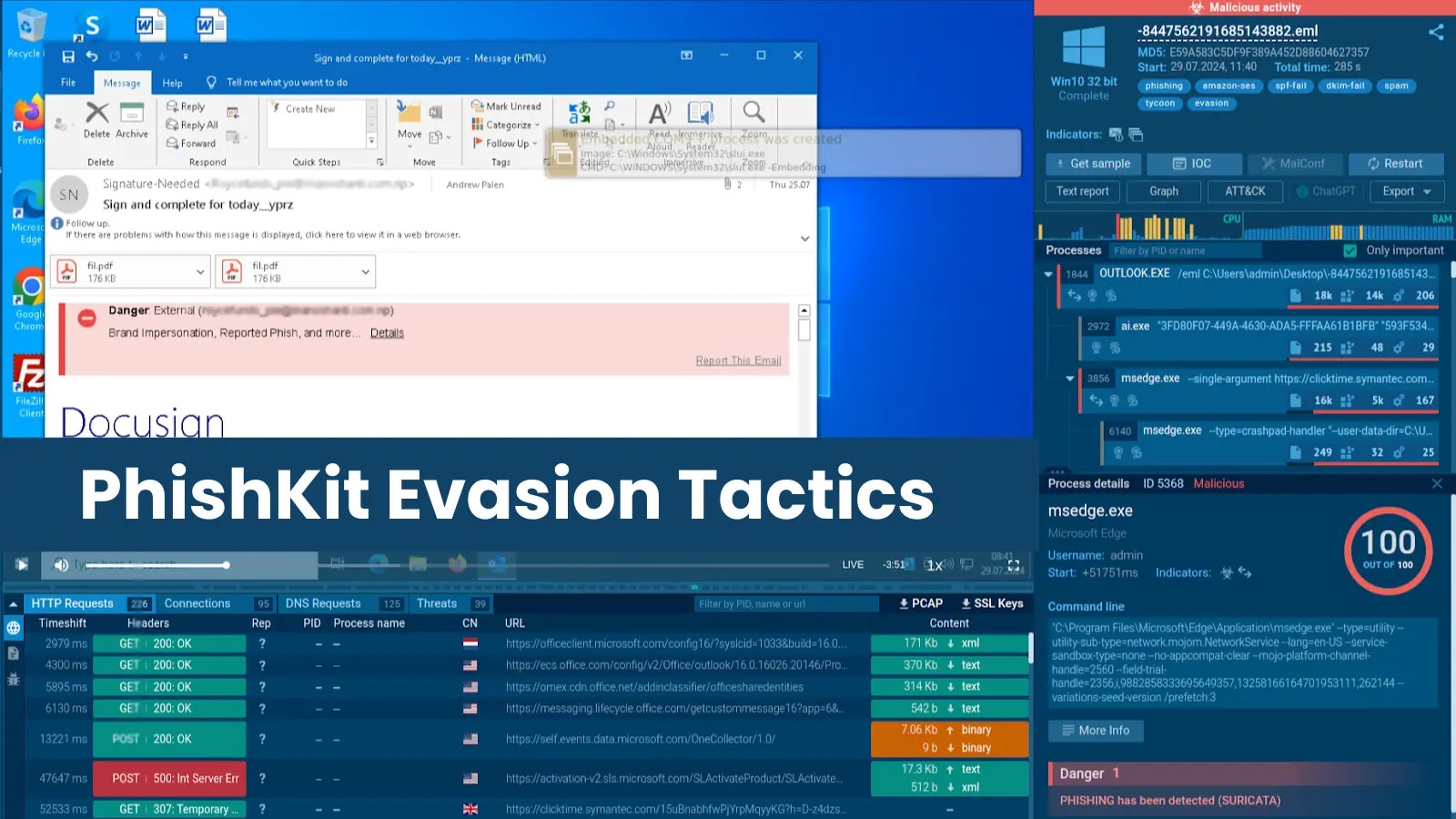
The most frequent tactic involves mimicking notifications from electronic signature services, such as Docusign, luring victims into clicking links that seem to direct to amazonaws.com. These links then lead to credential-harvesting pages hosted on AWS, making the deceit difficult to identify.

Business Email Compromise and Preventive Measures

Beyond credential theft, attackers also use Amazon SES for Business Email Compromise (BEC) schemes, impersonating employees to send fake invoice requests to finance departments. These emails often include PDF attachments with forged payment details, designed to look like genuine business communications.

The initial breach point for such operations is usually leaked AWS Identity and Access Management (IAM) access keys. Developers frequently expose these keys in public repositories or unsecured storage, making them easy targets for attackers using tools like TruffleHog.

Securelist advises organizations to prioritize the security of IAM access keys. Implementing the principle of least privilege, transitioning to AWS IAM roles, enabling multi-factor authentication, and conducting regular security audits can significantly mitigate risks. Additionally, users should verify unexpected emails through separate channels and scrutinize links before clicking.

Stay informed by following us on Google News, LinkedIn, and X, and set CSN as a preferred source on Google for more updates.


Cyber Security News Tags:Amazon SES, AWS, BEC scams, cloud security, credential theft, Cybersecurity, email authentication, email security, IAM keys, Phishing

Post navigation

Previous Post: Critical Vulnerability Threatens 300,000 Ollama Deployments
Next Post: Critical MetInfo CMS Flaw Exploited for Code Execution

Related Posts

Microsoft Enhances Windows Security by Turning Off File Previews for Downloads Microsoft Enhances Windows Security by Turning Off File Previews for Downloads Cyber Security News
Hackers Using Teams to Deliver Malicious Content Posing as Microsoft Services Hackers Using Teams to Deliver Malicious Content Posing as Microsoft Services Cyber Security News
APT28 Exploits Microsoft Office Flaw Targeting Europe APT28 Exploits Microsoft Office Flaw Targeting Europe Cyber Security News
1-Click Clawdbot Vulnerability Enable Malicious Remote Code Execution Attacks 1-Click Clawdbot Vulnerability Enable Malicious Remote Code Execution Attacks Cyber Security News
Multiple Critical Vulnerabilities in D-Link Routers Let Attackers Execute Arbitrary Code Remotely Multiple Critical Vulnerabilities in D-Link Routers Let Attackers Execute Arbitrary Code Remotely Cyber Security News
Palo Alto Networks Acknowledges SquareX Research on Limitations of SWGs Against Last Mile Reassembly Attacks Palo Alto Networks Acknowledges SquareX Research on Limitations of SWGs Against Last Mile Reassembly Attacks Cyber Security News

Categories

  • Cyber Security News
  • How To?
  • Security Week News
  • The Hacker News

Recent Posts

  • Apache HTTP/2 Vulnerability Exposes Systems to RCE and DoS
  • GnuTLS 3.8.13 Update: Key Security Vulnerabilities Fixed
  • Latvian Hacker Jailed for Karakurt Ransomware Crimes
  • China-Linked UAT-8302 Targets Global Governments with APT Malware
  • Supply Chain Attack Targets DAEMON Tools Software

Pages

  • About Us – Contact
  • Disclaimer
  • Privacy Policy
  • Terms and Rules

Archives

  • May 2026
  • April 2026
  • March 2026
  • February 2026
  • January 2026
  • December 2025
  • November 2025
  • October 2025
  • September 2025
  • August 2025
  • July 2025
  • June 2025
  • May 2025

Recent Posts

  • Apache HTTP/2 Vulnerability Exposes Systems to RCE and DoS
  • GnuTLS 3.8.13 Update: Key Security Vulnerabilities Fixed
  • Latvian Hacker Jailed for Karakurt Ransomware Crimes
  • China-Linked UAT-8302 Targets Global Governments with APT Malware
  • Supply Chain Attack Targets DAEMON Tools Software

Pages

  • About Us – Contact
  • Disclaimer
  • Privacy Policy
  • Terms and Rules

Categories

  • Cyber Security News
  • How To?
  • Security Week News
  • The Hacker News

Copyright © 2026 Cyber Web Spider Blog – News.

Powered by PressBook Masonry Dark