Skip to content
  • Home
  • Cyber Map
  • About Us – Contact
  • Disclaimer
  • Terms and Rules
  • Privacy Policy
Cyber Web Spider Blog – News

Cyber Web Spider Blog – News

Globe Threat Map provides a real-time, interactive 3D visualization of global cyber threats. Monitor DDoS attacks, malware, and hacking attempts with geo-located arcs on a rotating globe. Stay informed with live logs and archive stats.

  • Home
  • Cyber Map
  • Cyber Security News
  • Security Week News
  • The Hacker News
  • How To?
  • Toggle search form
Microsoft Teams Enhances Security with Bot Blocking

Microsoft Teams Enhances Security with Bot Blocking

Posted on June 30, 2026 By CWS

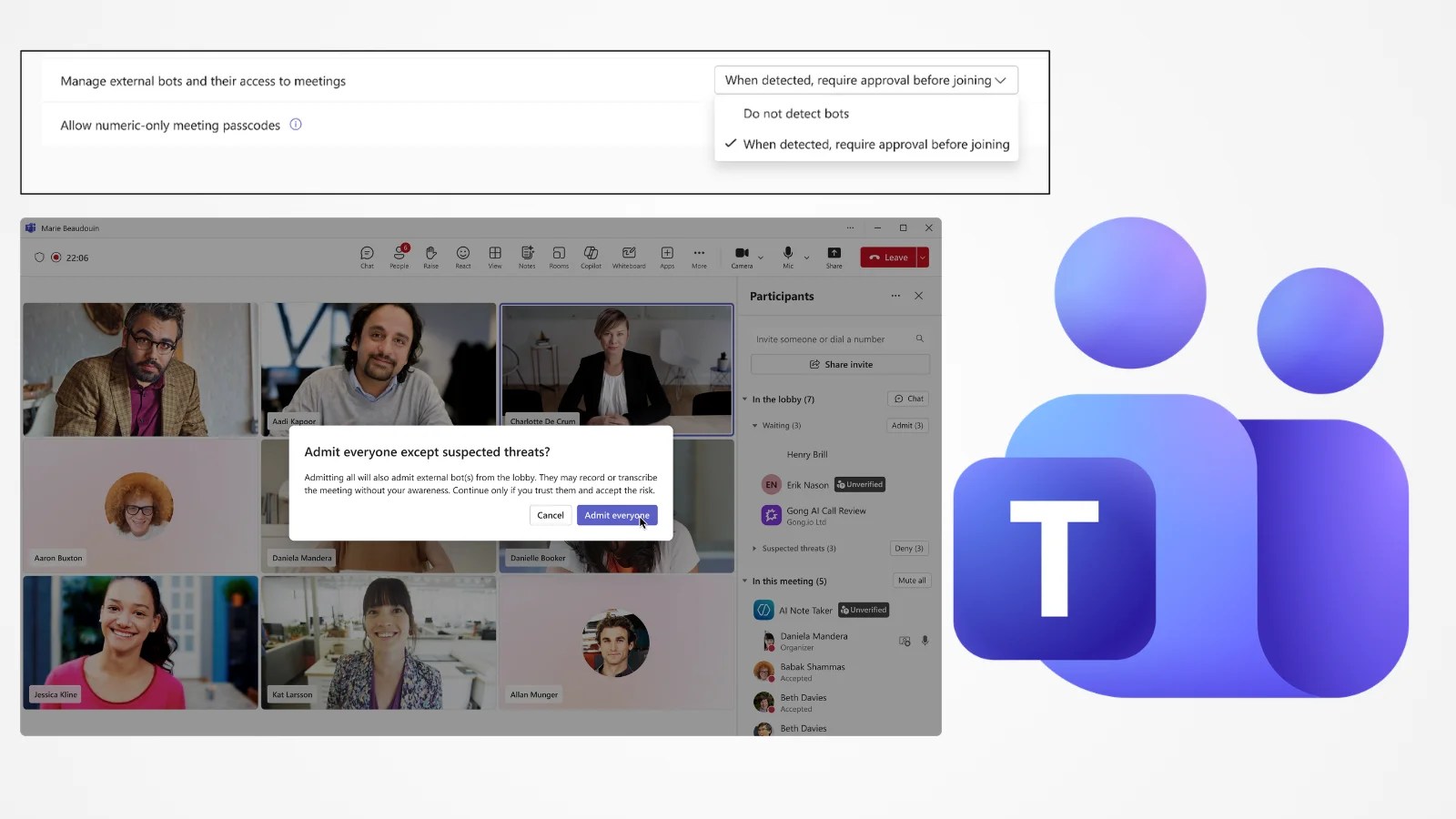
Microsoft has introduced an innovative bot protection feature in Microsoft Teams, offering IT administrators and meeting organizers enhanced control over external bots attempting to join meetings. This development addresses rising privacy and security concerns related to AI-driven meeting tools.

Addressing Unintended Bot Participation

As AI-based note-taking bots become commonplace in professional settings, an issue has arisen where these bots join meetings without participant consent. Users leveraging third-party services have reported that related bots might continue to automatically join future sessions, posing surveillance risks during sensitive discussions.

In addition to this update, Microsoft has launched a new presence feature within Teams that refreshes a user’s work location when they connect to their organization’s Wi-Fi.

New Administrative Controls

A new policy titled “Manage external bots and their access to meetings” is now available in the Teams Admin Center, allowing for detailed configuration by user or group. Administrators can choose between two settings:

  • Require approval: Bots are detected and placed in a meeting lobby, needing organizer approval before joining.
  • Do not detect: Turns off the detection feature entirely.

Bot detection is automatically enabled for all users, providing basic protection without additional setup. Microsoft has improved its ability to distinguish bots from human attendees using behavioral and infrastructure signals.

Efficient Bot Identification and Management

Microsoft is implementing a Teams Bot Identification Program, a system for Independent Software Vendors (ISVs) to register their bots. Registered bots include a self-identification marker recognized by Teams, classifying them as verified participants.

When this policy is active, bots are placed in a meeting lobby, categorized into verified participants and potential threats. This segmentation allows organizers to effectively manage who joins the meeting and mitigate risks.

Additionally, Microsoft has introduced measures to prevent accidental bot admissions. Organizers encounter confirmation prompts when admitting bots, and warnings appear if selecting ‘Admit All’ with bots in the queue. This feature also signifies the phase-out of the existing CAPTCHA system by August 2026.

Microsoft plans to expand the bot management ecosystem with future capabilities such as allow lists for pre-approved bots, organization-wide policies to block external bots, audit logs, and varied security controls. The feature became globally available in June 2026, with GCC environments included in the rollout.

For enhanced security, Microsoft advises setting the meeting option “Who can admit from lobby” to organizers and co-organizers only, preventing unintended bot admissions.

Cyber Security News Tags:AI tools, bot management, bot protection, IT administration, meeting security, Microsoft Teams, Privacy, Security, Teams updates, Technology

Post navigation

Previous Post: Microsoft Highlights AI Vulnerability to Tool Description Attacks
Next Post: RustDuck Botnet Transformed in Rust for DDoS Attacks

Related Posts

PayPal Breach Exposes Sensitive Customer Information PayPal Breach Exposes Sensitive Customer Information Cyber Security News
InvisibleJS Emerges as Stealthy JavaScript Obfuscator Using Zero-Width Characters InvisibleJS Emerges as Stealthy JavaScript Obfuscator Using Zero-Width Characters Cyber Security News
BlackSuit Ransomware Actors Breached Corporate Environment, Including 60+ VMware ESXi hosts BlackSuit Ransomware Actors Breached Corporate Environment, Including 60+ VMware ESXi hosts Cyber Security News
India to Prohibit Chinese CCTV Sales by 2026 India to Prohibit Chinese CCTV Sales by 2026 Cyber Security News
Microsoft SharePoint Server 0-Day Hack Hits African Treasury, Companies, and University Microsoft SharePoint Server 0-Day Hack Hits African Treasury, Companies, and University Cyber Security News
Shanya EDR Killer Leveraged by Hackers to Clear the Way for Ransomware Infection Shanya EDR Killer Leveraged by Hackers to Clear the Way for Ransomware Infection Cyber Security News

Categories

  • Cyber Security News
  • How To?
  • Security Week News
  • The Hacker News

Recent Posts

  • AI-Driven Browser Ransomware Exploits Chromium API
  • Adobe ColdFusion Flaws Allow Code Execution Attacks
  • Malware Chain Exploits Blogger to Deploy PureLogs Stealer
  • Critical Fluentd Vulnerabilities Threaten System Security
  • Teen Hacker Extradited to U.S. for Cybercrime Charges

Pages

  • About Us – Contact
  • Disclaimer
  • Privacy Policy
  • Terms and Rules

Archives

  • July 2026
  • June 2026
  • May 2026
  • April 2026
  • March 2026
  • February 2026
  • January 2026
  • December 2025
  • November 2025
  • October 2025
  • September 2025
  • August 2025
  • July 2025
  • June 2025
  • May 2025

Recent Posts

  • AI-Driven Browser Ransomware Exploits Chromium API
  • Adobe ColdFusion Flaws Allow Code Execution Attacks
  • Malware Chain Exploits Blogger to Deploy PureLogs Stealer
  • Critical Fluentd Vulnerabilities Threaten System Security
  • Teen Hacker Extradited to U.S. for Cybercrime Charges

Pages

  • About Us – Contact
  • Disclaimer
  • Privacy Policy
  • Terms and Rules

Categories

  • Cyber Security News
  • How To?
  • Security Week News
  • The Hacker News

Copyright © 2026 Cyber Web Spider Blog – News.

Powered by PressBook Masonry Dark