Skip to content
  • Home
  • Cyber Map
  • About Us – Contact
  • Disclaimer
  • Terms and Rules
  • Privacy Policy
Cyber Web Spider Blog – News

Cyber Web Spider Blog – News

Globe Threat Map provides a real-time, interactive 3D visualization of global cyber threats. Monitor DDoS attacks, malware, and hacking attempts with geo-located arcs on a rotating globe. Stay informed with live logs and archive stats.

  • Home
  • Cyber Map
  • Cyber Security News
  • Security Week News
  • The Hacker News
  • How To?
  • Toggle search form
Nebula’s AI-Powered Security Tool Revolutionizes Testing

Nebula’s AI-Powered Security Tool Revolutionizes Testing

Posted on July 3, 2026 By CWS

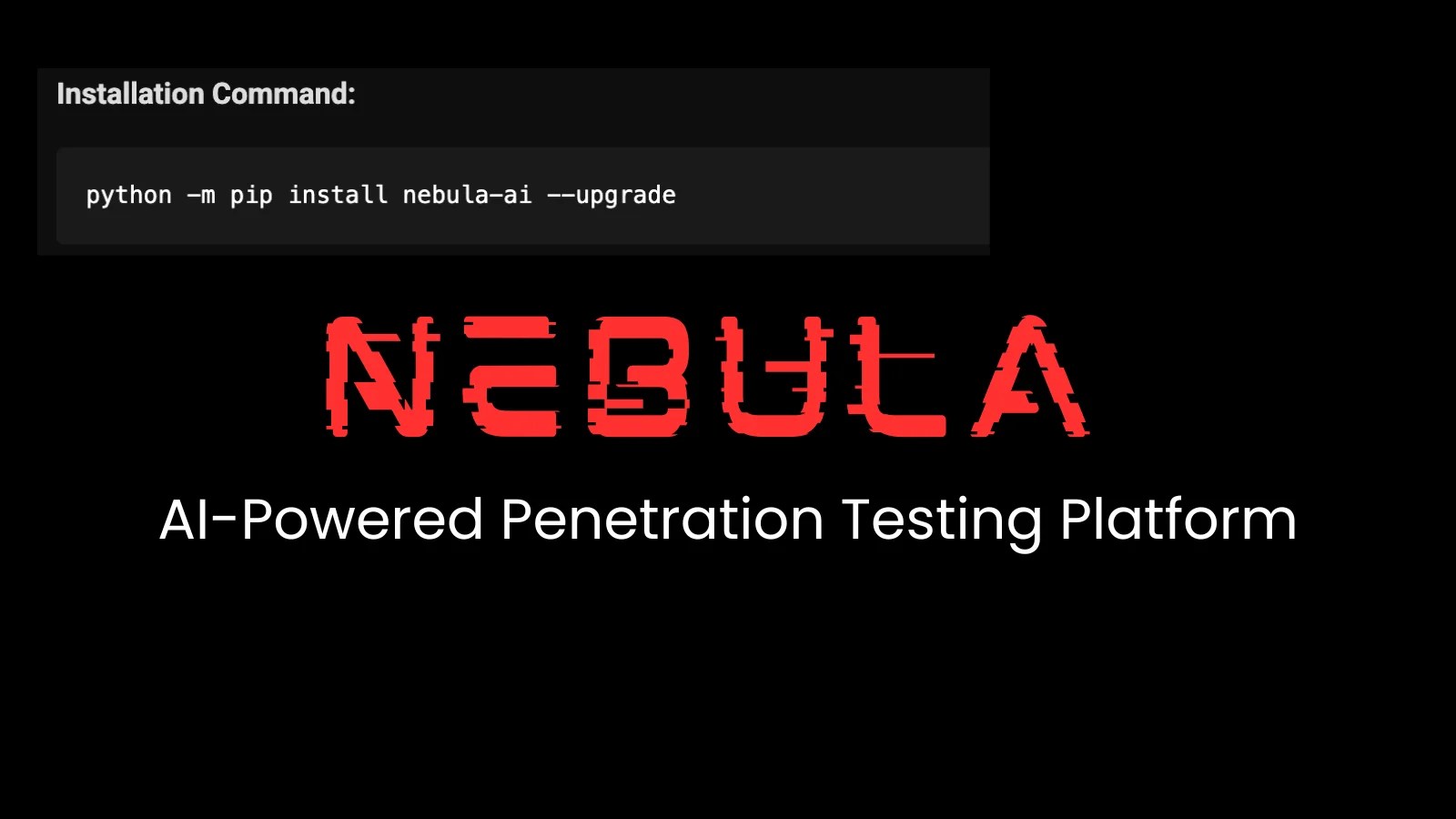
Nebula, an open-source security platform developed by BerylliumSec, is transforming the landscape of penetration testing by integrating advanced AI models directly into the command-line interface. This innovative tool allows security professionals to automate the process of vulnerability assessments and generate exploit scripts efficiently. By maintaining a seamless workflow without the need to switch contexts, Nebula enhances the productivity of ethical hackers.

Flexible AI Backend Support

Nebula offers support for various AI backends, giving users the flexibility to choose models based on their infrastructure and privacy considerations. The platform supports multiple models, including OpenAI’s API-accessible options, Meta’s Llama-3.1-8B-Instruct, Mistral AI’s Mistral-7B-Instruct-v0.2, and DeepSeek-R1-Distill-Llama-8B. This versatility ensures that users can select the most appropriate model for their specific needs.

The platform employs Ollama for local inference, which can operate on both CPU and GPU, while remote models are accessible via API keys. This seamless integration with existing command-line tools and security utilities, such as Nmap and Metasploit, ensures that Nebula can complement rather than replace established workflows.

Key Features and Enhancements

Nebula boasts several features that enhance its usability and effectiveness in penetration testing. Among these are AI-driven search agents that provide real-time cybersecurity context, automated note-taking capabilities, and real-time exploitation suggestions based on terminal outputs. The tool also includes built-in screenshot capture and annotation, alongside a status feed that updates every five minutes to reflect ongoing testing activities.

Users can interact with Nebula’s AI by prefixing commands with “!” or toggling a dedicated AI/Terminal mode button, facilitating a smooth transition between manual and AI-assisted operations. Such features make Nebula a versatile and powerful tool for cybersecurity professionals.

Installation and Future Developments

To install Nebula, users need at least 16GB of RAM and Python 3.10–3.13.9 for CPU-based inference via Ollama. The installation process is straightforward via pip, and users can deploy the tool locally or through Docker, with options for GUI support.

Complementing Nebula, BerylliumSec has launched the Deep Application Profiler (DAP), a malware analysis service that uses neural networks for zero-day malware detection, moving beyond traditional signature-based methods. Looking ahead, BerylliumSec plans to develop custom models tailored to penetration testing tasks, enhancing Nebula’s capabilities.

The integration of AI into penetration testing is indicative of a broader trend towards the inclusion of large language models in offensive security tools. Nebula, with its support for both local and cloud-based models, addresses diverse operational security requirements, offering a comprehensive solution for modern cybersecurity challenges.
Cyber Security News Tags:AI integration, AI security, BerylliumSec, cloud-based models, Cybersecurity, ethical hacking, large language models, Nebula, penetration testing, vulnerability assessments

Post navigation

Previous Post: Avalon Malware Framework Unveils CrownX Ransomware
Next Post: Critical Linux Kernel Bug Allows Unauthorized Root Access

Related Posts

WhisperPair Attack Allows Hijacking of Laptops, Earbuds Without User Consent WhisperPair Attack Allows Hijacking of Laptops, Earbuds Without User Consent Cyber Security News
Discord Introduces Age-Restricted Features for Safer Use Discord Introduces Age-Restricted Features for Safer Use Cyber Security News
GhostLock Exploits File-Sharing to Mimic Ransomware GhostLock Exploits File-Sharing to Mimic Ransomware Cyber Security News
Researchers Detailed r1z Initial Access Broker OPSEC Failures Researchers Detailed r1z Initial Access Broker OPSEC Failures Cyber Security News
BlueHammer Exploit Affects Windows Defender Security BlueHammer Exploit Affects Windows Defender Security Cyber Security News
ESET Warns AI-driven Malware Attack and Rapidly Growing Ransomware Economy ESET Warns AI-driven Malware Attack and Rapidly Growing Ransomware Economy Cyber Security News

Categories

  • Cyber Security News
  • How To?
  • Security Week News
  • The Hacker News

Recent Posts

  • Critical Vulnerabilities in FatFs Impact Millions of Devices
  • Hackers Exploit Blogspot and PowerShell for Data Theft
  • Critical Linux Kernel Bug Allows Unauthorized Root Access
  • Nebula’s AI-Powered Security Tool Revolutionizes Testing
  • Avalon Malware Framework Unveils CrownX Ransomware

Pages

  • About Us – Contact
  • Disclaimer
  • Privacy Policy
  • Terms and Rules

Archives

  • July 2026
  • June 2026
  • May 2026
  • April 2026
  • March 2026
  • February 2026
  • January 2026
  • December 2025
  • November 2025
  • October 2025
  • September 2025
  • August 2025
  • July 2025
  • June 2025
  • May 2025

Recent Posts

  • Critical Vulnerabilities in FatFs Impact Millions of Devices
  • Hackers Exploit Blogspot and PowerShell for Data Theft
  • Critical Linux Kernel Bug Allows Unauthorized Root Access
  • Nebula’s AI-Powered Security Tool Revolutionizes Testing
  • Avalon Malware Framework Unveils CrownX Ransomware

Pages

  • About Us – Contact
  • Disclaimer
  • Privacy Policy
  • Terms and Rules

Categories

  • Cyber Security News
  • How To?
  • Security Week News
  • The Hacker News

Copyright © 2026 Cyber Web Spider Blog – News.

Powered by PressBook Masonry Dark