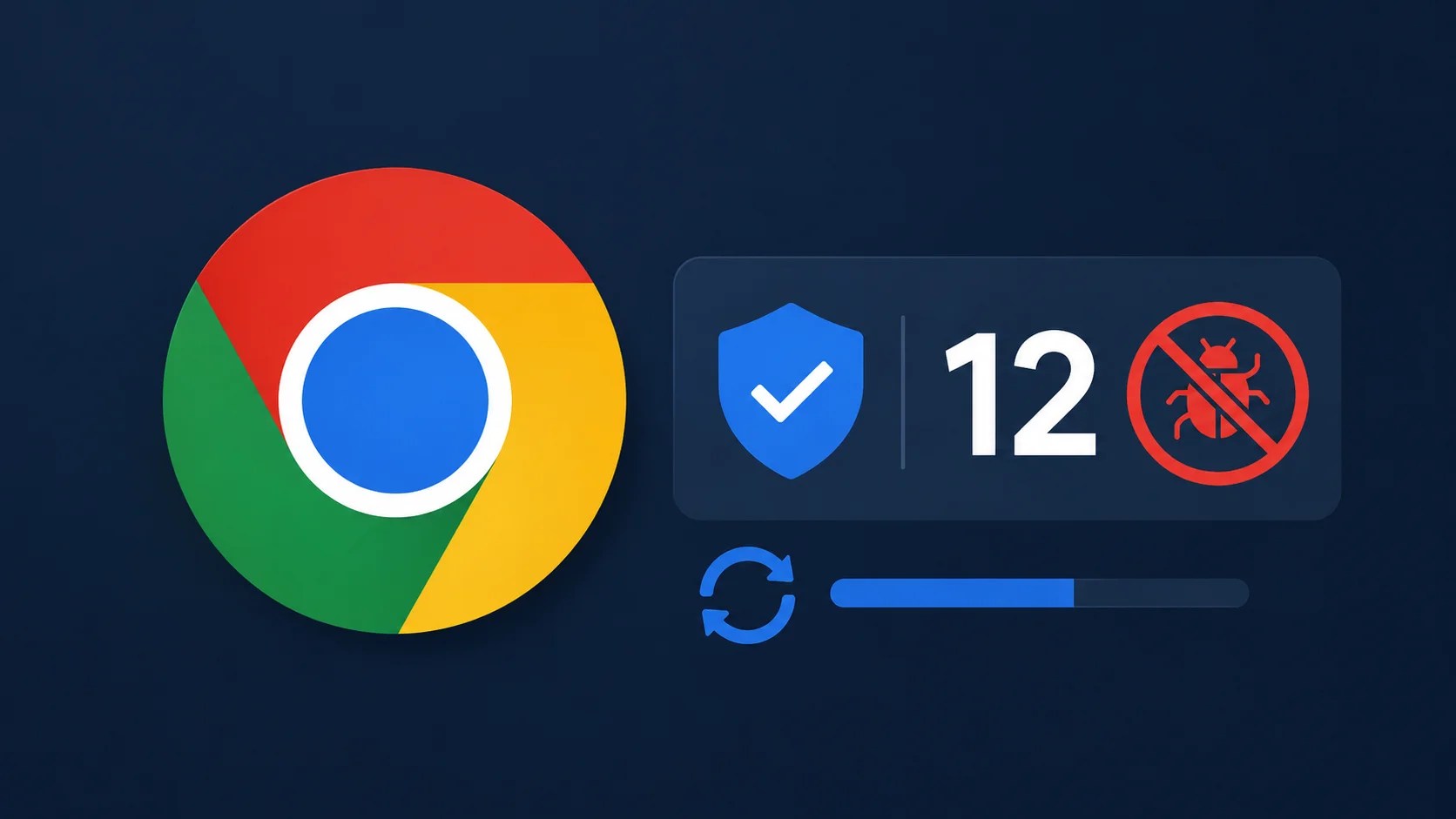
Google has announced a significant update for its Chrome browser, addressing 12 vulnerabilities, nine of which are classified as ‘High’ severity. This update elevates Chrome to version 150.0.7871.181/.182 for Windows and Mac, and version 150.0.7871.181 for Linux. The update will be gradually rolled out to all users in the coming days and weeks.
Critical Security Vulnerabilities Fixed
The newly released update rectifies flaws across various Chrome components, including V8, ANGLE, Skia, GPU, UI, Extensions, and Chromecast. These vulnerabilities, if exploited, could lead to memory corruption, arbitrary code execution, or the bypassing of security measures. Consequently, this update is crucial for both individual users and enterprise IT teams.
Among the notable fixes are vulnerabilities like out-of-bounds write in ANGLE, insufficient input validation in Chromecast, and a stack buffer overflow in V8. These issues present a significant risk as they directly impact how Chrome handles memory, making them prime targets for attackers.
Details of Vulnerabilities
The vulnerabilities addressed include CVE-2026-16413 through CVE-2026-16424, with types ranging from integer overflow to use-after-free issues. Two specific vulnerabilities, CVE-2026-16420 and CVE-2026-16421, were discovered by the AI-powered security research system, XBOW, and reviewed by researcher Brendan Dolan-Gavitt, each earning a $500 bounty.
The other ten vulnerabilities were identified by Google’s internal security teams between May and July 2026. Particularly concerning are those related to type confusion and buffer overflows, as they can allow attackers to execute malicious code or crash the browser through compromised websites.
Recommendations for Chrome Users
Due to the number of high-severity issues fixed in this update, users are strongly advised to update their Chrome browsers immediately. Manual updates can be initiated by opening Chrome, clicking on the three-dot menu, navigating to Help > About Google Chrome, and allowing Chrome to check for and install updates automatically. A browser restart is required to finalize the update.
Organizations managing multiple Chrome installations should expedite the deployment of this update via their device management systems to mitigate the risk of sophisticated attacks leveraging these vulnerabilities. Google’s proactive approach employs automated tools like AddressSanitizer and libFuzzer to identify and resolve memory safety issues before they reach users.
Overall, this Chrome update is a critical security measure that underscores the importance of staying up-to-date with software patches to protect against potential cyber threats.