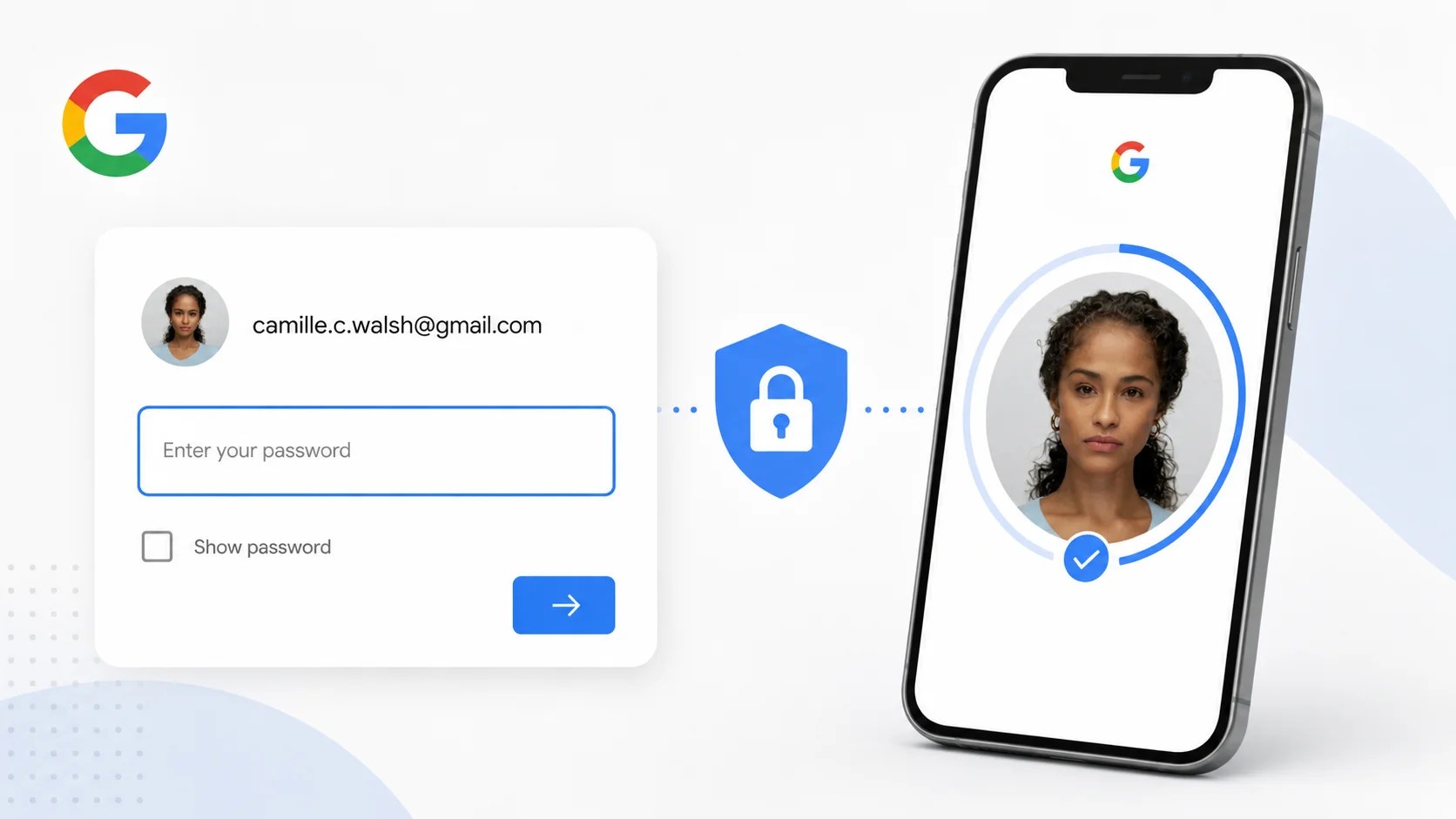
Google has launched a pioneering identity verification tool known as the ‘selfie video’ feature. This innovation aims to streamline access recovery for users locked out of their accounts, marking a major advance in authentication security.
This tool is particularly beneficial when users cannot use their primary authentication devices, offering an additional method for signing in. The announcement, made by John Gronberg and Claire Forszt, emphasizes enhancing account recovery processes while prioritizing user privacy and control.
Addressing Account Security Concerns
Google accounts often store sensitive information such as emails, documents, and personal media. Losing access to these accounts can present significant operational challenges and security threats. The newly introduced selfie video feature provides an alternative recovery method when conventional options like two-factor authentication or recovery emails are unavailable.
This feature allows users to create a short video of themselves, which serves as a biometric reference for future identity checks. During recovery, users can submit a fresh selfie video that Google compares with the stored version to verify identity.
How the New Feature Functions
The selfie video setup process is intuitive and user-friendly. Users can access this feature through their Google Account settings, where they are guided through recording a short video with prescribed head movements to capture various facial angles.
The captured video is securely linked to the user’s account. For account recovery, users record a new selfie video, which Google’s system matches with the original. A successful match results in restored access.
This method uses biometric verification akin to facial recognition but adds motion-based validation to minimize spoofing risks.
Privacy and Security Considerations
Google assures that the selfie video feature is developed with privacy and security as core elements. Videos are recorded and stored with user consent, encrypted for protection, and used solely for authentication unless users opt for other uses.
From a cybersecurity angle, this approach lessens the reliance on static credentials prone to phishing and credential-stuffing attacks. However, it raises new questions regarding biometric data protection and potential vulnerabilities if device security is compromised.
By introducing video-based authentication, Google moves towards adaptive multi-factor identity verification systems. This biometric layer aims to mitigate account takeover attacks and reduce reliance on SMS-based methods vulnerable to SIM swapping.
While this feature is an optional security measure, Google advises users to maintain multiple authentication factors, including security keys and authenticator apps, for comprehensive protection.
As identity systems advance, the inclusion of biometric recovery mechanisms like selfie video highlights the industry’s effort to balance ease of use with stringent security controls.