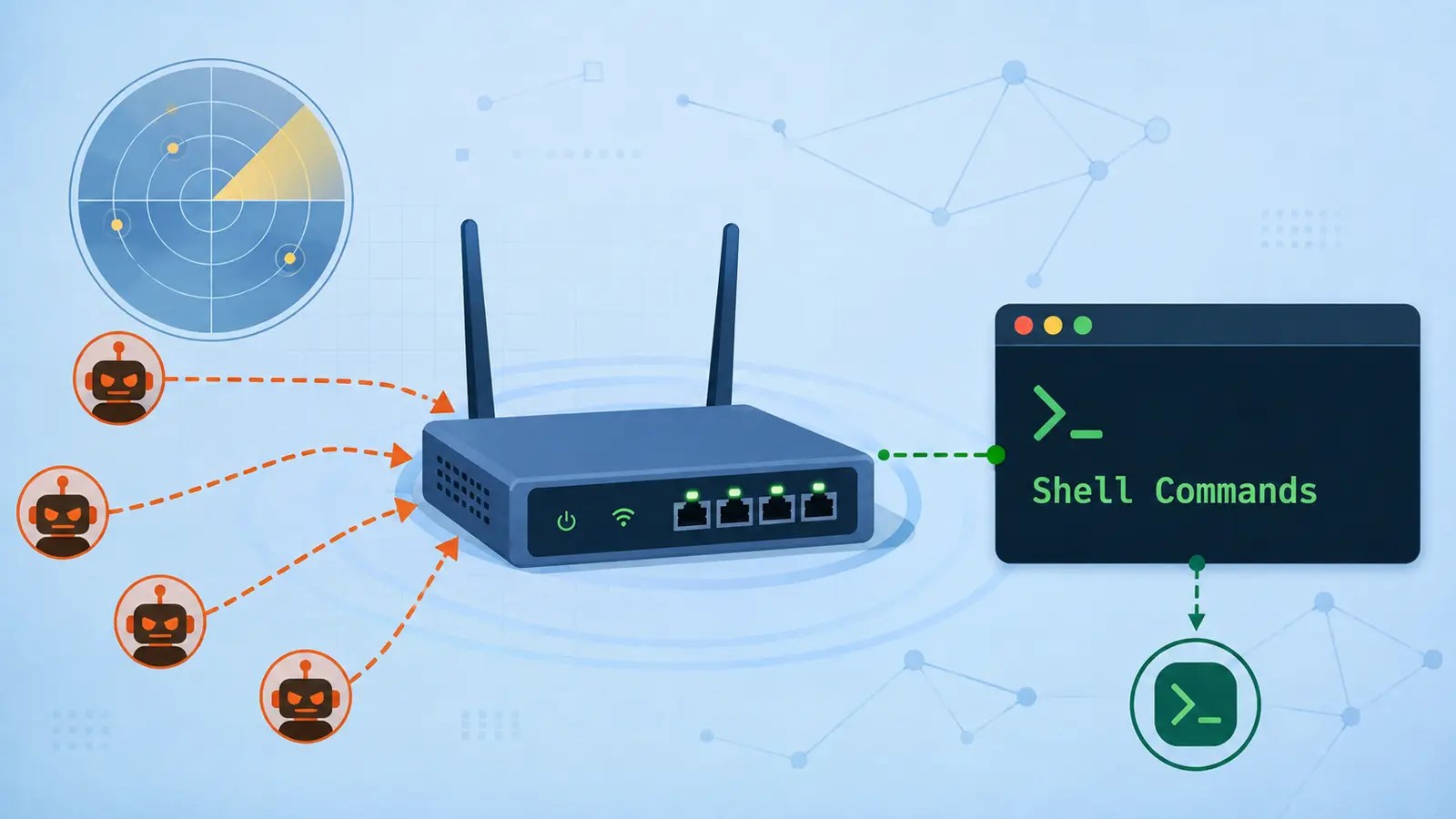
A recent botnet operation is actively exploiting vulnerabilities in router diagnostic tools. This campaign targets pathways linked to ping and traceroute functions, where insufficient parameter handling can lead to unauthorized command execution on the device.
Botnet’s Focus on Router Diagnostics
This botnet activity is reminiscent of previous campaigns exploiting routers left unpatched and exposed. The current scans are significant because these diagnostic tools are meant for connectivity testing, not command processing. When user inputs are directly incorporated into system commands, it creates a risk of attackers hijacking the device.
The Internet Storm Center has been tracking these patterns, noting repeated requests for specific URLs associated with known command-injection vulnerabilities. Although not every endpoint checked is confirmed vulnerable, the widespread scanning indicates a concerted effort to find exploitable devices.
Understanding Command Injection Risks
The heart of the issue lies in how routers manage user input. Commands that concatenate hostnames with system instructions can inadvertently enable command injection. This security flaw is not confined to a single programming language or router brand, but is a common issue across various web interfaces.
Attackers have probed routes linked to several router families, including pages for diagnostics, system management, and network testing. Successfully compromised routers could be used for malicious activities like traffic relaying or launching further attacks.
Securing Network Devices Against Exploitation
Given their critical role at the network perimeter, routers are prime targets for cyber threats. To mitigate risks, device owners are advised to disable unnecessary remote administration, apply firmware updates, change default passwords, and replace end-of-life hardware. These steps are vital for defending against potential botnet recruitment.
The most effective safeguard involves preventing input data from merging with command strings. Developers should adopt secure coding practices, such as separating commands from user-supplied data and employing secure interfaces like execv in Python, to avoid command execution vulnerabilities.
Future Outlook and Recommendations
As vendors explore the affected pathways, administrators should prioritize managing exposure by limiting web management access to trusted networks. Monitoring router logs for anomalies and addressing unexplained configuration changes can also serve as early warning signs of compromise.
Staying informed about evolving threats and implementing robust security measures can significantly reduce the likelihood of routers being co-opted into botnets, as demonstrated by past incidents like the Mirai attacks.