Skip to content
  • Home
  • Cyber Map
  • About Us – Contact
  • Disclaimer
  • Terms and Rules
  • Privacy Policy
Cyber Web Spider Blog – News

Cyber Web Spider Blog – News

Globe Threat Map provides a real-time, interactive 3D visualization of global cyber threats. Monitor DDoS attacks, malware, and hacking attempts with geo-located arcs on a rotating globe. Stay informed with live logs and archive stats.

  • Home
  • Cyber Map
  • Cyber Security News
  • Security Week News
  • The Hacker News
  • How To?
  • Toggle search form
Hackers Exploit Oracle Vulnerability to Control Windows Server

Hackers Exploit Oracle Vulnerability to Control Windows Server

Posted on August 6, 2026 By CWS

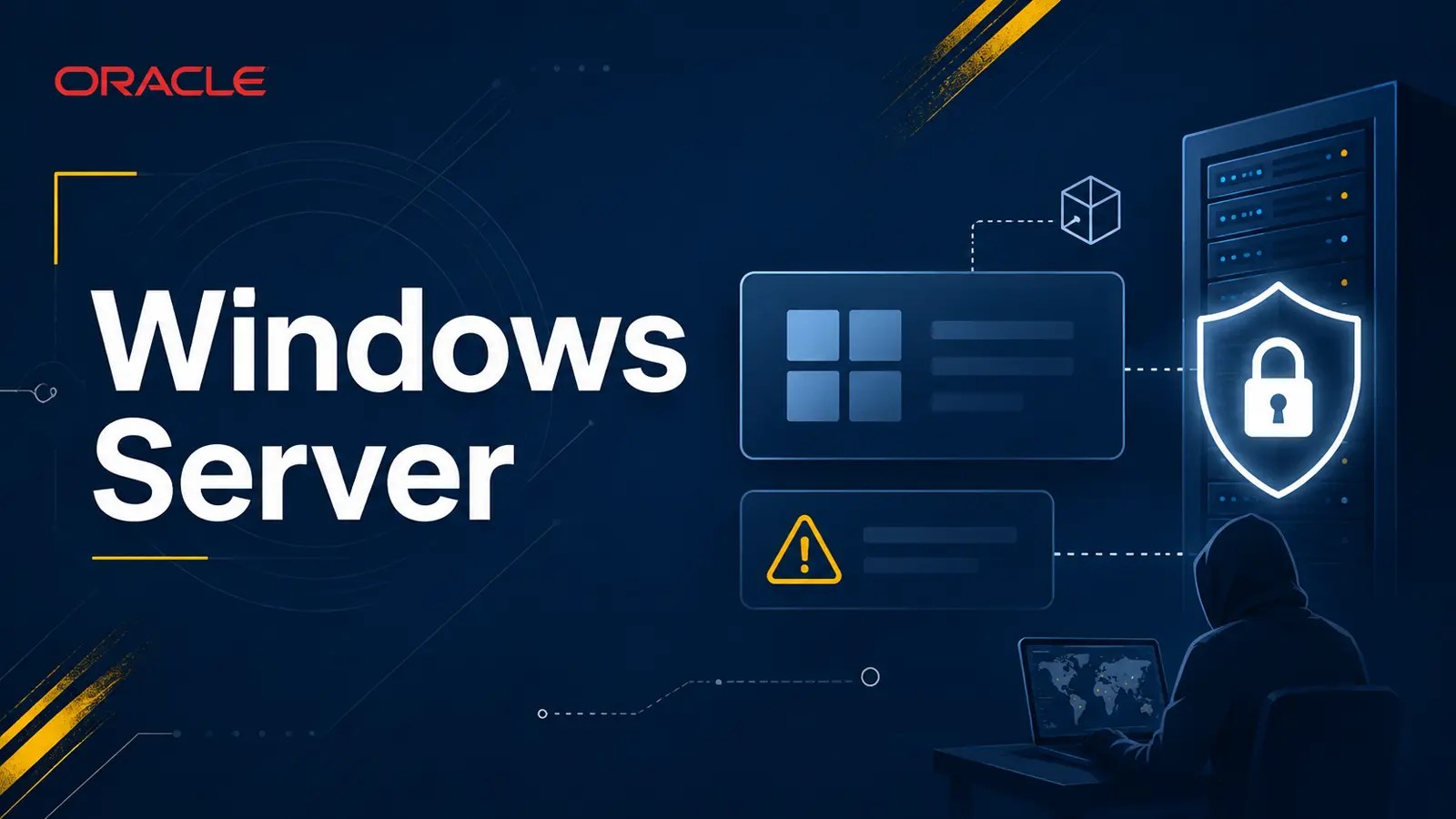
An alarming security breach has been traced back to a simple vulnerability within a web application, allowing hackers to compromise a Windows Server. Using SQL injection, the attackers implanted a remote-control toolkit into an Oracle database, highlighting a significant risk to systems with insecure input validation.

The attack exploited a public-facing Java and Tomcat application linked to an Oracle database. Through an improperly secured autocomplete function, the attackers injected database commands, enabling them to manipulate the system and set up further stages of their attack.

How the Attack Unfolded

Researchers from Huntress discovered this breach while investigating attempts to extract credentials from a server hosting Oracle. Their analysis revealed that the attackers had accessed critical Windows registry files, such as SAM, SECURITY, and SYSTEM, which could be used to extract password hashes and expand their access.

Rather than leaving traditional malware files on the disk, the attackers stored and compiled the malicious code within Oracle. This method made it difficult for conventional endpoint detection tools to identify the threat before the attackers could gain control over the Windows host.

Exploiting Oracle’s Java Capabilities

The intruders utilized Oracle’s built-in Java functionality to create Java source objects directly inside the database. By sending commands via the application’s JDBC connection, they transformed the database into a covert launch pad, rather than merely a repository for business data.

The toolkit, named ‘khunt’, was equipped to execute Windows commands, gather Oracle credentials, browse files, and ensure the toolkit’s activity remained undetected. This database-centric approach allowed the attackers to explore the server without relying on conspicuous executable files.

Securing Databases Against Future Threats

Organizations are urged to scrutinize public forms and search fields capable of accessing databases, particularly legacy features that might be neglected in testing phases. Input validation and query parameterization should be standard practices to prevent SQL injection attacks.

Database accounts should be limited to essential permissions only. Web applications should not have access to create Java objects or execute sensitive procedures, minimizing potential damage even if an injection vulnerability is exploited.

Security teams should conduct thorough searches for unexpected Java classes in database objects, review PL/SQL wrappers, and assess web and SQL logs for anomalies. Keeping abreast of security updates, such as those from Microsoft, is crucial for defending against these types of threats.

For incident response, prioritizing the search for unusual Oracle-generated files, unexpected database objects, and any signs of oracle.exe spawning command-line or registry tools is recommended. Systems should be isolated, credentials reset, and logs preserved for forensic analysis to restore trust in the compromised host.

Cyber Security News Tags:credential theft, Cybersecurity, database security, endpoint security, Hacking, Java, network security, Oracle, remote control, SQL injection, Tomcat, Windows Server

Post navigation

Previous Post: Interrupt Injection: New Attack Bypasses CPU Defenses
Next Post: AI Memory Poisoning: The Threat of Hidden Prompts

Related Posts

Cavalry Werewolf Attacking Government Organizations to Deploy Backdoor For Network Access Cavalry Werewolf Attacking Government Organizations to Deploy Backdoor For Network Access Cyber Security News
Chrome Security Update Patches Background Fetch API Vulnerability Chrome Security Update Patches Background Fetch API Vulnerability Cyber Security News
Threat Group ‘Crimson Collective’ Allegedly Claim Breach of Largest Fiber Broadband Brightspeed Threat Group ‘Crimson Collective’ Allegedly Claim Breach of Largest Fiber Broadband Brightspeed Cyber Security News
OpenAI Launches Expanded Cyber Defense with GPT-5.4-Cyber OpenAI Launches Expanded Cyber Defense with GPT-5.4-Cyber Cyber Security News
Weaponized Python Package Termncolor Attacking Leverages Windows Run Key to Maintain Persistence Weaponized Python Package Termncolor Attacking Leverages Windows Run Key to Maintain Persistence Cyber Security News
PoC Published For Fortinet 0-Day Vulnerability That Being Exploited in the Wild PoC Published For Fortinet 0-Day Vulnerability That Being Exploited in the Wild Cyber Security News

Categories

  • Cyber Security News
  • How To?
  • Security Week News
  • The Hacker News

Recent Posts

  • Canadian Hacker Admits Guilt in U.S. Cloud Breach Case
  • AI Memory Poisoning: The Threat of Hidden Prompts
  • Hackers Exploit Oracle Vulnerability to Control Windows Server
  • Interrupt Injection: New Attack Bypasses CPU Defenses
  • Pirated Movie Downloads Pose Cybersecurity Threat

Pages

  • About Us – Contact
  • Disclaimer
  • Privacy Policy
  • Terms and Rules

Archives

  • August 2026
  • July 2026
  • June 2026
  • May 2026
  • April 2026
  • March 2026
  • February 2026
  • January 2026
  • December 2025
  • November 2025
  • October 2025
  • September 2025
  • August 2025
  • July 2025
  • June 2025
  • May 2025

Recent Posts

  • Canadian Hacker Admits Guilt in U.S. Cloud Breach Case
  • AI Memory Poisoning: The Threat of Hidden Prompts
  • Hackers Exploit Oracle Vulnerability to Control Windows Server
  • Interrupt Injection: New Attack Bypasses CPU Defenses
  • Pirated Movie Downloads Pose Cybersecurity Threat

Pages

  • About Us – Contact
  • Disclaimer
  • Privacy Policy
  • Terms and Rules

Categories

  • Cyber Security News
  • How To?
  • Security Week News
  • The Hacker News

Copyright © 2026 Cyber Web Spider Blog – News.

Powered by PressBook Masonry Dark