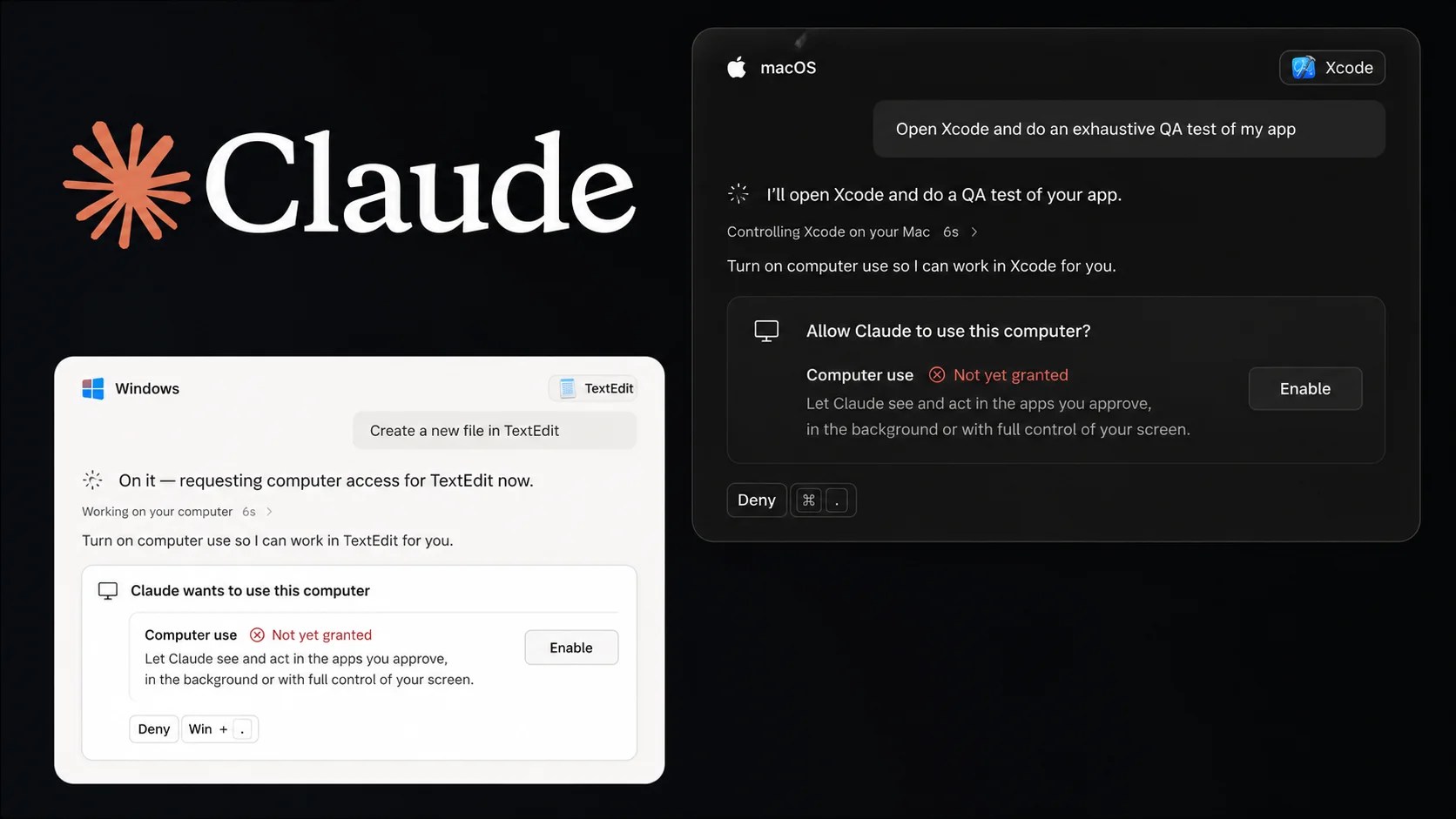
Anthropic, a leading AI company, has introduced a significant update allowing its AI, Claude, to operate in the background on both macOS and Windows systems. This enhancement enables users to delegate tasks to Claude while they focus on other activities, boosting overall productivity.
Background Functionality on macOS and Windows
Recently, Anthropic confirmed that Claude’s capabilities within Claude Cowork and Claude Code can now execute tasks in the background. This means the AI can perform actions such as clicking, typing, and opening applications without interrupting the user’s current screen activity. The update is available for the Claude Desktop app on both macOS and Windows, although background execution is currently limited to macOS 15 or later.
This functionality allows Claude to open and manage apps in background windows, providing users the freedom to continue their tasks uninterrupted in the foreground. The AI pauses during user input, ensuring a seamless experience without taking control of the mouse or keyboard unless absolutely necessary.
Enhanced Workflow and Multitasking
Anthropic had previously introduced this capability to developers via its API in late 2023. With the current update, users with Pro and Max subscriptions of Claude Cowork and Claude Code can enjoy enhanced multitasking. Claude prioritizes interactions through native connectors like Gmail, Google Drive, Microsoft 365, or Slack, resorting to direct screen interaction only when required.
Such advancements in AI functionality raise important discussions about potential risks. Anthropic’s safety documentation highlights the increased exposure associated with screen-level interactions, as opposed to safer sandboxed code execution or controlled file access.
Security Implications for Enterprises
Anthropic suggests that enterprises approach this new functionality with caution. The ability for an AI agent to autonomously navigate internal systems introduces potential vulnerabilities, such as prompt-injection or social engineering risks, particularly if malicious content is encountered.
To enable this feature, users must manually adjust their settings in the Desktop app. As a precaution, the feature is disabled by default for new users. Companies considering Claude Cowork should treat this as a privileged automation tool, ensuring thorough reviews and monitoring before implementation.
This advancement marks a significant step in AI integration, promising increased efficiency but also necessitating careful consideration of security protocols.