Skip to content
  • Home
  • Cyber Map
  • About Us – Contact
  • Disclaimer
  • Terms and Rules
  • Privacy Policy
Cyber Web Spider Blog – News

Cyber Web Spider Blog – News

Globe Threat Map provides a real-time, interactive 3D visualization of global cyber threats. Monitor DDoS attacks, malware, and hacking attempts with geo-located arcs on a rotating globe. Stay informed with live logs and archive stats.

  • Home
  • Cyber Map
  • Cyber Security News
  • Security Week News
  • The Hacker News
  • How To?
  • Toggle search form
CISA Recommends Cyber Decoys to Detect Hackers

CISA Recommends Cyber Decoys to Detect Hackers

Posted on September 18, 2026 By CWS

The Cybersecurity and Infrastructure Security Agency (CISA) has issued guidance urging organizations to implement fake credentials and systems as a strategy to identify hackers post-compromise. Released on September 16, 2026, the document titled ‘Using Cyber Decoys to Strengthen Detection and Response’ emphasizes the importance of these tactics in modern cybersecurity.

New Approaches to Cyber Threat Detection

Recent trends show attackers increasingly avoiding traditional malware-based intrusions, opting instead for methods that exploit legitimate user accounts and built-in administrative tools. These tactics allow them to blend in with normal network activity while they conduct discovery, lateral movement, and privilege escalation.

To counter these sophisticated threats, CISA advocates for the deployment of cyber decoys—assets that appear real but hold no legitimate value. These include inactive admin accounts, decoy databases, and simulated servers designed to trigger alerts when accessed by unauthorized users.

Cyber Decoys in Action

Organizations are encouraged to strategically place decoys within high-value network segments as part of proactive detection strategies. For instance, a fake privileged account can be created with its credentials stored in an enticing location for attackers. Any attempt to access this account would immediately alert security teams, allowing them to investigate potential intrusions swiftly.

CISA highlights that cyber decoys effectively complement Zero Trust security models, which operate on the assumption that breaches might occur. Decoys serve to continually verify user activity and detect suspicious movements within the network, thereby enhancing overall security posture.

Reducing Alert Fatigue and Enhancing Security Operations

One of the significant advantages of deploying decoys is the reduction in alert fatigue, as alerts triggered by decoys are less likely to be false positives compared to conventional endpoint or network alerts. This allows security analysts to focus on genuine threats, improving the efficiency of security operations centers (SOCs).

CISA’s guidance introduces several deception concepts such as tripwires, breadcrumbs, and honeytokens. Tripwires generate alerts when triggered, breadcrumbs lead attackers to decoys, and honeytokens act as fake data assets revealing unauthorized access upon use.

Integrating Deception Technology

Utilizing frameworks like MITRE ATT&CK and MITRE Engage, the guidance assists defenders in mapping decoys to adversary actions, enhancing planning and execution of deception operations. Despite their benefits, CISA warns that decoys should supplement, not replace, core security measures such as multifactor authentication and incident response plans.

By integrating these techniques, organizations can improve detection times and protect critical systems and data from unauthorized access, safeguarding against potential cyber threats.

Cyber Security News Tags:CISA, cyber decoys, Cybersecurity, deception technology, endpoint security, fake credentials, hacker detection, honeytokens, MITRE ATT&CK, MITRE Engage, network security, security strategy, SOC alerts, threat detection, Zero Trust

Post navigation

Previous Post: Critical Vulnerabilities Patched by Top Cybersecurity Firms
Next Post: Global Crackdown Halts NightmareStresser DDoS Service

Related Posts

NVIDIA’s Isaac-GROOT Robotics Platform Vulnerability Let Attackers Inject Malicious Codes NVIDIA’s Isaac-GROOT Robotics Platform Vulnerability Let Attackers Inject Malicious Codes Cyber Security News
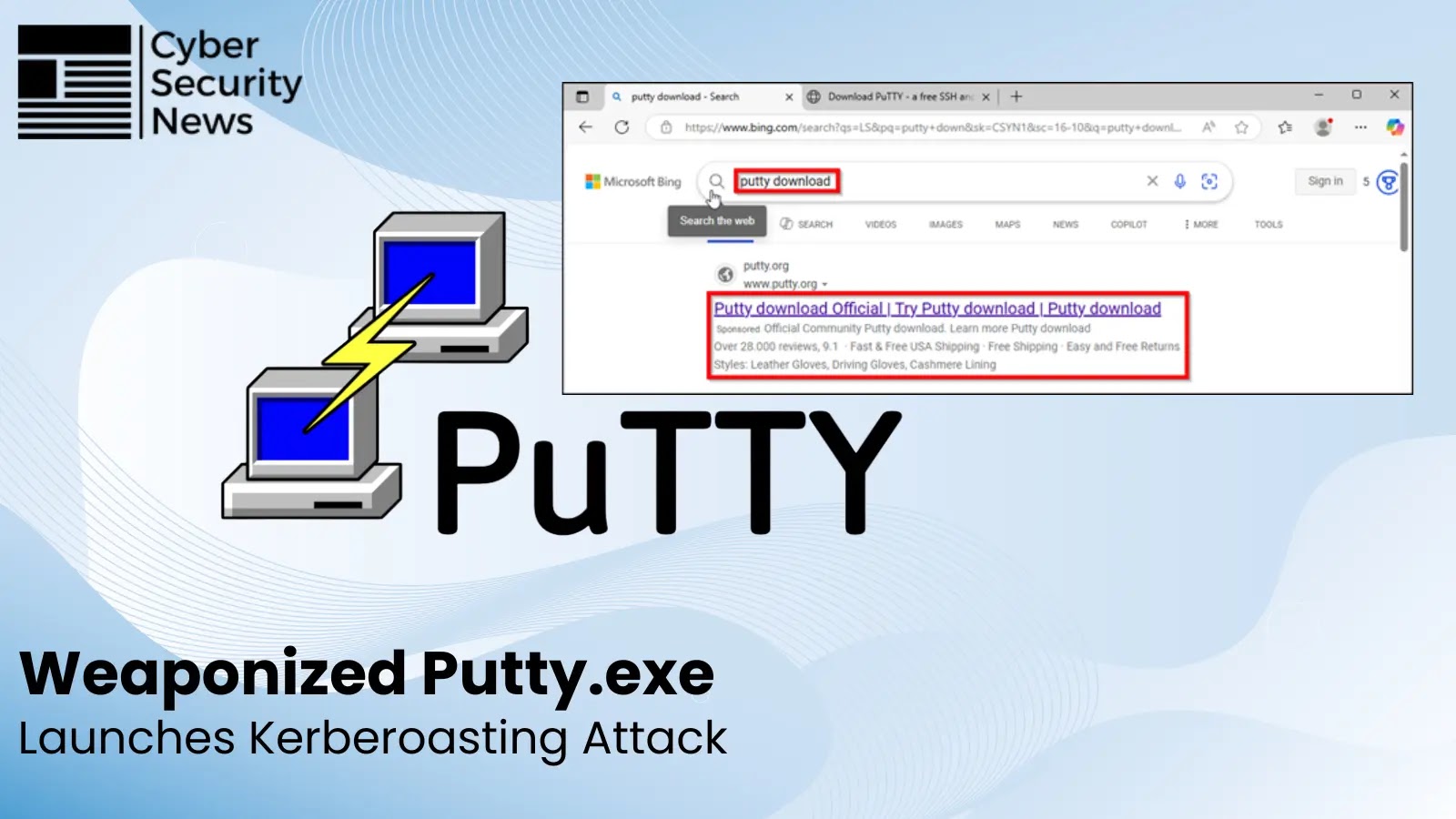
Malicious Bing Ads deploy Weaponized PuTTY to Exploit Kerberos and Attack Active Directory services Malicious Bing Ads deploy Weaponized PuTTY to Exploit Kerberos and Attack Active Directory services Cyber Security News
Claude Mythos Preview Detects 10,000+ Zero-Day Threats Claude Mythos Preview Detects 10,000+ Zero-Day Threats Cyber Security News
North Korean Phishing Campaign Exploits GitHub as C2 Tool North Korean Phishing Campaign Exploits GitHub as C2 Tool Cyber Security News
Ransomware Targeting Hyper-V and VMware ESXi Surges as Akira Group Exploits System Vulnerabilities Ransomware Targeting Hyper-V and VMware ESXi Surges as Akira Group Exploits System Vulnerabilities Cyber Security News
Beware of Typosquatted Malicious PyPI Packages That Delivers SilentSync RAT Beware of Typosquatted Malicious PyPI Packages That Delivers SilentSync RAT Cyber Security News

Categories

  • Cyber Security News
  • How To?
  • Security Week News
  • The Hacker News

Recent Posts

  • Brevo Attack Compromises Over 100,000 WordPress Sites
  • Gyazo Data Breach Exposes 23 Million User Records
  • WeaselBiscuit Malware Detected in 13 npm Packages
  • Phishing Scam Targets T-Mobile Users with Fake Rewards
  • Global Crackdown Halts NightmareStresser DDoS Service

Pages

  • About Us – Contact
  • Disclaimer
  • Privacy Policy
  • Terms and Rules

Archives

  • September 2026
  • August 2026
  • July 2026
  • June 2026
  • May 2026
  • April 2026
  • March 2026
  • February 2026
  • January 2026
  • December 2025
  • November 2025
  • October 2025
  • September 2025
  • August 2025
  • July 2025
  • June 2025
  • May 2025

Recent Posts

  • Brevo Attack Compromises Over 100,000 WordPress Sites
  • Gyazo Data Breach Exposes 23 Million User Records
  • WeaselBiscuit Malware Detected in 13 npm Packages
  • Phishing Scam Targets T-Mobile Users with Fake Rewards
  • Global Crackdown Halts NightmareStresser DDoS Service

Pages

  • About Us – Contact
  • Disclaimer
  • Privacy Policy
  • Terms and Rules

Categories

  • Cyber Security News
  • How To?
  • Security Week News
  • The Hacker News

Copyright © 2026 Cyber Web Spider Blog – News.

Powered by PressBook Masonry Dark