Google has unveiled a set of six advanced protection features for Android 17 designed to counteract sophisticated threats such as scams and unauthorized access. Announced on October 1, 2026, these enhancements aim to strengthen existing security measures while preserving evidence crucial for investigations.
Enhancing Existing Protections
Rather than responding to a specific malware outbreak, this update builds upon the security measures introduced with Android 16. Google is focusing on bolstering protection for users who are at higher risk, such as journalists, public figures, and officials.
Google’s security team highlighted how malicious applications exploit accessibility permissions to gather sensitive data, install malware, or hinder removal processes. The new enhancements target these vulnerabilities and also address browser exploits and physical device tampering.
Comprehensive Security Updates
One of the key features is a unified switch that enhances settings across Chrome, Google Messages, and Phone by Google. It also ensures that core protections like Google Play Protect and Scam Detection remain active and cannot be easily disabled.
Among the six new features, four are widely available across Android 17 devices. However, features like USB Protection and Failed Authentication Lock are limited to specific models.
Detailed Feature Breakdown
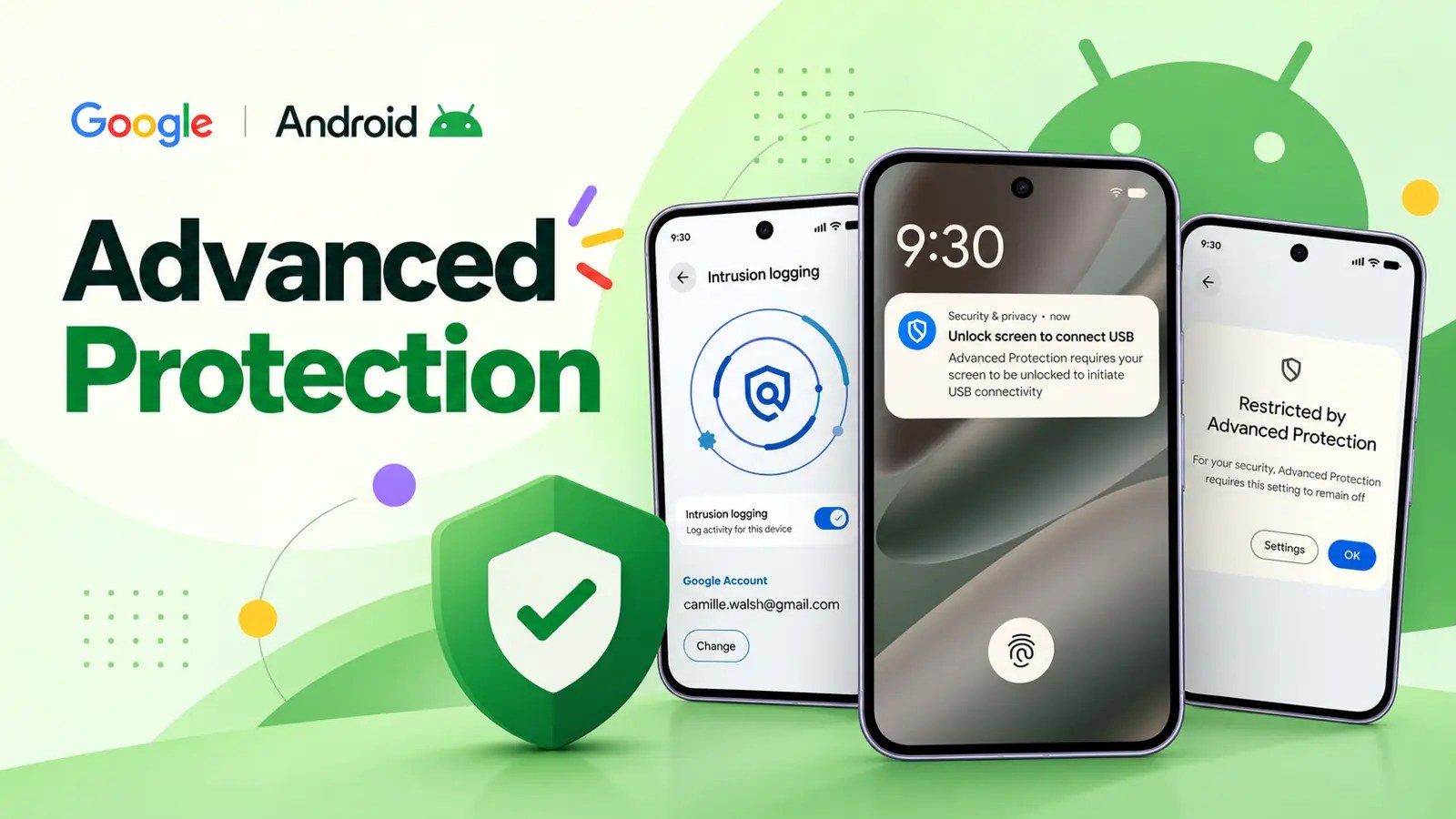
The new features are designed to cover various stages of potential compromise. Intrusion Logging, for instance, securely stores security and network events in cloud storage using end-to-end encryption, preserving evidence for up to 12 months.
USB Protection restricts new USB connections to charging-only mode when the device is locked, reducing the risk of unauthorized data access. Accessibility Protection limits accessibility service access to verified applications, blocking potential pathways for data theft and malware.
Additionally, disabling WebGPU in Chrome reduces exposure to advanced hardware-accelerated graphics exploits. The Failed Authentication Lock feature secures devices after multiple failed authentication attempts, while View Supporting Apps helps users identify applications that support Advanced Protection.
Implications for Users
These updates come in response to threats like those posed by fake streaming apps that misuse accessibility permissions. While Google does not claim these controls can prevent all infection routes, they significantly narrow the possibilities.
Intrusion Logging, in particular, offers a solution for investigating compromised devices by preserving encrypted records remotely. Organizations like Amnesty International have recognized its potential in documenting attacks against vulnerable groups.
Current Advanced Protection users will receive notifications when these features become available. Notably, Intrusion Logging must be manually activated within the settings to start recording.
Google advises users to be mindful of the hardware differences that may affect functionality, especially with USB Protection. Users should assess which features their devices support to fully utilize the new safeguards.