Skip to content
  • Home
  • Cyber Map
  • About Us – Contact
  • Disclaimer
  • Terms and Rules
  • Privacy Policy
Cyber Web Spider Blog – News

Cyber Web Spider Blog – News

Globe Threat Map provides a real-time, interactive 3D visualization of global cyber threats. Monitor DDoS attacks, malware, and hacking attempts with geo-located arcs on a rotating globe. Stay informed with live logs and archive stats.

  • Home
  • Cyber Map
  • Cyber Security News
  • Security Week News
  • The Hacker News
  • How To?
  • Toggle search form
1-Click Oracle Cloud Code Editor RCE Vulnerability Lets Attackers Upload Malicious Files

1-Click Oracle Cloud Code Editor RCE Vulnerability Lets Attackers Upload Malicious Files

Posted on July 17, 2025July 17, 2025 By CWS

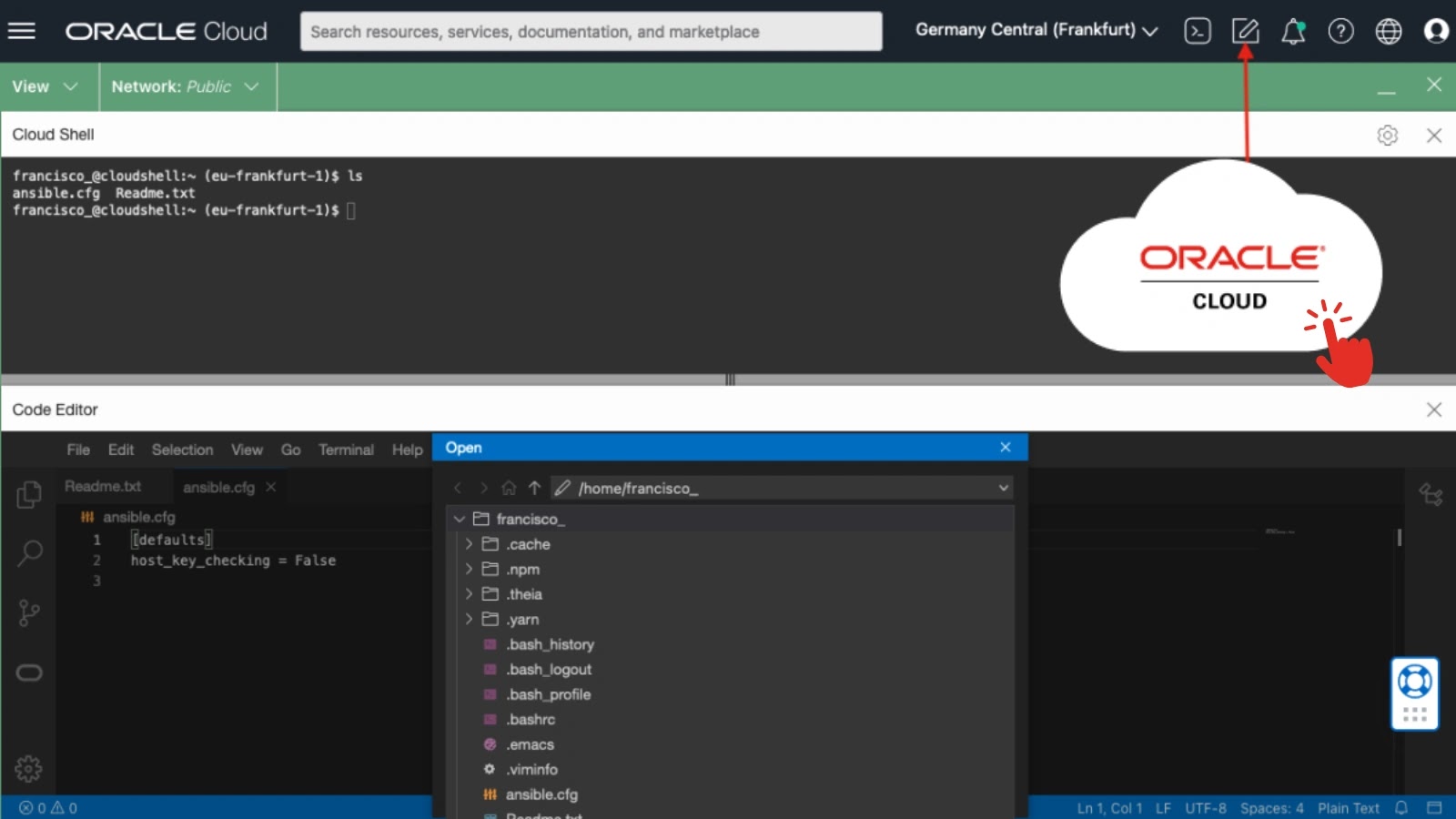
A crucial Distant Code Execution (RCE) vulnerability in Oracle Cloud Infrastructure (OCI) Code Editor that allowed attackers to silently hijack sufferer Cloud Shell environments via a single click on. 

The vulnerability, now remediated, affected Code Editor’s built-in providers, together with Useful resource Supervisor, Capabilities, and Knowledge Science, demonstrating how seemingly remoted cloud growth instruments can change into assault vectors.

Key Takeaways1. Oracle Cloud Code Editor’s file add lacked CSRF safety, permitting 1-click malicious file uploads.2. Enabled Distant Code Execution and potential compromise of built-in OCI providers.3. Oracle added obligatory X-CSRF-Token headers to forestall cross-origin assaults.

Oracle Code Editor Vulnerability

The vulnerability stemmed from Oracle Code Editor’s deep integration with Cloud Shell, the place each providers share the identical underlying file system and person session context.

Whereas this tight coupling was designed to supply a seamless developer expertise, it created an sudden assault floor that researchers exploited.

Tenable’s investigation started with a easy query: if builders can add information simply via Code Editor, might attackers do the identical? This led to the invention of a /file-upload endpoint in Code Editor that lacked Cross-Web site Request Forgery (CSRF) defenses, not like Cloud Shell’s correctly secured add mechanism.

The crucial part on the coronary heart of this vulnerability was the Cloud Shell router (router.cloudshell.us-ashburn-1.oci.oraclecloud.com), which accepted HTTP POST requests containing multipart/form-data payloads. 

The router used a CS-ProxyChallenge cookie configured with SameSite=None attribute, providing no safety towards cross-site requests from authenticated customers.

The exploitation path was remarkably easy. Attackers might create malicious HTML pages that, when visited by authenticated OCI customers, would routinely add malicious information to the sufferer’s Cloud Shell setting with out their data.

The assault utilized a crafted HTTP request:

Researchers demonstrated how attackers might override .bashrc information to ascertain reverse shells, gaining interactive entry to Cloud Shell and leveraging sufferer credentials for lateral motion throughout OCI providers utilizing the OCI CLI.

Safety Measures

Oracle responded to the vulnerability by implementing further safety measures, particularly requiring a customized HTTP header x-csrf-token with worth csrf-value for all related requests. 

This transformation successfully mitigates CSRF assaults since browsers can’t routinely embody customized headers in cross-origin requests with out correct CORS configuration. The vulnerability’s affect prolonged past Cloud Shell to Code Editor’s built-in providers. 

Since these providers function on the identical shared file system, malicious payloads might compromise Useful resource Supervisor workspaces, Capabilities deployments, and Knowledge Science environments, making a multi-surface risk throughout OCI’s developer toolkit.

This incident highlights the safety challenges inherent in cloud service integrations, the place comfort options can inadvertently broaden assault surfaces past their meant scope.

Enhance detection, cut back alert fatigue, speed up response; all with an interactive sandbox constructed for safety groups -> Attempt ANY.RUN Now 

Cyber Security News Tags:1Click, Attackers, Cloud, Code, Editor, Files, Lets, Malicious, Oracle, RCE, Upload, Vulnerability

Post navigation

Previous Post: GhostContainer Malware Hacking Exchange Servers in the Wild Using N-day Vulnerability
Next Post: Armenian Man Extradited to US Over Ryuk Ransomware Attacks

Related Posts

Cisco Webex Meetings Vulnerability Let Attackers Manipulate HTTP Responses Cisco Webex Meetings Vulnerability Let Attackers Manipulate HTTP Responses Cyber Security News
Insignary Unveils Clarity On-Demand for SBOMs Without Commitment Insignary Unveils Clarity On-Demand for SBOMs Without Commitment Cyber Security News
Atomic macOS Info-Stealer Upgraded With New Backdoor to Maintain Persistence Atomic macOS Info-Stealer Upgraded With New Backdoor to Maintain Persistence Cyber Security News
Proton Exposes 300 Million Stolen Credentials Available for Sale on Dark Web Cybercrime Markets Proton Exposes 300 Million Stolen Credentials Available for Sale on Dark Web Cybercrime Markets Cyber Security News
Glasgow City Warns of Parking Fine Scam as Cyber Security Incident Continues Glasgow City Warns of Parking Fine Scam as Cyber Security Incident Continues Cyber Security News
Chrome Security Update – Patch for 21 Vulnerabilities that Allows Attackers to Crash Browser Chrome Security Update – Patch for 21 Vulnerabilities that Allows Attackers to Crash Browser Cyber Security News

Categories

  • Cyber Security News
  • How To?
  • Security Week News
  • The Hacker News

Recent Posts

  • WhatsApp Introduces Scam Alert to Enhance User Safety
  • Lazarus Exploits Windows Flaw to Deploy New Backdoor
  • AI-Powered Cyberattack Targets Taiwan Government
  • Ivanti EPM Update Resolves Critical Security Flaws
  • Adobe ColdFusion Flaws Pose Severe Security Risks

Pages

  • About Us – Contact
  • Disclaimer
  • Privacy Policy
  • Terms and Rules

Archives

  • August 2026
  • July 2026
  • June 2026
  • May 2026
  • April 2026
  • March 2026
  • February 2026
  • January 2026
  • December 2025
  • November 2025
  • October 2025
  • September 2025
  • August 2025
  • July 2025
  • June 2025
  • May 2025

Recent Posts

  • WhatsApp Introduces Scam Alert to Enhance User Safety
  • Lazarus Exploits Windows Flaw to Deploy New Backdoor
  • AI-Powered Cyberattack Targets Taiwan Government
  • Ivanti EPM Update Resolves Critical Security Flaws
  • Adobe ColdFusion Flaws Pose Severe Security Risks

Pages

  • About Us – Contact
  • Disclaimer
  • Privacy Policy
  • Terms and Rules

Categories

  • Cyber Security News
  • How To?
  • Security Week News
  • The Hacker News

Copyright © 2026 Cyber Web Spider Blog – News.

Powered by PressBook Masonry Dark