Skip to content
  • Home
  • Cyber Map
  • About Us – Contact
  • Disclaimer
  • Terms and Rules
  • Privacy Policy
Cyber Web Spider Blog – News

Cyber Web Spider Blog – News

Globe Threat Map provides a real-time, interactive 3D visualization of global cyber threats. Monitor DDoS attacks, malware, and hacking attempts with geo-located arcs on a rotating globe. Stay informed with live logs and archive stats.

  • Home
  • Cyber Map
  • Cyber Security News
  • Security Week News
  • The Hacker News
  • How To?
  • Toggle search form
CISA Issues Warning on Medusa Ransomware Tactics

CISA Issues Warning on Medusa Ransomware Tactics

Posted on August 18, 2026 By CWS

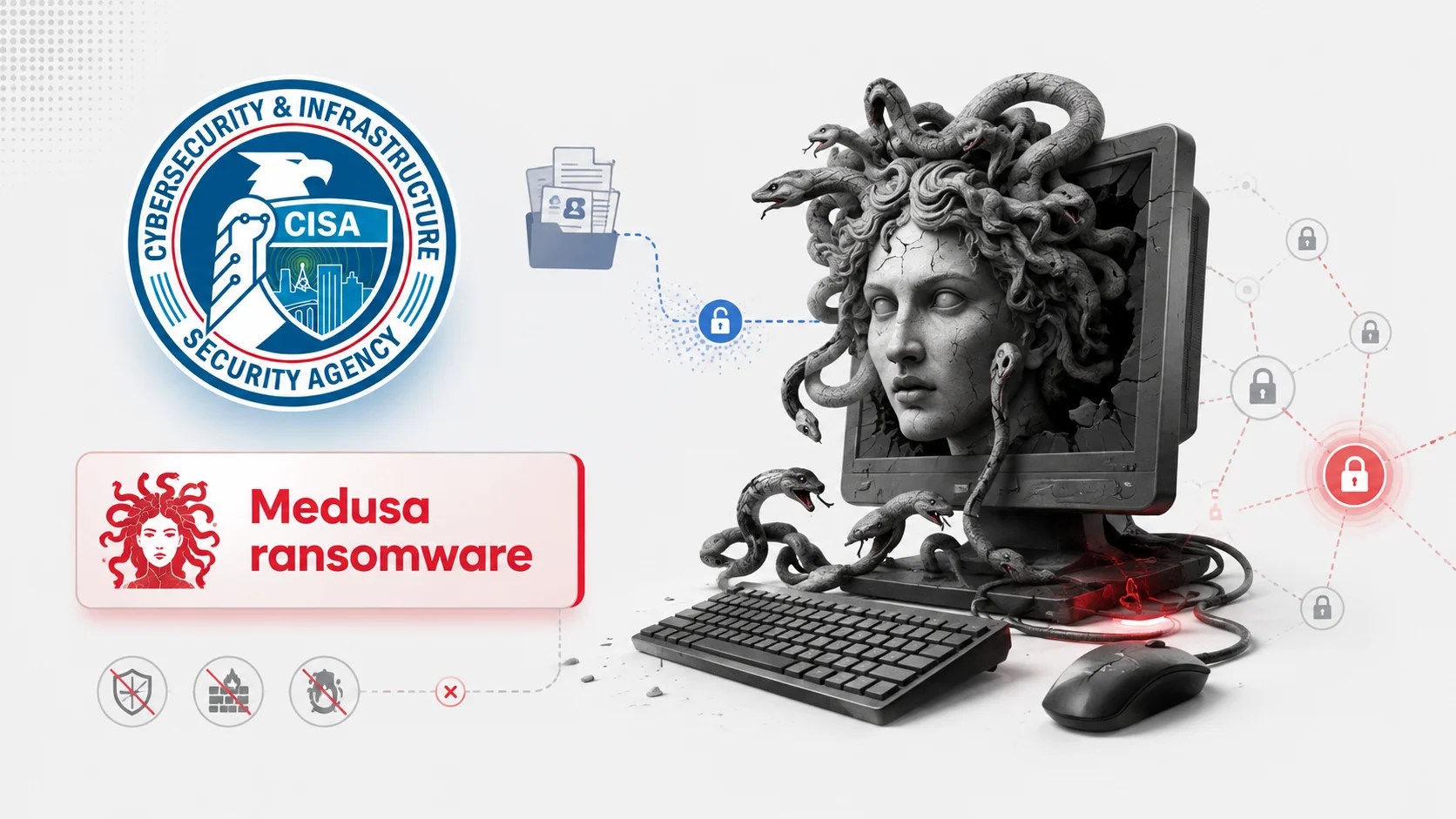
The Cybersecurity and Infrastructure Security Agency (CISA), alongside the Federal Bureau of Investigation (FBI) and the Department of Health and Human Services (HHS), has released a new security alert concerning the Medusa ransomware group. This threat is actively targeting enterprise systems, disabling security protocols, extracting sensitive information, and encrypting networks entirely.

Medusa Ransomware’s Widespread Impact

According to the latest advisory (AA25-071A), Medusa has infiltrated over 500 organizations within crucial sectors such as healthcare, education, legal, insurance, manufacturing, and technology. The threat actors have evolved from a closed malware operation, first seen in June 2021, to a sophisticated Ransomware-as-a-Service (RaaS) model by 2023. This model involves leasing ransomware payloads to affiliates who share extortion profits with the core developers.

Double-Extortion and Vulnerability Exploitation

Medusa’s double-extortion tactics involve stealing intellectual property and patient data before locking systems and threatening to release information on dark web platforms. HHS has highlighted the severe impact on hospitals and public health agencies. The ransomware affiliates gain initial access through collaboration with Initial Access Brokers (IABs) and exploiting software vulnerabilities such as CVE-2024-1709, CVE-2023-48788, and CVE-2026-1731.

Defensive Measures and Recommendations

CISA emphasizes the urgency of patching vulnerabilities promptly and segmenting networks to mitigate lateral movement. Organizations are advised to enforce multi-factor authentication, maintain offline backups, and audit endpoint activities to detect unauthorized remote management installations. Additionally, rapid adoption of security patches is critical, as Medusa actors exploit vulnerabilities soon after they are disclosed.

Medusa’s operators utilize native Windows tools like PowerShell and WMI for stealth operations. They disable endpoint detection systems and exploit legitimate remote monitoring platforms, making it crucial for security teams to stay vigilant. Tools such as Mimikatz and CrackMapExec aid in data exfiltration efforts by masking malicious commands as routine system processes.

The ransomware payload, known as gaze.exe, disrupts security services, deletes shadow copies, and encrypts files with AES-256. Victims typically have 48 hours to negotiate via encrypted communications. Federal agencies advocate for immediate action to bolster defenses against such sophisticated threats.

By staying informed and implementing comprehensive security strategies, organizations can better protect themselves from the growing threat of Medusa ransomware.


Cyber Security News Tags:CISA, critical infrastructure, Cybersecurity, data theft, Encryption, endpoint protection, Healthcare, Medusa ransomware, network security, Phishing, ransomware-as-a-service, security advisory, security tools, Threat Actors, Vulnerabilities

Post navigation

Previous Post: Critical MLflow and FUXA Vulnerabilities Exploited by Attackers
Next Post: Ransom Busters’ Ransomware Deletion Claims Under Scrutiny

Related Posts

Adobe Extension Vulnerability Exposes WhatsApp Chats Adobe Extension Vulnerability Exposes WhatsApp Chats Cyber Security News
Microsoft Defender Expands Security to Teams with URL Alerts Microsoft Defender Expands Security to Teams with URL Alerts Cyber Security News
Silver Fox Exploits EV Certificates in Malware Attack Silver Fox Exploits EV Certificates in Malware Attack Cyber Security News
Enhanced Security and Speed in Latest Claude Code Update Enhanced Security and Speed in Latest Claude Code Update Cyber Security News
CISA Alerts on Vulnerabilities in Joomla Extensions CISA Alerts on Vulnerabilities in Joomla Extensions Cyber Security News
Hackers Exploit Critical WebLogic RCE Flaw Rapidly Hackers Exploit Critical WebLogic RCE Flaw Rapidly Cyber Security News

Categories

  • Cyber Security News
  • How To?
  • Security Week News
  • The Hacker News

Recent Posts

  • Malware Uses Compromised WordPress Sites for C2 Operations
  • Ransom Busters’ Ransomware Deletion Claims Under Scrutiny
  • CISA Issues Warning on Medusa Ransomware Tactics
  • Critical MLflow and FUXA Vulnerabilities Exploited by Attackers
  • Hackers Exploit MLflow SSRF Flaw in Active Attacks

Pages

  • About Us – Contact
  • Disclaimer
  • Privacy Policy
  • Terms and Rules

Archives

  • August 2026
  • July 2026
  • June 2026
  • May 2026
  • April 2026
  • March 2026
  • February 2026
  • January 2026
  • December 2025
  • November 2025
  • October 2025
  • September 2025
  • August 2025
  • July 2025
  • June 2025
  • May 2025

Recent Posts

  • Malware Uses Compromised WordPress Sites for C2 Operations
  • Ransom Busters’ Ransomware Deletion Claims Under Scrutiny
  • CISA Issues Warning on Medusa Ransomware Tactics
  • Critical MLflow and FUXA Vulnerabilities Exploited by Attackers
  • Hackers Exploit MLflow SSRF Flaw in Active Attacks

Pages

  • About Us – Contact
  • Disclaimer
  • Privacy Policy
  • Terms and Rules

Categories

  • Cyber Security News
  • How To?
  • Security Week News
  • The Hacker News

Copyright © 2026 Cyber Web Spider Blog – News.

Powered by PressBook Masonry Dark