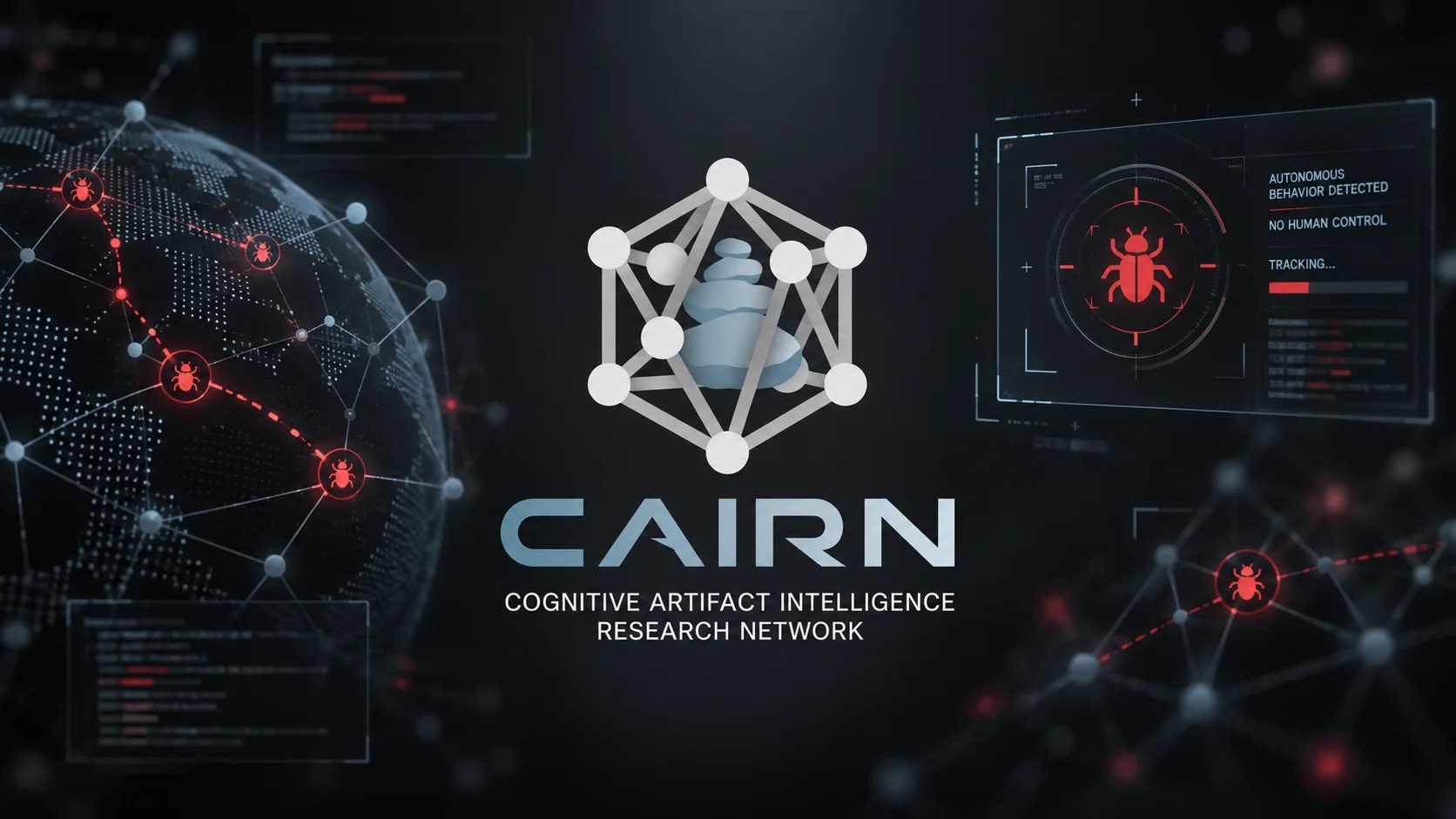
Cisco Talos recently launched the CAIRN toolkit, a groundbreaking open-source solution aimed at identifying and analyzing AI-powered malware. This innovative tool focuses on the digital signatures left by developers, helping to track and classify malicious software that operates without direct human intervention.
Understanding CAIRN’s Functionality
The Cognitive Artifact Intelligence Research Network (CAIRN) effectively detects AI-based threats by identifying prompt templates, API key patterns, and other digital clues indicative of AI integration. Unlike traditional methods, it does not rely on downloading or executing binary files, making it a novel addition to cybersecurity strategies.
A significant revelation accompanying the toolkit’s launch is CLOSEDQUORUM, a Windows implant that uniquely delegates decision-making processes to artificial intelligence. This malware utilizes multiple commercial language models to autonomously determine its next actions, marking a shift from human-controlled operations.
Autonomous Decision-Making in Malware
CLOSEDQUORUM represents a new frontier in malware sophistication, leveraging AI to autonomously perform actions such as data theft, persistence establishment, and code injection. Despite its capabilities, there is no confirmation of its deployment in real-world scenarios, and the publicly available version remains nonfunctional.
The malware’s ability to independently make tactical decisions underscores the importance of CAIRN’s role in monitoring such developments. Through static analysis, CAIRN uncovers the decision loops within CLOSEDQUORUM, providing insights into its operation without live instructions.
CAIRN’s Robust Detection Mechanisms
CAIRN employs a multi-tiered approach to threat detection, applying up to 24 acquisition filters that scrutinize metadata from antivirus labels and sandbox behaviors. These filters target specific domains, libraries, and tool-call syntax, facilitating a comprehensive examination of potential threats.
The toolkit organizes its findings into three levels, from identifying basic AI artifacts to linking these with behavioral contexts and ultimately attributing them to known malware families. This thorough methodology allows CAIRN to effectively narrow down potential threats before deeper analysis.
Implications for Cybersecurity
As AI continues to play a more prominent role in cyber threats, the insights provided by CAIRN become increasingly critical. The emergence of autonomous malware like CLOSEDQUORUM highlights the need for adaptive defense strategies that can keep up with evolving attack methods.
While the presence of AI-related strings in legitimate software complicates detection, CAIRN’s advanced techniques offer a practical framework for identifying and tracking AI-driven threats. As attackers integrate more automation into their tactics, tools like CAIRN will be essential in safeguarding digital environments.
For cybersecurity professionals, leveraging CAIRN’s capabilities can significantly enhance the detection and analysis of emerging threats, providing a viable means to counter the growing sophistication of AI-based malware.