Skip to content
  • Home
  • Cyber Map
  • About Us – Contact
  • Disclaimer
  • Terms and Rules
  • Privacy Policy
Cyber Web Spider Blog – News

Cyber Web Spider Blog – News

Globe Threat Map provides a real-time, interactive 3D visualization of global cyber threats. Monitor DDoS attacks, malware, and hacking attempts with geo-located arcs on a rotating globe. Stay informed with live logs and archive stats.

  • Home
  • Cyber Map
  • Cyber Security News
  • Security Week News
  • The Hacker News
  • How To?
  • Toggle search form
Critical Flaw Exposes 14,000 SimpleHelp Servers

Critical Flaw Exposes 14,000 SimpleHelp Servers

Posted on June 16, 2026 By CWS

Nearly 14,000 SimpleHelp servers exposed to the internet are at risk due to a severe authentication bypass vulnerability, identified as CVE-2026-48558. This critical flaw raises significant security concerns for businesses utilizing the remote monitoring and management platform.

Discovery of the Vulnerability

The vulnerability was uncovered by Horizon3.ai through its AI-driven research initiative, ‘Sua Sponte.’ This flaw affects SimpleHelp deployments that integrate with OpenID Connect (OIDC) authentication systems, including those using Azure Active Directory. The issue arises from the improper validation of identity provider assertions during the OIDC authentication process.

Attackers exploiting this vulnerability can create a new ‘Technician’ account and access the system without valid credentials. This grants them elevated privileges, allowing access to managed endpoints, execution of scripts, and administrative capabilities. Even multi-factor authentication (MFA) cannot prevent exploitation, as attackers can register their own authentication method during their initial login.

Indicators and Impact of the Exploit

The vulnerability becomes exploitable in environments with OIDC authentication enabled and where TechnicianGroup is linked to the OIDC provider. Administrators are advised to scrutinize technician accounts for unfamiliar names or emails and review server logs for unauthorized activities or configuration changes. These logs, located in directories such as /opt/SimpleHelp/logs/, can reveal signs of malicious activity.

The number of SimpleHelp servers accessible on the public internet has surged from approximately 3,400 in early 2025 to nearly 14,000 by June 2026. Around 7.2% of these servers are configured in a manner that makes them susceptible to this authentication bypass. If successfully exploited, attackers could gain lateral access across networks, compromising critical systems.

Mitigation and Prevention Strategies

Organizations are urged to apply the latest security updates provided by SimpleHelp to mitigate this vulnerability. For those unable to immediately patch, temporary controls such as IP address-based login restrictions can be implemented. The vulnerability was discovered on May 21, 2026, reported to the vendor the following day, and publicly disclosed on June 12, 2026. A patch was released on June 9, 2026, preceding the public advisory.

This incident highlights the persistent risks associated with widely used RMM tools and underscores the necessity of securing authentication mechanisms, especially when integrating with enterprise identity providers.

For more updates on cybersecurity and related topics, follow us on Google News, LinkedIn, and X.

Cyber Security News Tags:Authentication, authentication bypass, CVE-2026-48558, Cybersecurity, endpoint management, enterprise security, Horizon3.ai, MFA, network security, OIDC, patch management, remote monitoring, server security, SimpleHelp, Vulnerability

Post navigation

Previous Post: NarwhalRAT Malware Targets Korean Users via LNK Files
Next Post: Cisco Patches Actively Exploited SD-WAN Vulnerability

Related Posts

Details Emerge for SharePoint RCE Vulnerability Exploit Details Emerge for SharePoint RCE Vulnerability Exploit Cyber Security News
Cybercriminal Cryptocurrency Transactions Peaked in 2025 Following Nation‑State Sanctions Evasion Moves Cybercriminal Cryptocurrency Transactions Peaked in 2025 Following Nation‑State Sanctions Evasion Moves Cyber Security News
287 Chrome Extensions Breach Privacy of Millions 287 Chrome Extensions Breach Privacy of Millions Cyber Security News
Top DNS Security Solutions for 2026 Top DNS Security Solutions for 2026 Cyber Security News
Critical Cisco SD-WAN Flaw Exploited in Zero-Day Attacks Critical Cisco SD-WAN Flaw Exploited in Zero-Day Attacks Cyber Security News
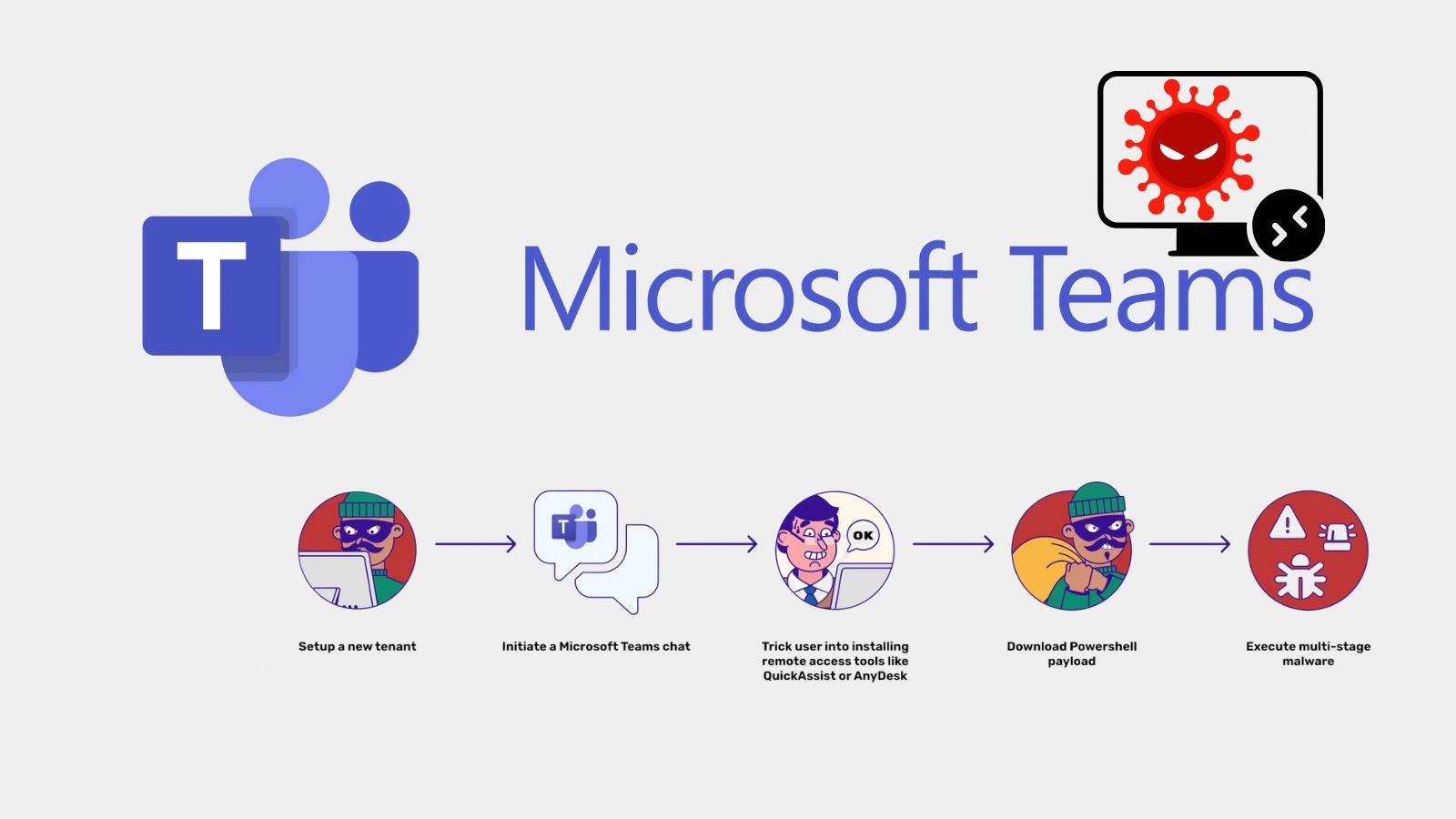
Hackers Abuse Microsoft Teams to Gain Remote Access With PowerShell-based Malware Hackers Abuse Microsoft Teams to Gain Remote Access With PowerShell-based Malware Cyber Security News

Categories

  • Cyber Security News
  • How To?
  • Security Week News
  • The Hacker News

Recent Posts

  • GitHub Awards Record $100K for Major RCE Vulnerability
  • Telus Alerts Customers to Data Breach Incidents
  • Critical Patch Issued for ScreenConnect Vulnerability
  • Twitch Extension Security Breach Exposes OAuth Tokens
  • Hackers Use AutoIt to Conceal AsyncRAT in Windows

Pages

  • About Us – Contact
  • Disclaimer
  • Privacy Policy
  • Terms and Rules

Archives

  • September 2026
  • August 2026
  • July 2026
  • June 2026
  • May 2026
  • April 2026
  • March 2026
  • February 2026
  • January 2026
  • December 2025
  • November 2025
  • October 2025
  • September 2025
  • August 2025
  • July 2025
  • June 2025
  • May 2025

Recent Posts

  • GitHub Awards Record $100K for Major RCE Vulnerability
  • Telus Alerts Customers to Data Breach Incidents
  • Critical Patch Issued for ScreenConnect Vulnerability
  • Twitch Extension Security Breach Exposes OAuth Tokens
  • Hackers Use AutoIt to Conceal AsyncRAT in Windows

Pages

  • About Us – Contact
  • Disclaimer
  • Privacy Policy
  • Terms and Rules

Categories

  • Cyber Security News
  • How To?
  • Security Week News
  • The Hacker News

Copyright © 2026 Cyber Web Spider Blog – News.

Powered by PressBook Masonry Dark