Skip to content
  • Home
  • Cyber Map
  • About Us – Contact
  • Disclaimer
  • Terms and Rules
  • Privacy Policy
Cyber Web Spider Blog – News

Cyber Web Spider Blog – News

Globe Threat Map provides a real-time, interactive 3D visualization of global cyber threats. Monitor DDoS attacks, malware, and hacking attempts with geo-located arcs on a rotating globe. Stay informed with live logs and archive stats.

  • Home
  • Cyber Map
  • Cyber Security News
  • Security Week News
  • The Hacker News
  • How To?
  • Toggle search form
Critical Linux Vulnerability Threatens System Security

Critical Linux Vulnerability Threatens System Security

Posted on May 19, 2026 By CWS

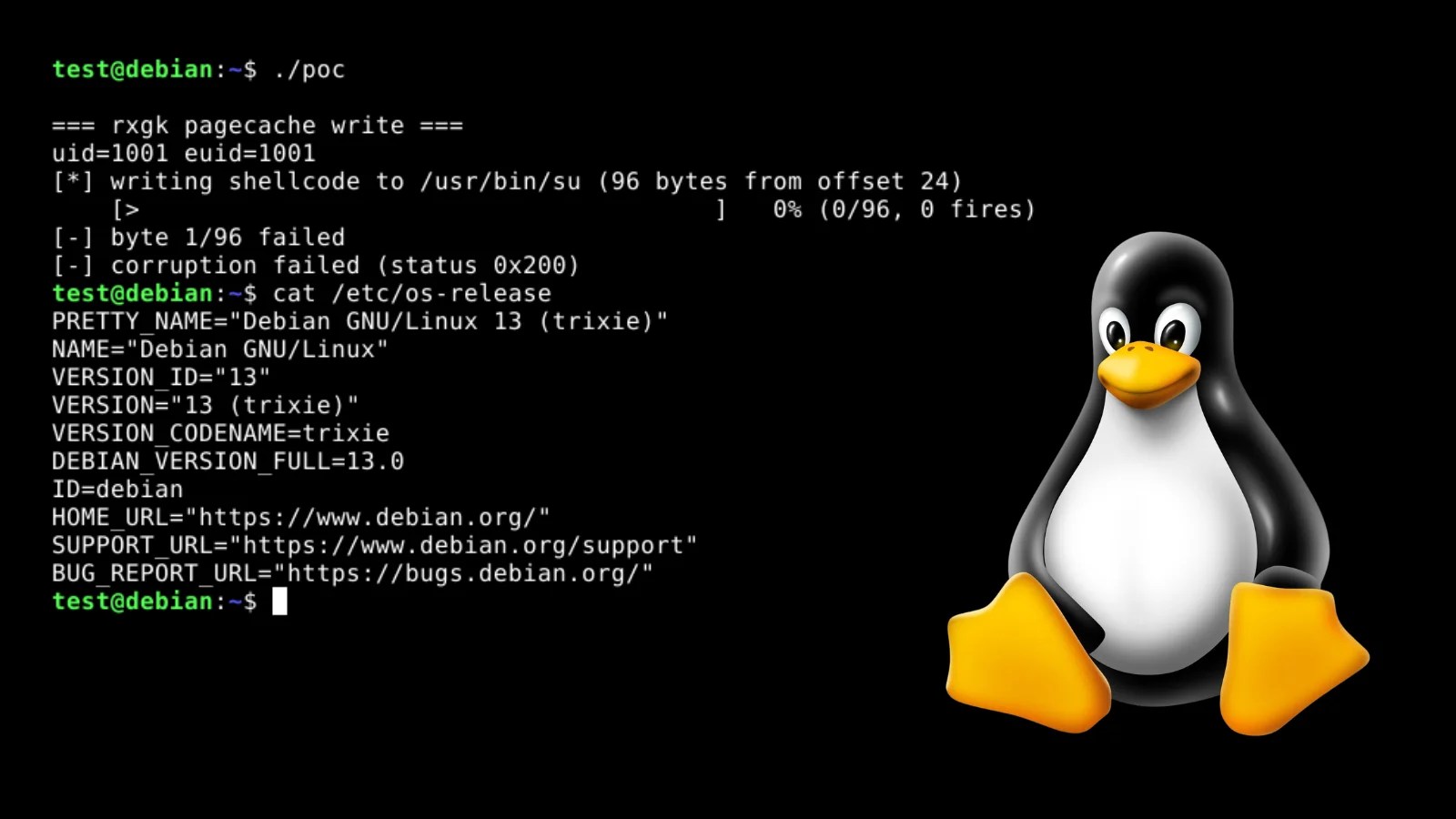
A newly exposed vulnerability, known as DirtyDecrypt or DirtyCBC, poses a significant security threat to Linux systems. This vulnerability, tracked as CVE-2026-31635, allows local attackers to elevate their privileges to root access. The exploit, which has been demonstrated through a proof-of-concept (PoC), affects systems with specific kernel configurations.

Understanding the DirtyDecrypt Vulnerability

The vulnerability was identified in the Linux kernel’s RxGK subsystem, which is part of the security layer for RxRPC, utilized by the Andrew File System (AFS) client. The flaw lies in the rxgk_decrypt_skb() function, where a missing copy-on-write (COW) guard enables direct writing to shared pages without creating private copies, potentially corrupting privileged files like /etc/shadow or /etc/sudoers.

Security analyst Will Dormann attributed the technical details to CVE-2026-31635, with a patch applied quietly on April 25, 2026. Researcher V12 highlighted the vulnerability’s impact, noting it was initially reported as a duplicate of an internally patched issue.

Distributions and Systems at Risk

Linux distributions compiled with CONFIG_RXGK=y or CONFIG_RXGK=m are susceptible, particularly rolling-release distributions closely aligned with upstream kernel updates. Notable affected distributions include Fedora, Arch Linux, and openSUSE Tumbleweed, among others. Systems using mainline kernel PPAs or ELRepo kernel-ml on RHEL/CentOS Stream are also vulnerable.

In contrast, stable enterprise distributions like Debian Stable, RHEL, and Ubuntu LTS typically disable RxGK by default, reducing their risk exposure. System administrators can check vulnerability status by executing a specific command in the terminal.

Mitigation and Immediate Actions

The risk escalates in environments like Kubernetes, where a compromised node can lead to container escapes and unauthorized access to secrets and runtime sockets. Developer workstations on Fedora or Arch, which might hold sensitive credentials, are particularly at risk.

To mitigate this vulnerability, users should apply the latest kernel updates that include the April 25 patch. For Fedora, Arch Linux, and openSUSE Tumbleweed, this involves using their respective package managers to upgrade and reboot the system. For systems where immediate patching is not feasible, blacklisting specific kernel modules offers a temporary workaround, albeit with potential service disruptions.

Organizations are advised to enforce strict security protocols, especially in Kubernetes clusters, to prevent further exploitation. Users on affected distributions should prioritize these updates due to the availability of public PoC code, which increases the likelihood of active exploitation.

Stay informed by following our updates on Google News, LinkedIn, and other platforms for the latest security developments.


Cyber Security News Tags:Arch Linux, Cybersecurity, DirtyDecrypt, Exploit, Fedora, Kernel, Linux, openSUSE, Security, Vulnerability

Post navigation

Previous Post: The Gentlemen Ransomware: A Growing Cyber Threat

Related Posts

Hackers Exploit GitHub with Fake AI Repositories Hackers Exploit GitHub with Fake AI Repositories Cyber Security News
Malware Campaign Targets Crypto Pros with Fake LinkedIn VCs Malware Campaign Targets Crypto Pros with Fake LinkedIn VCs Cyber Security News
Microsoft Windows 11 Insider Preview Build 26200.5600 Released Microsoft Windows 11 Insider Preview Build 26200.5600 Released Cyber Security News
WhatsApp Flaw Exploited via Instagram Reels Integration WhatsApp Flaw Exploited via Instagram Reels Integration Cyber Security News
New SmartAttack Steals Sensitive Data From Air-Gapped Systems via Smartwatches New SmartAttack Steals Sensitive Data From Air-Gapped Systems via Smartwatches Cyber Security News
OpenAI Discloses Mixpanel Data Breach OpenAI Discloses Mixpanel Data Breach Cyber Security News

Categories

  • Cyber Security News
  • How To?
  • Security Week News
  • The Hacker News

Recent Posts

  • Critical Linux Vulnerability Threatens System Security
  • The Gentlemen Ransomware: A Growing Cyber Threat
  • Criminal IP to Unveil AI Security Advances at Infosecurity Europe
  • Kimsuky Hackers Exploit LNK, JSE Lures Against Key Sectors
  • Trapdoor Android Fraud Scheme Hijacks 659 Million Daily Requests

Pages

  • About Us – Contact
  • Disclaimer
  • Privacy Policy
  • Terms and Rules

Archives

  • May 2026
  • April 2026
  • March 2026
  • February 2026
  • January 2026
  • December 2025
  • November 2025
  • October 2025
  • September 2025
  • August 2025
  • July 2025
  • June 2025
  • May 2025

Recent Posts

  • Critical Linux Vulnerability Threatens System Security
  • The Gentlemen Ransomware: A Growing Cyber Threat
  • Criminal IP to Unveil AI Security Advances at Infosecurity Europe
  • Kimsuky Hackers Exploit LNK, JSE Lures Against Key Sectors
  • Trapdoor Android Fraud Scheme Hijacks 659 Million Daily Requests

Pages

  • About Us – Contact
  • Disclaimer
  • Privacy Policy
  • Terms and Rules

Categories

  • Cyber Security News
  • How To?
  • Security Week News
  • The Hacker News

Copyright © 2026 Cyber Web Spider Blog – News.

Powered by PressBook Masonry Dark