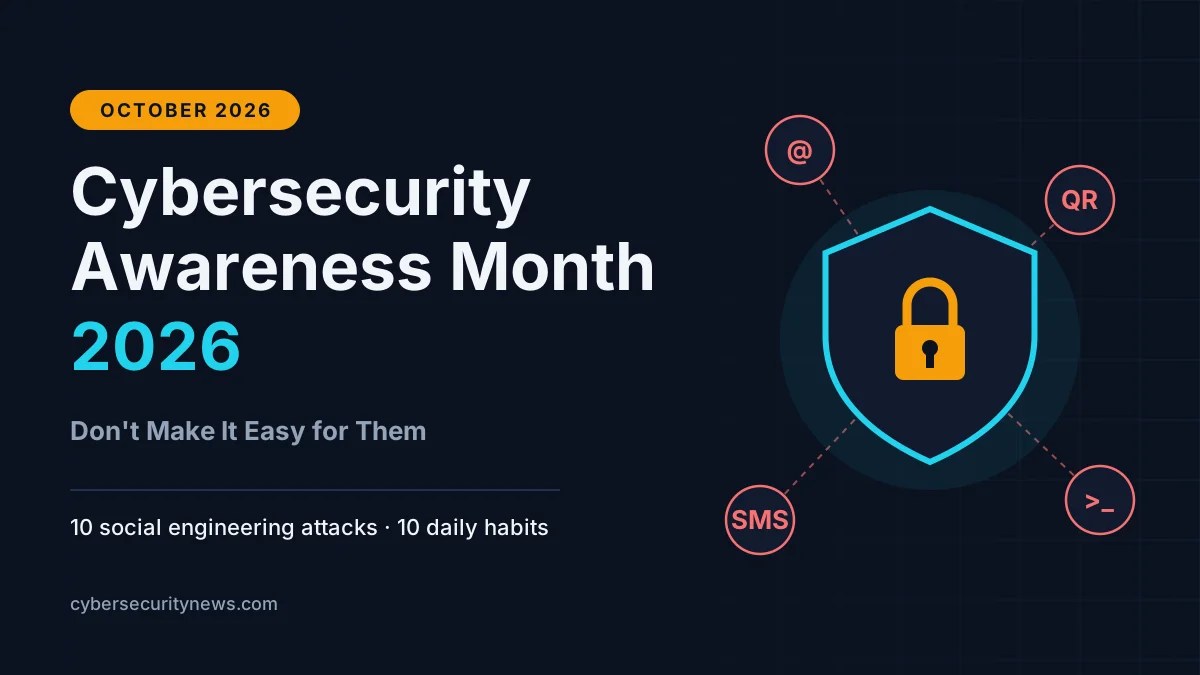
Cybersecurity Awareness Month 2026 arrives amid escalating online threats, emphasizing the importance of developing resilient digital habits. Held every October, this initiative aims to equip individuals and businesses with the tools needed to enhance their online security.
Key Themes for Cybersecurity Awareness Month 2026
This year, the campaign showcases two significant themes. The National Cybersecurity Alliance (NCA) introduces “Don’t Make It Easy for Them,” encouraging the adoption of simple daily practices to thwart cybercriminals. Concurrently, the Cybersecurity and Infrastructure Security Agency (CISA) focuses on “Securing the Next 250,” highlighting the protection of critical infrastructure like power and water systems.
In Canada, the “Get Cyber Safe” initiative underscores the theme “Your best defence is you,” stressing the growing sophistication of AI-driven scams. These messages aim to foster a global culture of awareness and proactive defense against cyber threats.
The Growing Complexity of Cyber Threats
Contemporary cyber attacks frequently exploit human behavior rather than technological vulnerabilities. Phishing, once characterized by poorly written emails, now employs sophisticated tactics such as fake CAPTCHA pages, QR codes, and AI-generated messages. These methods aim to deceive individuals into executing seemingly benign actions that compromise security.
According to Microsoft’s Q1 2026 email threat report, approximately 8.3 billion email-based phishing threats were detected, with QR-code phishing emerging as the fastest-growing attack method. These statistics highlight the need for constant vigilance and awareness.
Essential Cybersecurity Habits
Effective cybersecurity involves more than annual training; it requires the integration of security practices into daily routines. Among these, using unique passwords for each account, employing password managers, and enabling multi-factor authentication (MFA) are crucial. Regular updates for devices and applications are also essential to protect against known vulnerabilities.
Users must be wary of urgent messages that prompt immediate action, verify the legitimacy of web destinations, and treat QR codes with caution. Avoiding command execution from web pages and backing up important data are also critical measures. Reporting suspicious activities quickly can prevent minor incidents from escalating into major breaches.
Addressing Social Engineering Tactics
Social engineering attacks continue to evolve, with AI-generated phishing, adversary-in-the-middle (AiTM) phishing, and OAuth device-code phishing posing significant risks. These tactics often involve tricking users into divulging credentials or approving malicious actions.
Organizations should leverage October to not only reinforce training but also to simulate real-world attack scenarios. By understanding the nuances of modern phishing and social engineering, employees can better identify and respond to potential threats.
Ultimately, Cybersecurity Awareness Month 2026 emphasizes that a robust security posture is built on consistent, everyday actions. Adopting the “Don’t Make It Easy for Them” mindset can significantly reduce vulnerabilities, making it harder for attackers to exploit weaknesses.