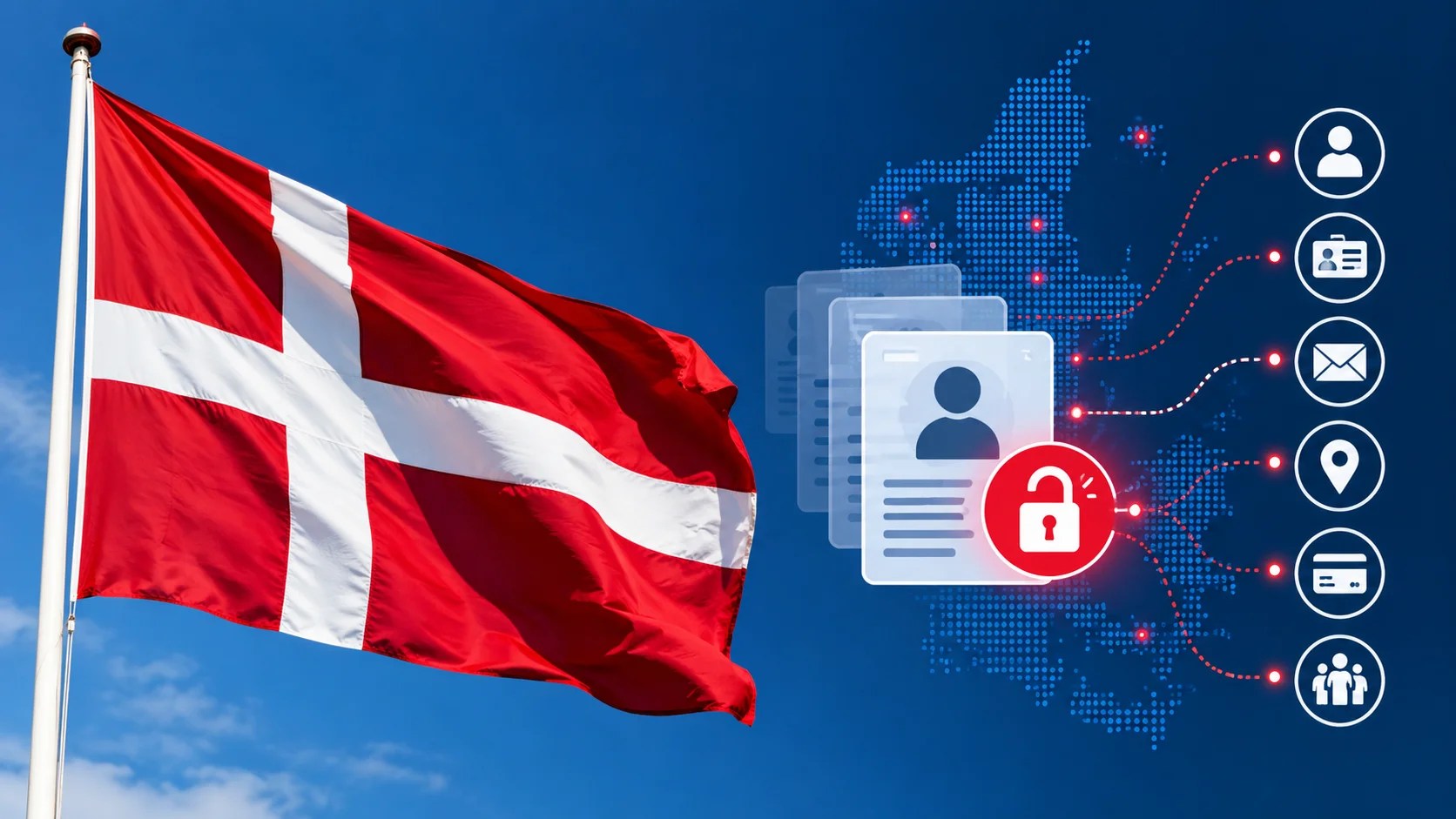
Denmark has recently unveiled a significant data breach affecting its Central Population Register (CPR), where unauthorized individuals accessed sensitive personal information of approximately 8.8 million people. This breach, officially announced on October 5, 2026, includes the exposure of names, addresses, and CPR numbers.
Scope of the Breach
The breach impacts more than Denmark’s population, as the register contains records of expatriates and deceased individuals. With a total of about 11 million entries, a substantial portion of the CPR system’s data was compromised. This revelation raises concerns about the security protocols in place for such a critical database.
Investigating the Breach
The breach occurred due to the misuse of a private Danish company’s authorized access to the CPR system in September. While the exact method of unauthorized entry remains undisclosed, officials have confirmed that it involved legitimate access rather than exploiting a software vulnerability. Investigators are scrutinizing how the company’s access was misused and whether further details will alter the current understanding of events.
The breach was detected on October 2, following unusual system activity. In response, authorities suspended the company’s access and engaged specialists to assess the situation. The case has been reported to Denmark’s Data Protection Authority, and a police investigation is underway, although it is still in its preliminary stages.
Response and Prevention Measures
Denmark’s Minister for Research, Education, and Digitalization, Christina Egelund, has labeled the incident as deeply concerning. She has briefed the Parliament’s Business and Digitalization Committee and initiated a comprehensive security review of the CPR system. While preventive actions are reportedly in progress, their specific technical aspects have not been revealed.
Initial reviews indicate that individuals with name and address protection were not included in the data exposed, although it does not confirm all their data fields remained untouched. This aspect remains a critical point of investigation as authorities work to understand the full extent of the breach.
Implications for Danish Citizens
The exposure of personal details like names, addresses, and national identification numbers increases the risk of phishing attacks. Such information enables cybercriminals to craft convincing fraudulent communications. Residents are advised to remain vigilant against unsolicited communications requesting personal information, even if the sender appears to have some personal details.
For guidance, citizens can contact Sikkerdigital or the Cyberhotline, which has extended its operating hours. The breach’s perpetrator is still unidentified, and the comprehensive investigation continues.
As the situation unfolds, Denmark’s digital security measures and their effectiveness are under intense scrutiny, with potential implications for data protection policies and practices.